
 A Beginner-Friendly Handbook for Smarter Rankings. Learn how keywords, site structure, product pages, and technical SEO come together to grow your online store—without overspending on ads.
ON THIS PAGE
- What is Ecommerce SEO?
- Why Ecommerce SEO Matters
- How to Build an Ecommerce SEO Strategy
- Best Tools for Ecommerce SEO
- Ecommerce SEO FAQ
- Start your online business today
The dream of every store owner is to get traffic without having to run a budget. But all the talks about keywords, crawling, indexing, and rankings could be considered as reading a map drawn in invisible ink. Luckily, eCommerce SEO services in Mumbai is not magic. It’s just the work of tuning your store so that search engines can see what you have and give you to the right customers.
SEO is a long-term game as search engines are not a static entity, their algorithms are more like helpful assistants than fixed lists. But one that brings excellent results once you have mastered the basics.
What Is Ecommerce SEO?

Ecommerce SEO is the procedure that involves the improvement of the online store’s visibility on the search engine result pages (SERPs). Your optimized pages are more likely to appear in the top 10 of the organic results when your potential customers search for the products you offer i.e. vegan skincare kit or ergonomic work chair.
Different SEO strategies are used by blogs and media sites, whereas the SEO of an ecommerce site mainly hinges on the commercial intent. In other words, the most significant factors are product pages, category pages, filters, specifications, and internal linking. Consider a properly optimized product page as a salesperson who identifies exactly which facts convince a buyer.
Why Should Ecommerce Websites Care About SEO?

Envision a search results page as a bustling market where only the shops in the first row get the customers’ attention. Most of the users do not come to the second page, and the very first result is the one that usually gets the most of the clicks.
Lower-ranked pages get only a small portion of the traffic that the first page gets, and the traffic going to the second page is almost negligible. If your store is at the end of page one or on page two, then you are practically invisible to most shoppers.
High rankings mean:
- traffic that is steady and does not require the running of ads
- higher level of trust and brand recognition
- increased conversion rates
- over time, becoming the go-to brand in your niche
It is less about tricking search engines that you should be highly ranked and more about making your store meet the criteria that people who are already looking for your products Online Store SEO set.
How to Develop an Ecommerce SEO Strategy

Online Store SEO is a complex task with many interdependent factors. However, the main pillars remain the same. Let’s see how to set up an effective plan.
1. Ecommerce SEO Keyword Research
Through keyword research, you will find what potential customers are looking for. The main task you should perform is to locate keywords that suit the products of your store and that will also attract people who search for different things but might end up buying from you.
The first step of an ecommerce keyword research is to identify the two types of keywords:
- Commercial keywords — “best smart vacuum cleaner,” “gold minimal earrings”
• Informational keywords — “how to choose a vacuum,” “jewellery care tips”
To discover excellent keywords, you should utilize:
Google Autocomplete – To check the latest searches related to a keyword you type.
Amazon Search Suggestions – Great for finding product-specific modifiers.
Competitor Analysis – Using competitor analysis tools such as Ahrefs, you can find the keywords where your competitors are ranked.
Keyword Tools – Google Keyword Planner, Ahrefs, Semrush, Ubersuggest, Moz.
Monitor closely:
- search volume
• keyword difficulty
• user intent
• product relevance
• long-tail keywords (very specific, more accessible for ranking, higher conversion potential)
If the users are searching for “matte black electric kettle 1.5L,” do not just go for the general term “kettle.” Specificity is your ally.
2. On-Page Online Store SEO
This is the point where you take your keyword research and apply it to your product pages.
Make the following elements of your website SEO-friendly:
- Title tags
• Meta descriptions
• Product descriptions
• Image alt text
• URL structure
The product description must be unique, detailed, and informative—simply not copying the manufacturer’s description. A detailed, well-organized description helps search engines to identify exactly what your page is about.
Besides that, good on-page SEO work should also consist of:
- inserting related keywords naturally
• implementing internal links for better user experience
• creating subheadings that explain the main benefits of the product
• getting reviews, FAQs, and trust signals visible
Note: The intention is to make both the engines and people that read your product understandable.
3. Site Architecture for Online Store SEO
An efficiently structured e-commerce site can be compared to a well-organized closet, where you do not need to dig to find your stuff.
A good structure will help the following:
- shoppers find products faster
• search engine crawlers understand your pages
• authority “flow” from your homepage to product pages
Good habits:
- Always keep your navigation user-friendly
• Important collections, link to them from your main menu
• Make sure that every product is in at least one category
• Keep the routes short (such as 3 clicks to get to any product)
• Utilizing breadcrumbs for better navigation
Only index those pages that merit ranking. Pages with little, copied, or almost identical content should be noindexed or canonicalized.
4. Technical Ecommerce SEO
It is the hardware under the hood that runs smoothly besides the software.
Technical SEO comprises:
- page loading speed
• responsive design
• well-cleaned HTML code
• image optimization
• easy-to-use navigation
• few broken links
• XML sitemap sent to Google Search Console
Speed is everything in ecommerce. Two seconds of delayed response can result in a very high bounce rate, especially for mobile users.
5. Product Feeds in Google Merchant Center
By submitting correct product information to Google Merchant Center, you make sure that your products can be shown not only in free product listings but also in Shopping ads.
This is about:
- verifying your website
• uploading product data (title, price, availability, GTINs, descriptions)
• ensuring the information is consistent with your store
• checking for errors and fixing them
Keeping your feed well means that your products will be seen by more consumers who are ready to purchase.
6. Publish Helpful Informational Content
Blogs, guides, FAQs, help articles, and how-to pages are the great supporters of the shoppers’ decision process.
Informational content may:
- bring top-of-funnel visitors
• resolve customer problems
• enhance brand authority
• create more internal links
• improve overall SEO health
The reason why ecommerce brands publishing valuable content grow faster is because they provide the right answers to the real questions. The secret is to combine usefulness with the slight promotion.
7. Link Building
Backlinks are still one of the main factors that determine your ranking. When a website links to you, search engines consider it as deferring a vote of confidence to you.
Strong backlinks usually arise from:
- niche-related blogs
• media publications
• influencers
• partners and vendors
• resource pages
Quality of links is more important than the quantity. A few strong links may have better results than hundreds of weak ones.
Best Ecommerce SEO Tools
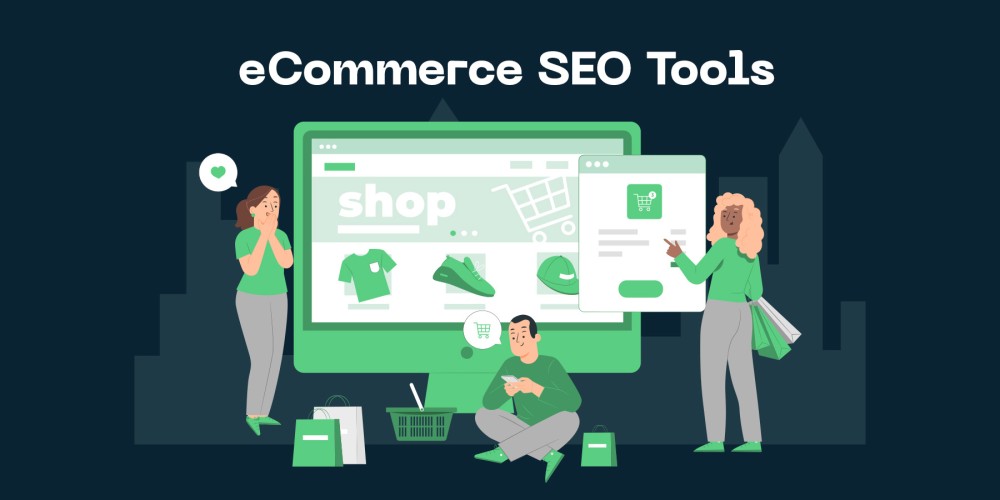
- Google Search Console
• Google Keyword Planner
• Ahrefs / Semrush
• Screaming Frog
• Shopify’s built-in SEO features
• PageSpeed Insights
• Moz Keyword Explorer
These tools help you track performance, spot issues, and find opportunities.
Ecommerce SEO FAQ
Do I need SEO if I already run ads?
Yes. While SEO and ads are different strategies, they work well together. Ads are temporary, while SEO is a permanent visibility builder.
How long does ecommerce SEO take?
Usually it takes 3 to 6 months to see a visible growth, however, it depends highly on the competition and site condition.
Should I blog for ecommerce SEO?
Definitely, if you are looking to get organic traffic in the long run. Informational content is one of the main engines of growth.
What is the most important SEO task for ecommerce?
Optimization of product pages and categories/collections pages. These pages generate the highest revenue impact.
Is technical SEO hard?
Yes, it may be difficult, but many platforms, like Shopify, do a lot of things automatically.
On-Page SEO for Ecommerce
After thorough keyword research and thoughtful planning of your website structure, the subsequent vital step is on-page SEO. On-page SEO signifies the enhancement of individual pages on your web store, aiming at impressing search engines and users with better ranks and relevant traffic. In the case of ecommerce stores, this mainly means the optimization of product pages and category/collection pages.
Product Pages
The product pages are the core of your online store. It is the place where the conversions occur, thus, it is essential to optimize the pages both for search engines and users. The main points to take into consideration are:
1. Title Tags and Meta Descriptions
Making use of the main keyword, naturally in the product title is a must.
Turn your meta description into an irresistible offer—mention good points, offers, or free shipping.
To attract more clicks and better the position of your product page in the SERP, use modifiers such as ‘Best,’ “Buy,” “Free Shipping,” or “Discount.”
2. Product Descriptions
Each product should have its own unique, detailed description. Don’t just copy paste the manufacturer’s text.
Along with target keywords, use also their synonyms and related words in the text.
Explain the benefits, materials, dimensions, usage, and unique features.
Though it is better to use bullet points sometimes for quick reading, still try to keep your text in a readable, engaging format.
3. Image Optimization
Use the best camera-ready images and the alt text for them must be descriptive and contain the most relevant keywords.
Resize pictures to speed up your website but do not lessen the quality of them.
Think about the various parts, 360-degree views or lifestyle pictures to get users involved.
4. Internal Linking
Links from your product pages to the relevant category pages or other similar products are a great idea.
Use descriptive anchor text which naturally includes your keywords.
Do not overload your pages with links. One to three links per section will be enough.
Category/Collection Pages
The main goal of category pages is to help users explore your store and your site’s SEO. By optimizing these pages, you ensure that search engines can understand your product hierarchy and thus target the appropriate keywords. The main points to take care of are:
1. Descriptive Titles and Meta Tags
Make sure to use the main category keyword in both your page title and the meta description.
Give the benefits and the variety of the products in the description.
2. Content on Category Pages
The main point of the introduction is to tell the reader what the category is and what products he can expect.
Use appropriate secondary keywords to improve search engine presence.
Work on adding FAQ or small guides to keep users engaged longer.
3. Structured Data Markup
Adopt schema markup for products and categories to give detailed information to search engines about your content.
Use Breadcrumbs to enhance user experience and give more information to search engines.
Technical On-Page Tips
- URL Structure: Be sure the URL is short, informative, and has keywords. Example: yourstore.com/womens-running-shoes
- Canonical Tags: In order to avoid the problem of duplicate content, make sure that you use canonical tags, particularly if there are several URLs that direct to the same product.
- Mobile Optimization: Your pages must be mobile-friendly with a responsive layout and quick loading time.
Site Architecture for Ecommerce
An ecommerce site structure reflects the usability (UX) and ranking of the site in the SERPs. A properly set up site lets visitors easily navigate your store, find products quickly, and also allows search engine bots to index your pages with less effort.
Reasons Why Site Structure Is Essential
Navigation Made Better: Having a definite and clear hierarchy enables the consumers to locate the products without having to experience any kind of frustration, which in turn leads to lower bounce rates.
SEO Benefits: It is easier for search engines to locate and index pages that are well structured logically and are in a site which is easy to navigate. Correct site architecture gives the opportunity for link authority to be passed through your entire site.
Additionally, your neat layout will allow infinite growth of your store with the addition of new products or categories without worrying about losing your SEO.
Ways of Organizing Your Pages
Turning a great ecommerce site into a structurally strong one involves the following steps:
Principal Navigation: Through the main menu it is possible to connect the most essential collections or categories of your website. Thus link authority transfers from your homepage to the pages that are of the greatest value to users.
Parent-Child Relationships: One product should be linked with one parent category or collection. Subcategories can facilitate further organizing of products both for the user and for better SEO.
Breadcrumbs: Breadcrumbs are helpful both for users and for search engines in understanding where a certain page is located in the site structure. For instance:
Home > Women > Shoes > Running Shoes
By improving internal linking, breadcrumbs give people the chance to access products with fewer clicks.
Page Indexing Strategy
The pages that are the main focus of SEO on your ecommerce site are not necessarily the same pages that should be indexed. It is best to index pages that:
- Are full of unique and useful content.
- Are optimized for SEO with the use of long-tail keywords that have a high search volume.
- Display the products or categories for which the customers are looking.
In the case of pages having thin content or duplicated problems, it is better to apply:
Noindex Tags: These ensure that pages with little value are not indexed by the search engines.
Canonical Tags: These point the search engines to the main version of a page where all ranking factors are to be combined.
Internal Linking
Internal links are the ones that move the authority from pages with a high rank (e.g., homepage or major categories) to other pages within your website. Tips for internal linking that work:
- Link naturally and contextually in product descriptions, category pages, and blog content.
- Employ keyword-rich anchor text; however, make sure it sounds normal.
- Do not indulge in over linking; put emphasis on relevance rather than on the number of links.
Technical SEO for Ecommerce
Technical SEO is the set of measures that make your website a simple target for crawlers, fast, and easy to use. In return, these factors have a positive influence on the ranking and the user experience. The majority of technical issues are not visible to the site visitors but can significantly lower your site’s visibility.
Important Places to Work On
- Site Speed Optimization
- Make image files smaller but without compromising on the quality.
- Reduce JavaScript and CSS that are responsible for slow page loading.
- Use a hosting provider optimized for ecommerce platforms like Shopify, WooCommerce, or BigCommerce.
- Mobile-Friendliness
- The design should be the same for all types of gadgets.
- Check your mobile site with Google’s Mobile-Friendly Test tool.
- Sitemap and Robots.txt
- Send a current sitemap to Google Search Console.
- With robots.txt you can decide which pages Google should not crawl.
- Secure Website (HTTPS)
- Without SSL certificate, an ecommerce site simply cannot exist.
- HTTPS makes the store more visible in the rankings and creates trust in the buyer during the checkout process.
- Structured Data (Schema Markup)
- Insert product, review, and breadcrumb schema for a better look of your site in the search results.
- Rich snippets may enhance CTR by showing prices, ratings, or availability.
- Fix Crawl Errors
- Keep tabs on your website through audits for 404 errors, broken links, and redirects.
- Make sure each essential page can be accessed within three clicks from the homepage.
- Optimize Product Feeds
- Make sure the product feeds meet the requirements for Google Merchant Center.
- Make product titles, descriptions, prices, and availability accurate and consistent.
Content Strategy for Ecommerce
Content is the most powerful tool Online Store SEO can be. Along with the optimizations of product and category pages, making content that educates turn your store into a place where visitors get attracted, educated, and converted. This approach leads the brand to become more trusted, which is, in effect, great for the sales, and also the brand gets spread up through the organic traffic volume.
Types of Ecommerce Content
1. Blog Posts
Focus on solving customer problems and answering their questions.
Use relevant keywords in a natural manner to get ranked for searches that are not directly related to product pages.
Explanation: For instance, if a company is selling running shoes it can write a blog post “Best Running Shoes for Flat Feet” and link its products.
2. How-to Guides and Tutorials
Provide simple and clear instructions that demonstrate the use of your products.
Make your content more attractive with the help of the images, videos, or illustrations.
For instance, a houseware store may create the guide “How to Choose the Perfect Blender for Smoothies” to lure potential customers.
3. FAQs and Help Center Articles
By only providing the answers to the questions that customers ask most will, significantly, lessen the anxiety that customers experience when deciding to make a purchase.
Besides that, pages with proper keywords and links inside may contribute to SEO and product connection.
Example: “How to Measure Your Ring Size at Home” for a jewelry store.
4. Product Comparison and Buying Guides
If you do either one, comparing your products or the different types of products, then you will be helping the buyer to make the decision faster.
Certainly, you can employ comparison charts, pros/cons, and linking to the relevant product pages to support your content.
Content Optimization Tips
Put the primary and secondary keywords in a normal way into the titles and the regular text.
By using internal links one can move easily between blogs, product pages, and categories.
Put the call-to-action button on your site, which is a link leading visitors to product pages.
Keep on refreshing your content so that your site will always be new and ranking high.
Benefits of Content for Ecommerce SEO
One of the most important benefits is that content helps to establish authority and trust among the intended audience.
There is no need to exert extra effort for content to attract backlinks from other sites.
In addition, content allows visitors to come back to your site at their discretion, thereby, site metrics such as the average time per visit increase, which is considered as a quality indicator by search engines.
Another benefit is that content supports ranking for long-tail keywords which, in most cases, lead to highly-targeted traffic.
Link Building for Ecommerce
Still, backlinks remain one of the major factors that influence the positions in Google’s ranking algorithm. Besides authority, the creation of top-notch links will grant ecommerce stores with a great visibility in a non-paid way.
Effective Link-Building Strategies
1. Guest Posting
Write articles for blogs or websites of the related industries.
Use back links that refer to your product pages or informational content.
Focus on those sites that are attractive to the same audience so that you can direct the targeted visitors to your site.
2. Press Mentions
Connect with journalists or bloggers who write about your kind of business.
Help a B2B Writer is one of the tools that can be used to discover daily opportunities for getting your name in the press.
Have the links in the mentions that go back to your site.
3. Partnerships and Influencers
Make a relationship with the brands that are not your competitors but can either complement you or/and with the social media influencers.
On the one hand, you could work together to create content, guides, or campaigns that have backlinks to your store. On the other hand, these …
4. Resource Pages and Directories
Sign up your store or blog in the niche-specific directories or on the resource pages’ lists.
Be sure that the listings you are in are of good quality and that they are appropriate for your products.
5. Linkable Assets
Create such things as informative visuals, do-it-yourself guides, or detailed reports that other people can effortlessly and naturally link to.
Let the world know about these assets via social media and outreach campaigns.
Link-Building Best Practices
Put more emphasis on the quality of links rather than the quantity of the links: few links from authoritative sites will give you more value and ranking power.
Refrain from black-hat tactics such as buying links or being involved in link farms because which may harm your Online Store SEO and lead to penalties.
Periodically check your backlinks to ensure that they are still working and relevant keeping your link profile healthy and beneficial for your Online Store SEO.
Best Ecommerce SEO Tools and Resources
Various tools are required to perform proper Online Store SEO optimization of your online store. The toolkit in mention allows for keyword research, technical audits, competitor analysis, backlink monitoring, and content optimization. These will not only be time-saving tools but will also give you the actionable insights that you need to improve your rankings.
1. Google Analytics
Purpose: To record and monitor web traffic.
Main Features:
- Measures the behavior of visitors, sources of traffic and conversion rates.
- Allows for the identification of top and bottom pages.
- Also, you are empowered to set up e-commerce tracking and assess the performance of products and categories.
E-commerce recommendations:
- Connect your Shopify, WooCommerce, or other e-commerce platform with Google Analytics.
- Through goal tracking, monitor events such as purchases, newsletter sign-ups, or any other conversion that needs to be tracked.
2. Google Search Console
Purpose: This informs about how Google crawls and indexes your website.
Main Features:
- Identifies the words that bring traffic to your site.
- Identifies various types of errors related to indexing, broken links, and crawling issues.
- Just hit the keyword tab for CTR, impressions, and average position displaying.
Ecommerce Tips:
- Let Google know about your sitemap so that it can index all your products and pages.
- Watch coverage reports and fix errors so that you continue to be visible.
3. Ahrefs
Purpose: An all-in-one SEO tool for keyword research, backlink analysis, and competitor insights.
Main Features:
- Analyze the competitors’ ranking keywords and backlink profiles.
- Find the keywords that have a lot of searches with less competition.
- Monitor your keyword rankings regularly, as well as your overall website health.
- That’s great for you, using Site Explorer to see details of where the competitors are getting their links.
- Comparing your product pages against competitors allows you to see which content areas are missing in your account.
4. SEMrush
Purpose: A unified platform for all SEO and marketing requirements.
Main Features:
- Keyword research and rank tracking.
- Website audit for finding technical SEO problems.
- Competitor Analysis for traffic sources, keywords, and backlinks.
- You can track seasonal keyword trends to monitor the demand of products whose popularity changes with the seasons.
- Make sure to use the SEO audit tool in fixing errors present in your content, such as duplicate and missing meta tags.
5. Technical SEO & Optimization Tools
Examples include: Screaming Frog, GTmetrix, PageSpeed Insights.
Purpose: They aim at locating and resolving the problems of the website that are causing a drop in ranks.
Main application of the tools:
- Helps in finding broken links, duplicate content, as well as outdated or missing metadata.
- Permits the evaluation of web performance regarding its speed and mobile-friendliness.
- Optimizing images and providing structure to data.
6. Ecommerce-Specific Tools
- Avada SEO & Image Optimizer:
It gets the images and the web ready for fast loading and good user experience.
Offers technical SEO features, including schema markup support. - SEOAnt:
Useful, free tool for SEO check-ups, fixing broken links, and image optimization.
AI-powered features for meta and alt text generation. - Shopify Magic:
If you already use Shopify’s AI-powered tool for creating optimized product descriptions and content, then this is a great way to keep your Online Store SEO-friendly copywriting process going without taking up too much of your time.
7. Competitor & Keyword Research Tools
Purpose: To know the opponent’s plan and to find out the unexploited keyword opportunities.
Tools:
- Moz: focuses on keyword research, rank tracking, and link analysis.
- Ubersuggest: Provides keyword suggestions and SEO analysis for free.
- AnswerThePublic: It helps you find questions that your audience might be looking for.
Proper Usage of Tools
Use tools in combination for the best outcome; for example, you might do keyword research with Ahrefs, monitor traffic using Google Analytics, and do your technical SEO using Screaming Frog.
Always seek ways to make your site better by scanning it regularly. Identify the competitor insights to find what content you lack and sources of possible backlinks .
Ecommerce SEO FAQs
Where to start with SEO writing? That question pops into the head of each e-commerce business pretty often. We’re giving answers to those questions raised most frequently by e-commerce businesses in the field of Online Store SEO writing:
1. What is ecommerce SEO?
SEO for e-commerce refers to a search engine-friendly strategy for an online store, which will be more suitable not only for Google but for all other search engines, thus making it easier for clients to find you and your products by entering the necessary queries. The main technique of the store is to employ keywords, to do on-page via the API to modify titles, to make content correspond with the keywords, to organize the site tree, technical SEO, to create content for products and categories, etc.
2. How long does it take to see results from ecommerce SEO?
Yes, SEO is somewhat notorious for its long waiting times, but usually, the time frame for SEO results is between 3 and 6 months. Though at the same time, a business operating in a highly competitive market might only be able to see its SEO results after a very extended period, while a product company in a less competitive niche can realize its SEO progress quicker.
3. How do I find the right keywords for my products?
First of all, you must decide to use both commercial and informational types of keywords in your research.
Create your keyword list by utilizing the information that comes from tools like Google Keyword Planner, Ahrefs, and SEMrush.
Take the best of the seller features emphasized on the product page, and then determine features where the competitors do not exist.
Long tail keywords will, in most cases, have a one-to-one conversion ratio, so it is better to focus on those.
4. Should I optimize every product page?
Definitely, it is something that needs to be thought over, although just impracticable. Focus your research on products with the greatest sales potential and on the pages that are already ranked low on the first page of search engine results. Products that are either seasonal or trending can be a great source of new topics.
5. What is the difference between ecommerce SEO and regular SEO?
Typically, the main difference lies in the different focuses of the two. Regular SEO mainly focuses on enhancing the visibility of informative content from websites, blogs, or services which require it. Whereas Online Store SEO is a customer acquisition tool that works mainly with product pages, category pages, and transactional search queries to generate sales.
6. Do I need technical SEO for ecommerce?
Indeed!
Without the proper care and attention, technical SEO issues may really become a hindrance for search engines that try to crawl, index, or even understand your site. Therefore, making sure that all technical SEO elements are in place and working smoothly is a must. Some of those are:
- Fast loading time
- Good user experience on mobile devices or mobile responsiveness
- Correct use of canonical tags
- Implementation of Schema and breadcrumbs
7. Is link building necessary for ecommerce SEO?
It is absolutely essential for you to undertake this. The inbound links are what bring about your website’s authority and trust from the perspective of Google and other search engines; consequently, your website ranks higher. A small number of good quality, relevant links should be considered as the foundation of link-building efforts rather than a large quantity.
8. How often should I update my ecommerce SEO strategy?
Search engine algorithms are never static; they are changing constantly. Besides not forgetting to review your plan at the beginning of each quarter, you should also continuously track your performance and be in a position to make necessary changes in terms of new keywords, new products, and content creation opportunities.
Frequent SEO Errors in E-commerce
Even the most competent business owner will have mistakes in his or her past that will make a negative impact on the site’s E-commerce SEO. Here are some common mistakes that you don’t want to find yourself making:
1. Duplicate Content
Simply by using product descriptions of items from the manufacturer that are duplicates, or copying your competitors listing may have a negative impact on your ranking on Google.
You will definitely want to utilize/described/write unique product descriptions that you can describe features to but ultimately share the benefits.
2. Ignoring Long Tail Keywords
Most E-commerce SEO businesses will tend to promote broad types of terms, while ignoring long-tail keywords. The long-tail keywords will bring your specific buyers, and usually some less competition.
3. Poor Site Structure
A poor user experience through difficult navigation or product pages that are way too deep, will damage your E-commerce SEO authority, decreasing authority.
Both the search engine and users will only find your content through tiered categories hierarchy, breadcrumbs, and internal linking.
5. Not Optimizing for Mobile
Slow-loading pages are the most important reasons for site visitors who rarely live on a website and are the sites that bring about the autumn of the web page’s ratings.
It is also feasible to do such things as converting the pictures’ sizes, imposing a caching method, and optimizing scripts to get a quicker loading velocity.
Mobile-first indexing is the approach that Google especially makes use of to recollect the cellular versions of a site.
Find out if your internet site is designed to be responsive and make sure that the cell version is loading speedy, which is essential for E-commerce SEO.
6. Neglecting On-Page Search Engine Optimization
The non-optimization of the name tags, meta descriptions, alt text, and headings decreases the probabilities of your internet site going to the pinnacle of the rankings, negatively impacting E-commerce SEO.
7. Ignoring Analytics and Tracking
If you are not actually monitoring traffic, conversions, and scores, you will not be capable of recognise what’s running and what isn’t always.
It is a good exercise to regularly examine your website’s performance thru Google Analytics and Search Console to maintain strong E-commerce SEO.
Pro Tip: Frequent content updates along with audits will keep your Online Store SEO strategy always effective and up to date. Minor changes such as upgrading product descriptions or interspersing FAQs can have a great impact on the ranking.
Ecommerce SEO Checklist
Understanding how steps lead to each other will guide your work of Online Store SEO implementation in the right way. Consult this checklist as a step-by-step guide of how you can optimize your online store.
1. Keyword Research
To begin with, both commercial and informational keyword research should bedone. Find out long-tail keywords that express a strong intent and at the same time are less competitive. Next, use the tools like Ahrefs, SEMrush or Moz to find the keywords that your competitors are targeting. In addition, keywords should be productively put on product pages, category pages, and blog posts.
Action Step: Develop primary and secondary keyword spreadsheets for each page.
2. On Page SEO:
Use the main keywords to highlight the features of the products in a unique and detailed manner. If you put offers into your title tags and meta descriptions, they will definitely become more attractive. Furthermore, if you add image descriptions with relevant keywords, it will be of great help to SEO. In case you are a brand using multiple products under the same category, link the products together.
Category/Collection Pages:
Main keywords should be used in titles as well as in meta descriptions. Besides that, you may use a few lines of introductory content to describe the category. Use breadcrumb and structured data so that it is easy for machines to comprehend your site.
Action Step: Review your current pages and make changes to them as per this checklist.
3. Site Architecture
The user should be able to navigate without any difficulty and the navigation should follow the hierarchy. The main menu should have links to the most important collections. In addition, users can be asked if they can still get to any page on the website within three clicks from the homepage. Moreover, you are supposed to use canonical tags to combine the SEO value of your duplicate pages and make the redirect to the main page.
Action Step: Make a site map of your website and if it is necessary, change your menus.
4. Technical SEO
Your website can be made fast if you allow image compression and caching. Also, be sure that your site is built for mobile devices like smartphones and tablets. An XML sitemap should be delivered via Google Search Console. Fix the crawl errors that a search engine indicates, and interact with your dead links and duplicate content by removing them. Action Step: Perform a complete technical SEO audit with the help of the Screaming Frog and GTmetrix instruments.
5. Google Merchant Centre
First of all, ensure that your website is verified as yours in the Google Merchant Center. Make it easy for Google to read the product details by keeping titles, descriptions, prices, and availability consistent. Always check the status of the feed and if there are any errors, deal with them immediately.
Action Step: Make your feed updates automatic if it is possible, thus the data are always up to date.
6. Content Strategy
Make content that not only provides the information to users but also solves their problems. Use the benefits of blogging, FAQs, and guides to support your product pages. In addition, content should contain primary and secondary keywords in a natural way.
Action Step: An editorial calendar with publishing dates and target keywords will help you manage your time efficiently.
7. Link Building
Links that come from high-authority and relevant sites will be a great asset for you. Guest posting, getting press mentions, and building partnerships are the activities you can use to accomplish this. To get the maximum SEO effect, focuson the quality rather than the quantity.
Action Step: Identify 10-20 sites where you can get backlinks and write a draft of your outreach email.
8. Analytics and Monitoring
Google Analytics gives you real-time access to user behavior, conversions, and revenue. Be on the lookout for changes in keyword rankings on a regular basis. Through Search Console or auditing tools, keep a watch on your SEO technical Metrics.
Action Step: Prepare monthly SEO performance reports and adjust your strategy based on the insights.
Success Pro Tips Ongoing
- Continuously replenish product descriptions, content, and category pages.
- Besides new keyword trends, do not forget to peer at the competitors as well.
- Experiment with meta descriptions, titles, and CTAs to find out which leads to more
- clicks. Get prepared for voice queries and AI-powered requests as the searchevolves.
This checklist guarantees that your Online Store SEO is thorough, doable, and of long duration. If carried out regularly, it will raise your visibility, bring you more targeted traffic, and increase your conversion rates over time.
Conclusion: Mastering Ecommerce SEO in 2025
The ecommerce SEO of an e-commerce site should not be regarded as a one-off action to be ticked off and then forgotten, rather it is a perpetual plan that continues to draw traffic, build authority, and boost sales. Consequently, your dream online store will have the ability to rank consistently higher in search engine results if you intertwine detailed keyword research with on-page optimization, technical SEO, content strategy, and link building.
Key Takeaways
Keywords Are the Foundation
The main thing is to discover high-intent, long-tail keywords and then link them with product, category, and content pages in order to attract the most appropriate audience.
On-Page Optimization Drives Conversions
The product pages, category pages, images, and internal links that are optimized will not only improve user experience but also search rankings.
Site Structure and Technical SEO Matter
The website that has a transparent structure making it easily crawlable by search engines, is quick to load, mobile-friendly, and is properly indexed is a store that performs well in Online Store SEO.
Content Builds Authority
Topics, FAQs, and guides presented through blogs do not only help customers to make the right decisions but also improve ecommerce SEO ranking and brand trust.
Link Building Boosts Trust and Visibility
The links to your website from reliable and pertinent sources not only raise the authority of your site but also enhance your site’s ranking in search engines.
Measure, Monitor, and Iterate
Ecommerce SEO is a dynamic environment. You need to continuously evaluate results, conduct the activities of competitors, and tweak your strategies if you want to be at the top of the search engine results.
Your Action Plan
Start by doing less work and later you will be able to do more:
- The first thing to do is to make the top-selling products perfect from an SEO perspective.
- Keep on publishing targeted content regularly.
- Do your technical SEO audit every quarter.
- Quite gradually start to get good backlinks.
Doing these things will make your ecommerce SEO store capable of non-paid visitors in a proper way, getting the attention of the customers, and increasing the number of conversions not only in 2025 but also in the following years.

Neetu Wadhwa is the Director of Bloom Agency, a Mumbai-based full-service digital marketing and web development company. With a strong focus on performance, innovation, and strategy, she leads the agency in delivering SEO, web design, and growth marketing solutions that drive measurable business outcomes.





Rahul M.
B2B Service Provider