
In case you have had no idea till now, digital social media marketing services are core business requirements regardless of whether the business is big or small. A host of once-personal-uses-only networking-applications like Facebook, Instagram, LinkedIn, and TikTok have morphed into adept marketing tools that businesses utilize to get in touch with potential customers, construct their brand persona and create measurable results. Indeed, the presence of a business on social media is a marketing weapon which can achieve all the listed-in-effects and even more with ease. In fact, this guide is intended to be comprehensive, covering 2025 strategies, tips, insights, and tools.
What is Social Media Marketing?
:max_bytes(150000):strip_icc()/SMM_Final_4188900-b14da77d5eee49019768a7b839a19efb.jpg)
Social media marketing (SMM) denotes the use of social networks to publicize a business, its products, or services. SMM differs from traditional methods in that it takes advantage of interaction and highly visual nature of social platforms to establish true engagement with audiences. The most significant mistake that many people still make is to think that one can advertisethrough social media by randomly posting content without engaging, setting goals, or having a strategy.
Some main activities entailed in social media marketing services are:
- Optimalizing your profile: making sure your business profiles are not only complete but also branded and SEO-friendly.
- Content creation and publishing: the idea of content can now include photos, videos, stories, or live sessions and practically anything relevant and trendy.
- Community management: Following through, assisting, and replying to the questions and comments of your customers.
- Social media advertising: Paying for and then broadcasting ads to target specific segments based on fans’ interests, demographics, and habits.
- Analytics and insights: Keeping a close eye on the key metrics that are expected to help in understanding and improving performance and ultimately ROI.
Social Media Marketing is a living creature that constantly changes to new trends, algorithms, and customer behaviors. You can only cope with that if you are always on top of the latest news and flexible enough to adjust.
Benefits of Social Media Marketing

Social media marketing has a lot of advantages and these advantages very directly lead to the growth of the business as well as to the visibility of the business.
- Humanizes Your Brand: Social media provides the possibility for your company to have its own personality that the people can relate to. Posts, interactions, and stories contribute to the humanization of your brand, which makes it not only approachable but also a brand that people can put their trust in. Customers become more involved with brands that are real rather than those that don’t have a face.
- Increases Website Traffic: Where Instagram and LinkedIn are the sources of referral, the users are taken to blogs, landing pages, or product pages. The links that are in posts, stories, or bios are the closest ways of website visits getting higher. Besides that, social signals which are a bit indirect still can have some effect on SEO, thus, contributing to that search ranking gets higher.
- Generates Leads and Sales: Instagram Shops, Facebook Marketplace, and LinkedIn lead forms are features through which businesses can make the followers become customers and all this can be done directly on social media platforms. The conversion process becomes easy and fast if the usage of call-to-action buttons, booking systems, and messaging options is done.
- Enhances Brand Awareness: The continuous posting of the brand’s eye-catching and relevant content is one of the ways through which the brand can stay top-of-mind. The use of social media gives you the opportunity to communicate with your audience visually not only the brand story but also the brand values which will be attractive to potential customers and at the same time, you will be creating loyal customers.
- Builds Strong Relationships: Communicating directly through comments, direct messages, or interactive polls, where businesses get feedback, solve the issues that are raised, and build relationships, is a way of connecting with the audience deeply. Such relationships build the trust and loyalty, and thus, customers are converted into advocates.
Pro Tip: It is a fact that businesses which are very active in their communication with their followers will see not only their followers sticking with them but also getting new followers through word-of-mouth referrals.
Social Media Marketing Statistics
Numbers are a loudspeaker of the reasons why Social Media Marketing will be a must-have in 2025:
- The normal adult is on average for 2.5 hours a day on social media.
- After a positive social media interaction more than 70% of consumers recommend the brand to others.
- Over 80% of Instagram users state that the platform influences their purchase decisions.
- On average, through Facebook, users are exposed to almost a dozen adverts every month which leads to the platform’s ad extension.
- Five out of the six business decisions on LinkedIn are made by the professionals who have thus made the platform very important for business-to-business marketing.
- TikTok users prominently focus their attention on the app (46% engagement without distraction), thus, it’s an excellent tool for brand storytelling.
These figures are proof that companies that are not into social media marketing are actually missing out on a big portion of the audience.
Creating a Social Media Marketing Strategy
The point of a strong strategy is the supporting structure for the successful social media marketing.Stuff
It’s very funny how each company’s social media strategy is different,presence of winning social media marketing strategies will always share these vital constituents:
1. Know Your Audience:
Comprehend demographics, likes, platforms, and behavior in the web. This understanding allows you to produce content that connects with your target customers.
2. Define Your Brand Identity:
Comprise the content of a brand voice, tone, and style. Regardless of the nature of the brand be it entertaining, professional, or uplifting, the essential thing is to keep the character the same throughout all the platforms.
3. Develop a Content Strategy:
Rely on various content types like how-to guides, consumer-generated content, behind-the-scenes posts, or streaming sessions to keep up a relationship with the audience. Do quality and timing to ensure continued engagement.
4. Leverage Analytics:
Measure the data through metrics like the number of people reached, the number of people who interacted, the number of clicks, and the number of conversions. The sources of the data, for example, Facebook Insights, Instagram Analytics, and LinkedIn Analytics, allow you to fine-tune your game.
5. Regular Engagement:
Be consistent with posting, look after messages quickly, join in the current topics, and maintain a high activity level to profile accounts. Social media is dependent on interaction—nonactive posting will not work.
6. Inbound Marketing Approach:
The emphasis should be on offering the customers something worthwhile rather than pushing the products. In this era of information, entertainment, or inspiration, the content will attract consumers and thus the followers will become your brand’s advocates.
Example: A small bakery sharing daily baking tips, recipes, and customer stories is likely to see more engagement than simply posting promotional offers.
Creating Your Social Media Marketing Plan
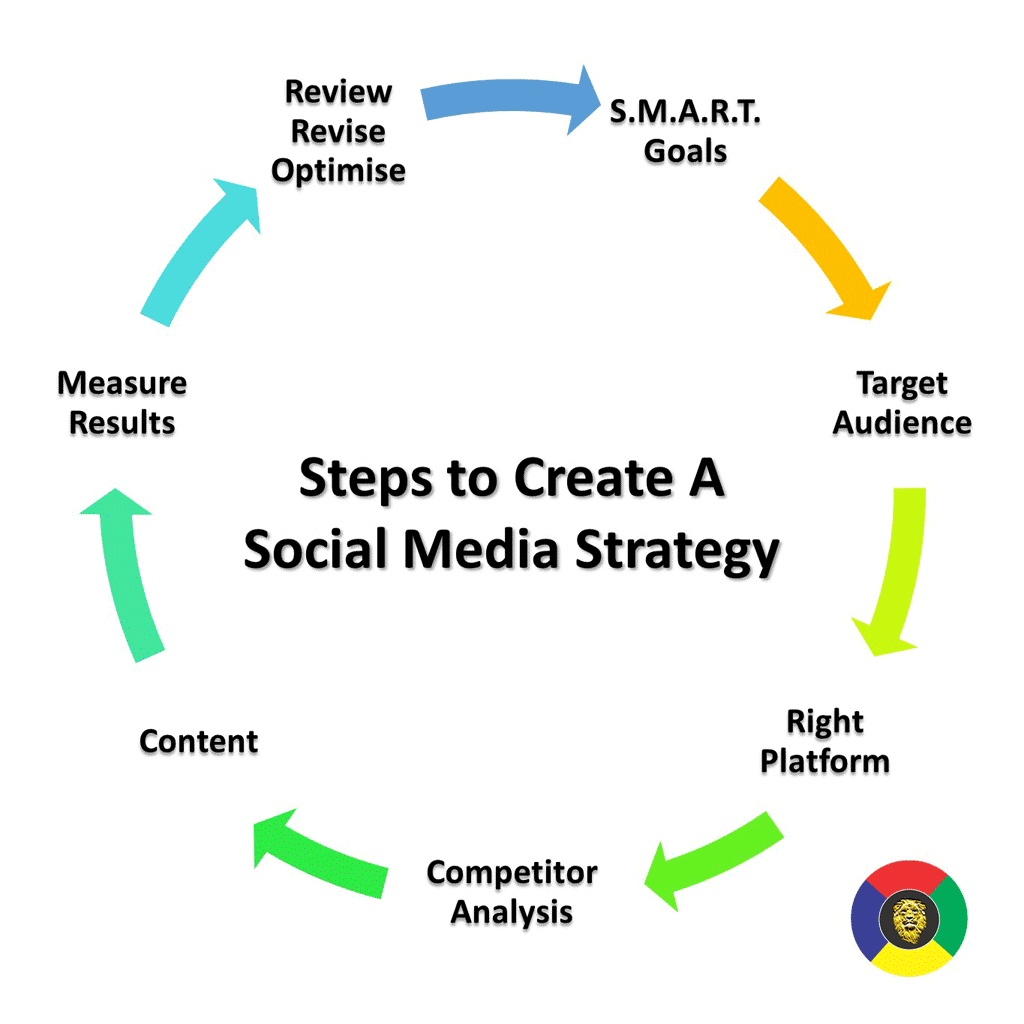
A social media marketing plan turns your strategy into actionable steps. It organizes your efforts, ensures consistency, and provides measurable milestones.
Steps to Create Your Plan:
1. Select Your Platforms: Focus on platforms where your target audience is most active. Start with one or two to maintain quality, then expand gradually. Popular choices for 2025 include Facebook, Instagram, LinkedIn, TikTok, YouTube, Twitter, and Snapchat.
2. Set SMART Goals: Goals should be Specific, Measurable, Achievable, Relevant, and Time-bound. Examples include:
- Post at least 4 times per week on Instagram for 3 months.
- Increase LinkedIn followers by 20% in 6 months.
- Generate 50 leads per month through Facebook Ads.
3. Develop a Content Calendar: Plan your posts, visuals, captions, hashtags, and posting times. A well-organized calendar helps maintain regular posting and ensures varied content, such as tips, behind-the-scenes posts, polls, or live sessions.
4. Monitor and Adjust: Track engagement rates, reach, clicks, and conversions. Use insights to refine content types, posting times, and messaging. Experiment with trends while staying aligned with your brand identity.
Tip: Using tools like Hootsuite, Buffer, or Sprout Social can streamline scheduling, analytics, and monitoring.
Social Media Marketing Tips

1. Create Diverse Content:
Diversity remains the main factor which attracts an audience. Mix:
-
Educational content: By doing, learning the brand, tips, and tutorials.
-
Entertaining content: Memes, challenges, and reels.
-
Promotional content: Offers, new product launches, and discounts.
-
Interactive content: Polls, Q&A sessions, and contests.
2. Consistency is Key:
Keep your brand voice not only on one but across all platforms. A more consistent and repeated one tonal is dis-covered by the user and trust is built. To be another words, the same tonality e.g. professional, friendly or fun helps the brand to be recognized and trusted by the customer.
2. Engage Actively:
Social media is a two-way street like a street coming in two directions. Interact to comments, messages letters, and mentions. Stimulate users-generated post to share and contact with leading bloggers for reach higher engagement and gain more followers.
3. Use Content Creation Tools:
Such tools as Canva, Adobe Express, or Freepik helps to create professional visuals in a short time. Branded templates are a kind of post that helps to share visually in a uniform way.
4. Repurpose and Recycle Content:
Make the most of content pieces by:
- Turning a blog post into a carousel on Instagram or LinkedIn.
- Sharing TikTok videos as Instagram Reels or YouTube Shorts.
- Reposting top-performing content to reach new followers.
5. Curate Your Feed:
Keep an eye on your competitors, influencers, and industry leaders to keep yourself updated with the latest trends, identify content gaps, and find the inspiration.
6. Measure Success with Analytics:
Analytics give information to the business about its successful or unsuccessful activities. They should keep an eye on:
- Engagement rate (likes, comments, shares)
- Reach and impressions
- Click-through and conversion rates
- Follower growth
Make good and effective use of these information to modify tactics to have a greater influence.
7. Consider Paid Social:
Paid campaigns help to broaden brand awareness with less time and efforts and pinpoint with a great precision a target demographic. Advertisers on Facebook, Instagram, LinkedIn, and TikTok have the possibility to focus on users on the basis of age, location, interests, and behaviors.
The Best Social Media Platforms for Business

Understanding each platform’s strengths helps you tailor your content:
-
Facebook
-
Instagram
-
LinkedIn
-
Twitter/X
-
YouTube
-
TikTok
-
Snapchat
Social Media Marketing Courses
Keeping oneself updated is very much required in the field of social media which is changing at a rapid pace. A few of the popular courses are:
- LOCALiQ Social Media Marketing Lab
- WordStream Social Ads 101
- Facebook Ads 101
These courses present a variety of methods that can be implemented to achieve success in organic as well as paid social media marketing.
Social Media Marketing Services
A social media manager’s services are widely used by many companies to effectively handle their social media:
- Management Tools
- Marketing Agencies
- Digital Marketing Agencies
- Hybrid Services
Spending on services can be a wonderful means of achieving the scaling of your business.
Start Prioritizing Your Social Media Marketing Strategy
Social media is not just a tool for marketing your business; it is an area where you can demonstrate your brand’s character, principles, and knowledge. The main point is: instead of pitching, connecting is the way to go.
Work on giving value, relationship building, and real engagement with your audience. When users become the carriers of your message through shares and brand advocacy, your influence and trustworthiness increase automatically, thus, leading you to both measurable business outcomes and intangible assets like trust and loyalty.







Rahul M.
B2B Service Provider