
Search engines somewhat resemble cosmic librarians.They move through literally billions of web pages, sorting, indexing, and ranking them in a way that is based on the signals which humans are unable to see but can feel. One of those signals, which is talked about all over the world but is only occasionally understood, is Domain Authority. It is like a recognition badge that shows how much a website looks to be reliable and influential from the outside.
Almost all companies that want to increase their visibility through SEO hire SEO professionals to improve their positions in the rankings of the search engines. However, domain authority has become the measure that is quietly affecting almost every other SEO result.
So, owners, marketers, bloggers – everybody who is part of the digital ecosystem – tries to raise this score. At the same time, it is not a metric used by Google, DA is actually a very good predictor of ranking strength. You’re about to see why.
Domain Authority – What It Really Means
Domain Authority or DA is a term frequently used to denote a score given by Moz.
It is rated on a scale that ranges from 0 to 100, with the higher scores indicating a greater potential of ranking on search engines. It can be compared to a kind of online trustworthiness score. Better DA? More perceived reputation, more backlink profile, and more chances of showing up at the top of search engine results.
In fact, Google does not directly employ DA but the metric is very much in line with the same factors that are considered by other search engines: trust signals, link quality, the authority of referring domains, and content consistency. Therefore, even though Google has never officially recognized it as a ranking factor, the correlation is still there.
Besides, starting from zero is a new site’s natural position. On the other hand, what we call “massive platforms” such as news portals, government sites, and popular brands are actually closer to the upper side of the range. The majority of “good” websites are usually found to have their DA somewhere between 40 and 60.
What Counts as a Good DA Score?
One hundred is almost never the case, except for a website which has been around for a long, receives millions of backlinks and is referred to by a lot of authoritative institutions from all over the world.
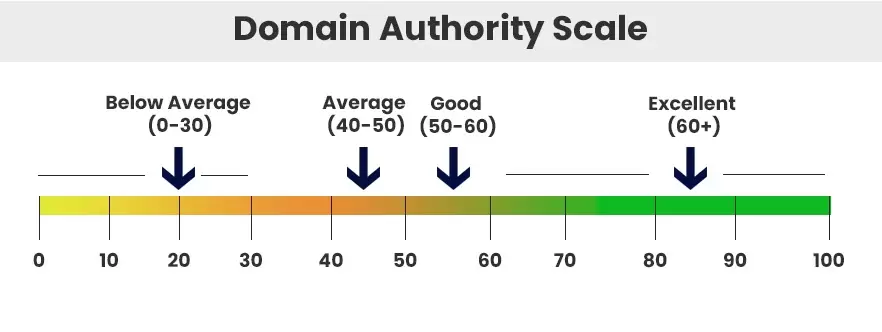
Most sites will have their DA as follows:
40–50 = Fair
50–60 = Good
60+ = Excellent
Actually, the real purpose is not to go after some magic number but to be better than your competitors. If the highest DA in your line of business is 45 then setting your goal at 50 is already giving you a competitive edge.
How DA Score is Actually Calculated
There is no clear cut way of doing the calculation by hand. These tools employ advanced APIs to assess a wide array of factors:
- Backlink quality
- Linking domains and their authority
- Spam signals
- Content performance
- Indexing strength
When you use a DA tool to check a domain, it is as if in the background the tool is scanning thousands of datapoints and weighting the site as either strong or weak based on criteria that come from search algorithms. Every tool may provide somewhat different figures, but the difference is usually negligible.
How to Increase Domain Authority: Core Strategies That Work
Raising DA is not a quick trick which can be done in just one day. It works like a tree that grows slowly—you put the right seeds in the ground, water them regularly, and the environment around your website gradually stabilizes its roots.
We lay bare the most effective ways to increase domain authority, starting from the base.
Produce Content That Is Ranking Worthy
Any strong website starts with content that is worth reading, quoting, and sharing. Search engines are very selective in their consumption. If the content provides real value to people, then the engines reward it by giving it higher positions.
Good content should perform three functions:
- It informs.
- It engages.
- It builds trust.
Informative content is one that answers the real questions of people—issues, confusions, goals, fears. When a product completely solves a need, people give it their time. Google recognizes this action as a very strong positive signal.
Engaging content keeps the reader’s interest alive. It employs simple language, rational flow, useful insights, and at times storytelling to attract and keep the reader.
Readable content does not use complicated words unnecessarily, long paragraphs, vague ideas, or a robotic tone. If people have difficulties understanding the message, they simply go away, and this drop in engagement is detrimental to the rankings.
Top-notch content is a source of backlinks without even asking for them. And backlinks, in turn, are the main support of domain authority.
Backlinks: The Currency of Authority

Backlinks are what search engines refer to as votes. However, not all votes are equal. The link from a highly trusted domain means a lot more than a link from a weak and irrelevant website.
One of your objectives is to develop a tidy and powerful backlink profile.
These are the strongest methods (Part 2 contains the information):
- Guest posting on relevant sites
- By creating backlinks from within the segments of the already existing articles
- Producing link-worthy content such as research, tools, or guides
- Developing profile and forum links naturally and in a way that is of value to others
- Regaining links that you have lost
- Domains outreach with history and link value
On the other side, one improper backlink from a spammy website will be like a knife in your authority. Quality is always the main factor here. The most common rule that is the safest: if the website that links to you is a site that you would not want to show to Google, then avoid it.
Technical SEO: The Silent Power Behind Authority
You can create excellent content, but if your website is slow, hard to navigate, or broken, the search engines will not be willing to rank it high.
Technical SEO makes sure that a site is:
- Fast
- Crawlable
- Cleanly structured
- Mobile-friendly
- Secure
- Without errors
Working on technical aspects is somewhat like working on the parts of your website that no one sees but are necessary for the whole thing to function properly. When everything is in order and the search crawlers can find what they need, they reward the website with better rankings and higher authority.
Technical SEO: Strengthening Your Website’s Core
The best and most innovative content might still be housed on a website which structurally is so confusing that it resembles a labyrinth, and hence the search engine’s trust will be withheld. Technical SEO can be defined as the invisible framework which supports the whole website user experience. By merely lifting it, the rankings don’t solely benefit—the overall user satisfaction increases as well.
Commence with the essentials:
Not only does a fast-loading site portray efficiency at once, but it also allows the user to stay satisfied. Having the propensity to be impatient, people openly refuse to wait for a page to load if it takes ages as it did in the early 2000s. The goal should be a load time under two seconds. Every extra second increases the page abandonment rate and decreases user engagement.
The ability of the site to be equally friendly towards mobile device users is of the same significance. The majority of the users perform browsing on their mobiles, and sites which assure an impeccable mobile experience are prioritized by search engines. It is an inherent requirement that pictures, buttons, menus, and text should be adjusted to any screen size without the need for intervention.
Then comes crawlability. Search engines “crawl” websites to grasp what pages they have, how they are structured, and what their purpose is. If your website is a mess of broken links and is poorly structured, then the crawlers will face the difficult task of finding and indexing your content. Better site architecture, clear navigational paths, and strategically placed internal links not only make it easier for algorithms to move from one page to another but also improve rankings.
On the other hand, technical optimization is not as attractive as creating new blog posts, but it has a tremendous effect on authority. Every little step in this direction lays down the groundwork that supports long-term growth.
On-page SEO: Understanding Its Impact
On-page SEO means the changes that are directly made on the actual pages of your website. These changes help search engines understand the content correctly. The better the understanding, the more accurate the rankings will be, and consequently, the domain authority gets lifted over time.
One of the most important things is the use of keywords in the right places. Choose the words that not only explain what the user is looking for but also use them evenly and in a natural way throughout the text. A badly written paragraph with repetitive keywords not only makes the text less readable but also leaves a bad impression on search engines.
Internal Linking and Schema Markup
The following step is internal linking. Consider the internet world as a city in digital form. Internal links are like well-planned roads that connect different areas (pages) of a city. They let customers move from one relevant page to another, and also, through them, search engines get to know your site in detail. In the future, these links extend the separate pages’ power which, in concert, leads to raising the authority of the whole domain.
Besides that, it is also a clever move to use schema markup. It provides search engines with supplementary information about your content in the same way you would give them a brief before they start work. So, whether you are publishing FAQs, recipes, product reviews, or blog articles—schema organizes content in a way that is very quick for algorithms to understand.
Consistency: The Key to On-site SEO
On-site SEO is most effective when it is done on a regular basis rather than occasionally. An optimized page is just another step towards your internet credibility.
Domain authority is different from traffic or ranking changes and is a slow, gradual process. It is not a score you can trick into rising overnight. It depends largely on the content, backlinks, and user engagement, which together form a trust chain that determines the score.
The comparison to building a good reputation in real life applies here—people cannot be forced to trust you; they must get value from you repeatedly before trust is established. The same rule applies to search engines.
Updates, fresh content, good link profiles, and positive user signals are the ways that slowly turn your website into a reliable digital resource. When search engines see this stability, your authority strengthens, and rankings reflect that progress.
Avoid Shortcuts: Long-Term DA Growth
There are some sites that may be willing to take an easy path, such as by purchasing links, spamming forums, or rapidly creating a large number of low-quality articles just for the sake of posting more. In fact, these methods can give a site a quick boost, but over time, they will lose the site’s trust. Thus, a lasting domain authority is only possible as a result of providing real value.
A DA score that is strong is not only a source of pride for the site but also a measure of the site’s influence and level of competition within the given industry.
Benefits of Strong Domain Authority
Good Search Visibility
High-authority sites are top-ranked on Google, and this is how they become most visible to people. This means that a site gets a continuous flow of visitors who arrive organically—people that are really interested in the field. The more visitors there are, the more engagement will occur, leading to higher conversions and brand awareness strengthening.
An Edge Over Competitors
Suppose you and a competitor have similar content, but your DA is higher, then it is more probable that your content will be the first to appear. Step by step, this advantage becomes bigger, thus allowing you to be the one who dominates the market just because search engines rely more on your site.
Better Partnership Opportunities
Brands are more willing to collaborate with websites whose profiles are authoritative. So, whether it is through guest posts, affiliate programs, sponsorships, or collaborations—the higher a domain authority, the more opportunities become available to you. Also, high DA allows you to be better paid if you make money from ads or affiliate links since the traffic is more likely to be interested in the products.
More Secure Long-Term Growth
Low-authority websites are hit hard by frequent changes in search algorithms whereas high-authority websites suffer minimal impacts. Therefore, strong authority can be seen as a protective layer which ensures that your site stays up even when there are changes, due to already established trust signals.
Where Professional Help Makes a Difference
The DA improvement task is like a layered puzzle that requires a multifaceted approach and is not a one-time action. While some brands do everything by themselves internally, others get professionals to handle technical SEO, backlinks, and content strategy.
The provision of dedicated SEO services by the company facilitates the whole process, thus making brand development faster without the brand having to sacrifice quality.
Why Consistency Matters More Than Quick Wins
Building domain authority is quite similar to nurturing a garden that grows slowly rather than making a quick sprint towards the finish line. Your core elements—content, backlinks, technical fixes, internal architecture—are all your garden, which needs steady watering. Consistency is like a sign for search engines that your website is not only alive but also active, trustworthy, and evolving with the needs of the users.
Websites that have slow but steady progress are more likely to be successful than those which make sudden changes of a random nature. Algorithms are quite fond of stability. That is, they look for patterns of trustworthiness.
Consistent growth, as a rule, is about:
- Publishing helpful content that meets users’ needs on a regular basis
- Updating pages so that they are not getting old or outdated
- Fixing broken links to prevent long-term problems
- Keeping a natural flow of high-quality backlinks
After a while, these actions become hallmarks of good behavior. Search engines like them because they recognize websites that are continuously adding value month after month.
Neglect is, however, a slower process, which gradually dissolves authority. When there are no updates, technical errors pile up, and content becomes outdated, domain authority gradually decreases. The digital world is like a fast train, and sites that are not on board with the changes will quickly fade into the background.
Why User Experience Impacts DA More Than People Realize
Search engines are very keen on how users react to your site. If visitors spend more time, view multiple pages, and navigate without trouble, these are strong trust signals. They indicate that your content is helpful and your website structure is user-friendly.
However, if users exit your site quickly due to slow loading pages, cramped layouts, or confusing navigation, your credibility declines even if your information is highly valuable.
Working on user experience usually involves:
- Easy, user-friendly navigation
- Readable text with appropriate spacing and neat formatting
- Fast-loading pages that reduce user friction
- Minimal pop-ups and distractions
- Clear and accurate information
These changes may not be immediately noticeable, but search engines detect them. When users feel comfortable interacting with your site, domain authority benefits from this positive momentum.
The Role of Backlinks in Long-Term Authority Growth

Backlinks are one of the most powerful signals of trust in SEO. When another website links to yours, it acts like a public endorsement. Search engines view these endorsements as proof that your content is credible and helpful.
Not all backlinks carry the same weight. Quality always matters more than quantity.
The strongest backlinks usually come from:
- Reputable blogs in your industry
- Established media platforms
- Niche resource pages
- Relevant guest posting opportunities
- Editorial mentions and digital PR features
A diverse link profile built gradually sends a strong message of authority. But shortcuts, like buying bulk low-quality links, cause more harm than good. Search engines recognize unnatural patterns and can penalize them.
Steady, genuine endorsements from trusted sites are what truly push domain authority upward.
How Maintaining Content Freshness Helps Authority
Content doesn’t lose value just because it’s old—unless you allow it to. Search engines appreciate websites that revisit older pieces and keep them relevant.
Freshness signals include:
- Adding updated statistics
- Improving examples
- Expanding outdated sections
- Refining structure and readability
This kind of maintenance strengthens both page authority and domain authority. A well-maintained content library shows that your website values accuracy and reliability.
Evergreen content, in particular, becomes a long-term asset. Well-optimized evergreen posts can:
- Attract steady backlinks
- Maintain relevance for years
- Continue generating traffic long after publication
Each evergreen piece becomes a self-sustaining tree that grows your authority over time.
When to Consider Professional Support
The SEO landscape continues to get more competitive, and managing everything—content, backlinks, technical updates, on-page optimization—takes expertise and time. This is why many brands turn to agencies that offer professional SEO services.
Experts help streamline long-term domain authority growth by providing:
- Technical audits and fixes
- Strategic content planning
- High-quality backlink building
- Personalized SEO roadmaps
- Insights into competitor weaknesses
This structured approach saves brands from months of trial and error and ensures every action contributes meaningfully to DA improvement.
For websites in competitive niches, professional guidance often makes the difference between slow progress and sustainable growth.
The Bigger Picture
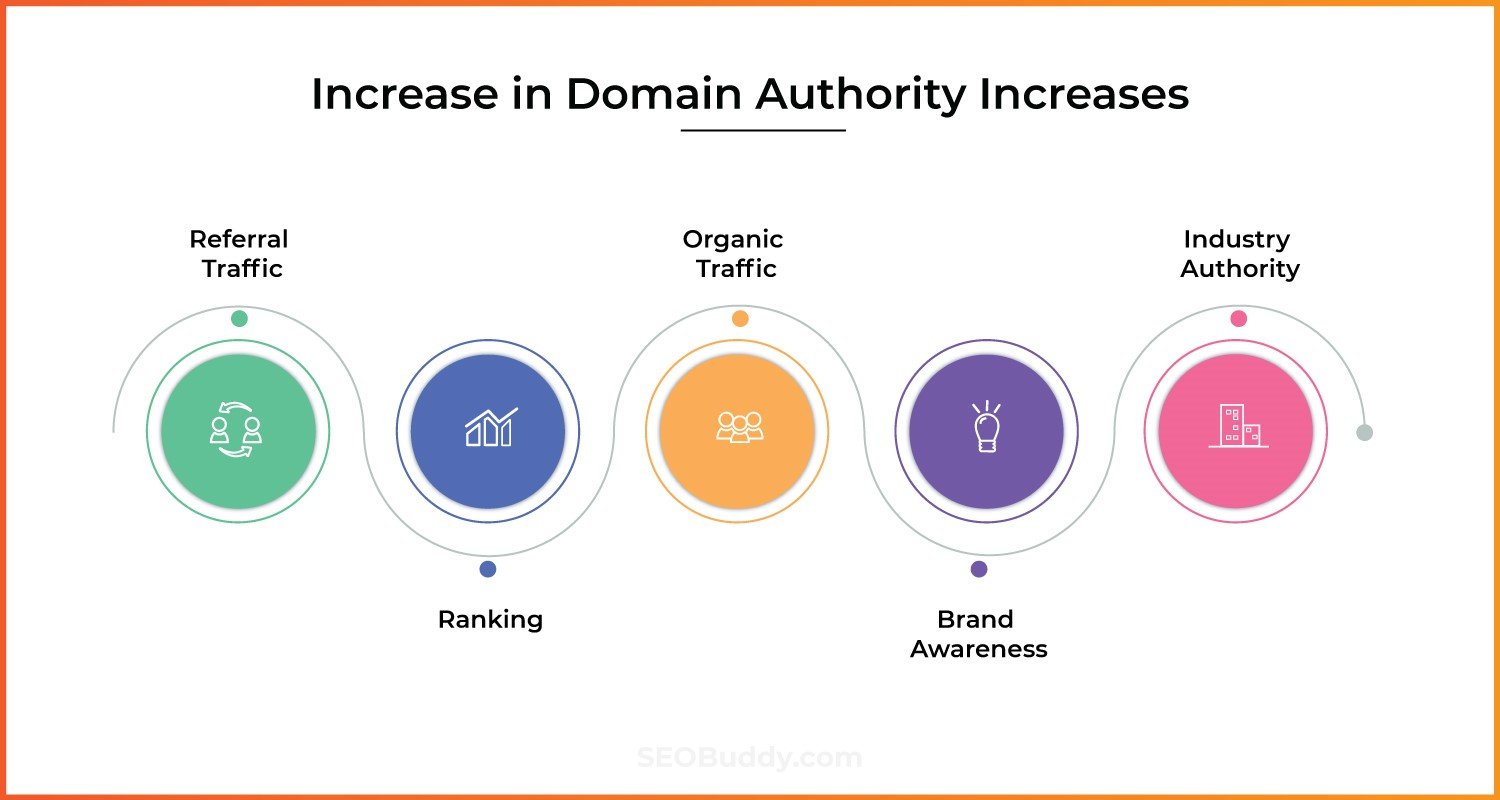
Domain authority isn’t a trophy—it’s a reflection of your website’s overall health. When your DA rises, it means your site has become more trustworthy, more user-friendly, and more visible in search results.
Higher domain authority leads to:
- Stronger rankings
- Better engagement
- A wider audience reach
- Improved brand visibility
- Long-term digital resilience
As long as you keep enhancing content, earning quality backlinks, refining technical elements, and improving user experience, your authority will continue to grow. Combine that consistency with occasional support from experienced SEO services, and your website becomes a long-term force in its niche.
Growing DA is less about rushing and more about becoming a genuinely valuable resource—one that search engines can confidently recommend to users again and again.






Rahul M.
B2B Service Provider