

Website maintenance services are essential in today’s digital landscape. By 2025, in the very dynamic digital world, a business website is no longer just an online brochure. It has become the core of a company’s presence on the internet. For small businesses, a well-designed website works as both a marketing engine and a sales hub, pulling in new customers, strengthening credibility, and driving meaningful engagement. Yet many small business owners still treat their website as a “set it and forget it” project.
The truth is a website needs ongoing attention, updates, and optimization if it is expected to remain functional, secure, and competitive. That is exactly where professional website maintenance service providers step in.
Proper website maintenance ensures that a site remains operational, accessible, protected from cyber threats, and visible in search results. Professionally managed maintenance enhances brand reputation, improves user experience, and boosts business revenue. When small business owners prioritize maintenance, they safeguard long-term growth, earn more customer trust, and consistently stay ahead of competitors.
The Importance of Properly Maintained Websites for Small Businesses
Small business websites function as digital storefronts and the primary touchpoints between a brand and its audience. When a website is maintained properly, it elevates the brand’s image, builds credibility, and helps expand the customer base.
Enhancing Brand Image and Credibility
A regularly updated, smoothly functioning website signals professionalism. Fresh content, clean navigation, and an appealing design shape a positive impression of the brand. Customers naturally trust businesses whose websites are stable, informative, and secure. This trust gradually develops into long-term loyalty, which becomes one of the strongest assets for a small business.
Improving Customer Satisfaction
Customer satisfaction is deeply rooted in user experience. A website that is fast, error-free, and rich in relevant content captures the attention of visitors. When users can navigate effortlessly and find what they need without friction, they are more likely to return—and even recommend the business to others.
A website maintenance team plays a crucial role here. They ensure smooth navigation, prevent downtime, and resolve technical issues before they affect users. This reduces frustration and keeps the brand’s online presence polished.
Increasing Conversion Rates and Sales
An efficiently maintained website naturally improves conversions. For e-commerce brands, the site itself is the sales funnel—and every part of that funnel must work flawlessly. Fast loading pages, intuitive navigation, and updated information remove user hesitation and encourage action, whether that means making a purchase, submitting a form, or subscribing to a newsletter.
Through consistent updates and technical improvements, small businesses can significantly increase their revenue potential. This is one of the core advantages of investing in professional web management services.
Challenges Small Businesses Face in Website Management
Even though most small businesses understand how essential a website is, they often struggle to maintain it. A handful of recurring challenges stand in their way, slowing down growth and affecting long-term digital performance.
Lack of Technical Expertise
Most small businesses simply don’t have in-house technical teams who can manage performance, security, and ongoing updates. As a result, websites gradually accumulate outdated content, broken links, slow loading speeds, and vulnerabilities that expose them to cyber threats. Professional website maintenance bring the technical skill that small teams lack, allowing these problems to be fixed quickly and efficiently.
Competing Business Priorities
Small business owners operate like multitasking acrobats, handling sales, operations, marketing, customer service, and everything in between. With so many responsibilities, website management often slips down the priority list. Regular monitoring, updating, and optimizing require time—something most business owners rarely have. When a website maintenance team steps in, the business gets dedicated oversight without needing a full internal department.
Security Threats
Cybersecurity risks only grow with time, and small businesses are among the most vulnerable. Hackers actively target websites with outdated plugins, old software, or weak protection protocols. A single breach can lead to compromised customer data and a damaged reputation that is difficult to rebuild.
Professional website maintenance teams help minimize these risks through regular security audits, timely updates, and reliable backups. This creates a protective layer around the website, ensuring the business stays safe while continuing to serve its customers.
Key Elements of Effective Website Maintenance
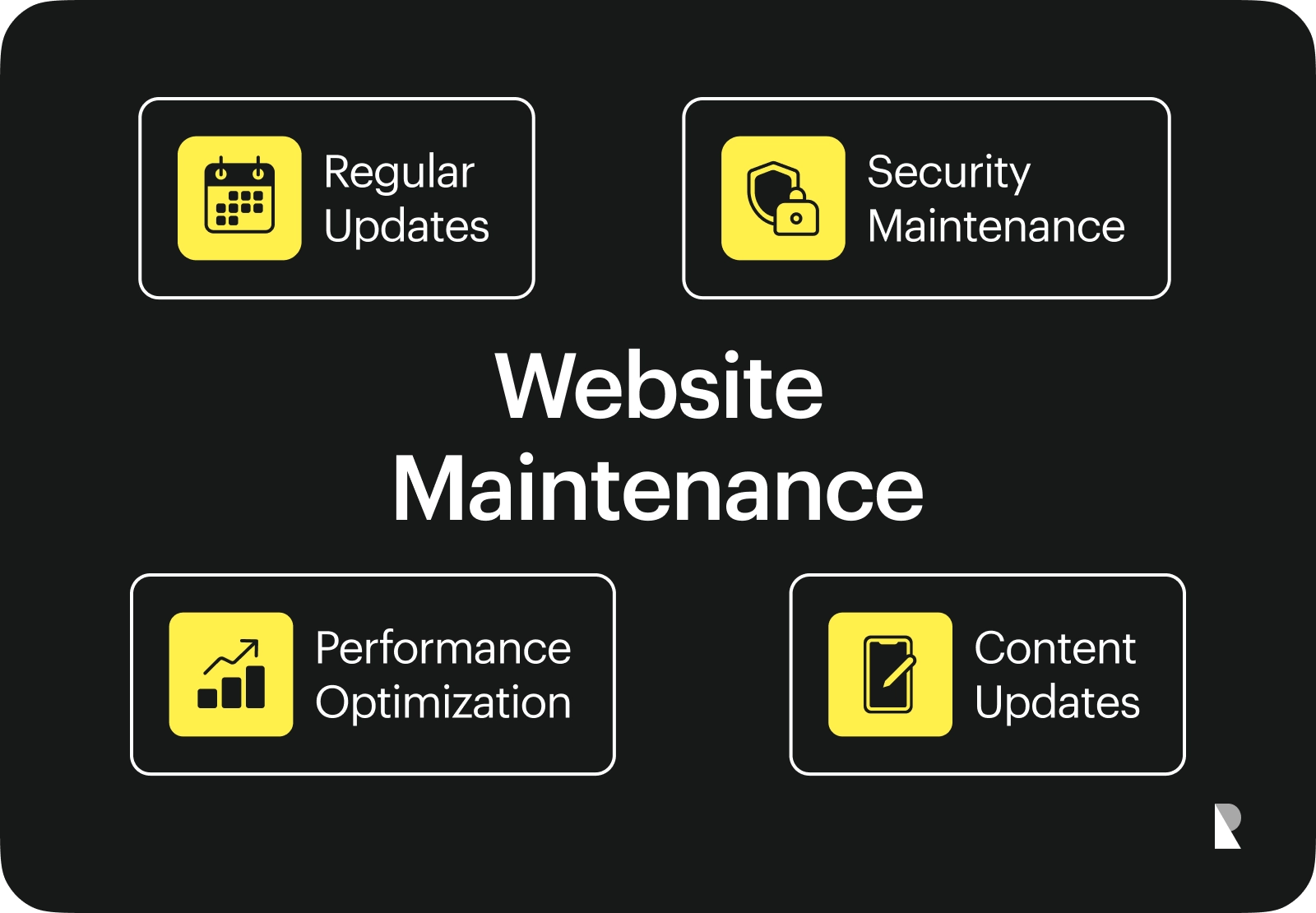
Keeping a website healthy isn’t just about updating content once in a while. It’s a full-spectrum process that protects the site, improves user experience, and ensures long-term performance.
Regular Backups
Backups act as a safety net against everything from human error to system failures and cyberattacks. If something goes wrong, having recent copies of your website’s data means the site can be restored quickly, minimizing downtime. Maintenance providers typically automate these backups—daily or weekly—so business operations can continue smoothly no matter what happens.
Software and Security Updates
A website relies on more than its content management system. Plugins, themes, and integrated tools all need continuous updating. These updates fix security vulnerabilities, enhance features, and improve stability. When a site goes too long without updates, it becomes an easy target for hackers and can develop broken functionalities that frustrate users. A professional maintenance team keeps everything current through scheduled, monitored updates that reinforce the site’s security and reliability.
Performance Optimization
A high-performing website attracts more visitors, keeps them engaged, and earns better visibility in search engines. Maintenance teams work behind the scenes to ensure speed and stability by optimizing images, cleaning up unnecessary code, adjusting caching settings, and monitoring server performance. These improvements reduce load times, prevent crashes, and create a smooth browsing experience that encourages users to stay longer and return more often.
Why Small Businesses Should Invest in Website Maintenance Services
Small business owners managing day-to-day operations often overlook how essential ongoing website maintenance is. When a website is neglected, the cost shows up in lost revenue, reduced credibility, and weakened customer trust.
Staying Current in a Dynamic Digital Landscape
Technology and web trends evolve at breakneck speed. A website that felt modern last year can look outdated today. Professional website maintenance help small businesses stay relevant by integrating current design trends, updating technologies, and improving overall website functionality.
Enhanced Security
Cyberattacks are rising, and small businesses are usually the most vulnerable. Regular security updates, continuous monitoring, and reliable backup systems provided by help protect customer data and safeguard the brand’s reputation.
Improved User Experience
Visitors quickly lose interest when a website is slow, unresponsive, or full of broken links. Proper maintenance ensures smooth navigation, fully functional features, and up-to-date content. This leads to higher engagement, improved conversions, and more satisfied visitors.
Search Engine Optimization (SEO) Benefits
Search engines reward websites that load fast, perform well, and stay updated. web support services help small businesses consistently apply SEO strategies, track analytics, and make improvements that enhance rankings and boost organic traffic.
Reducing Downtime and Protecting Revenue
Keeping downtime to a minimum is one of the most crucial aspects of maintaining a small business website. Every minute a website is unavailable represents a lost opportunity—and lost revenue. Issues like server crashes, broken links, and slow responses can quietly drain a business of both customers and profit.
Professional website maintenance includes constant monitoring to detect early signs of trouble before they grow into serious problems. This preventive approach reduces the chances of breakdowns and helps maintain a stable online presence. For small businesses where every lead counts, early intervention protects both revenue flow and customer trust.
Staying Ahead of Competitors
Standing out in today’s crowded market requires more than just a functional website. A site that is fast, modern, and secure creates a strong impression of professionalism and reassures visitors. In contrast, an outdated or poorly maintained website pushes potential customers straight into the arms of competitors.
Regular website maintenance allows small businesses to adopt new technologies, update designs, and create user-friendly experiences. Fresh features, smooth navigation, and fast-loading pages not only attract visitors but convert them into loyal customers. A well-maintained website becomes a competitive advantage—one that helps small businesses retain existing clients and continuously attract new ones.
Benefits of Outsourcing Website Maintenance for Small Businesses
While some small businesses consider handling website maintenance in-house, this approach often proves expensive and difficult to sustain. Outsourcing professional maintenance services offers several practical advantages.
Cost Efficiency
By outsourcing, businesses gain access to expert-level support without the expense of hiring full-time staff. There is no need for training, onboarding, or expanding internal teams. Instead, businesses pay only for the services they actually require. This makes high-quality maintenance affordable and predictable.
Access to Specialized Skills and Expertise
Website maintenance providers have specialized knowledge that small businesses rarely possess in-house. Their familiarity with the latest tools, technologies, and security practices ensures that websites remain fast, reliable, and aligned with modern digital standards.
Time Savings and Focus on Core Activities
Managing a website every day can be surprisingly time-consuming. Outsourcing routine tasks frees up valuable time for the business owner and the team. They can then concentrate on core activities that directly generate income, such as marketing, customer service, and product development.
Enhanced Security and Data Protection
Cyber threats continue to evolve, and small businesses are frequent targets. Outsourced maintenance teams handle critical security tasks—performing vulnerability checks, installing security patches, updating software, and protecting customer data. With experts managing the backend, the risks to both the website and its users are significantly reduced.
Types of Website Maintenance Services Available
Small businesses can avail of an assortment of web support services that have been purposely crafted to tackle different facets of site management:
Content Updates and Changes
One of the most important things that should be done regularly is updating website content, which in return makes the content fresh and relevant both for visitors and search engines. The maintenance services take care of content creation, editing, and implementation, thus, they ensure that the information about products, services, and promotions is not only accurate but also attractive.
Server Monitoring and Availability
Indeed, website uptime is the main factor through which customers can have access to the business and business continuity is also maintained. To avoid the times when servers are down, web support services keep an eye on them, locate issues that may arise in the future, and solve situations that suddenly occur. By making certain that a website is always accessible to people, the latter’s trust and engagement are increased.
SEO Optimization and Analytics Tracking
Being visible on search engines is the main thing that leads to success in online business. Moreover, the maintenance services take continuous SEO audits, carry out optimization strategies, and trace user behavior through analytics. In turn, by examining the data on visitors, companies get an opportunity to make a wise decision that will lead to better results and more traffic.
User Experience and Usability Enhancements
To have a website that is smooth, easy to use, and attractive for people’s eyes is one way that will lead to an increase in the number of visitors as well as in conversions. web support services perform usability testing, discover the most difficult aspects for users, and bring the design changes to improve not only navigation, but also accessibility, and overall user experience.
Next Steps for Small Business Owners
Knowing how essential it is to maintain a website is just the very first point. Small business owners should definitely think of a well-planned way to:
- Assess Your Current Website: Look at the performance, content, security, and user experience. Find the areas where you have to improve or update.
- Research Service Providers: Find a good provider who leads to the best website maintenance service for small businesses. Look at their reviews, experience, and success stories of the past clients.
- Communicate Your Needs Clearly: Talk about the particular needs and goals with the provider you have chosen to be on the same page.
- Establish a Recurring Maintenance Schedule: You and your provider should agree on a daily routine that content updates, security checks, SEO audits, and performance monitoring are included.
Working with a professional website maintenance service provider is a must if you want your site to stay safe, work properly, and be always up to date with optimization techniques. Owners of small businesses need to take a thorough look at a service provider before making up their mind and base their decision on these key factors.
Assessing Business Needs and Objectives
It is very important to establish what your website needs and goals are before making a choice of a provider. Think of how often you will be updating, what security measures you will want, whether you will need SEO, and what will be the overall objectives of the business. By providing these requirements a provider is able to maintain communication that is not lost and the maintenance of your website is effectively targeted.
Evaluating Experience and Reputation
Whether it is website maintenance services or others, check the providers’ records of accomplishment in the field. Client testimonials, success stories, and even case studies, all these sources can be used to check out a company’s professionalism and reliability. To ease this task experienced providers have a higher probability of foreseeing obstacles, executing the most effective methods and giving you excellent results.
Understanding Pricing Structures and Service Packages
The correct and clear pricing along with the able to be adjusted service packages are what matter the most. Take a look at a few providers and note down what every package includes and whether you can customize it to fit your business needs perfectly. Knowing about the costs upfront is a way of guaranteeing that you will be purchasing the right amount of service without going over your budget.
Real-Life Case Studies: Small Businesses That Benefited from Web Support Services
Looking at the real scenarios can explain the benefits of a service that sometimes people think is for big corporations only, like a website maintenance.
Case Study 1: Boosting E-Commerce Sales
One small online business was the cause of the problem of having very low online sales. After collaborating with a web support services provider, they began doing daily updates, wrote SEO-friendly product descriptions, and redesigned the user interface. The effect was online sales were noticeably increased, customer engagement got better, and users’ satisfaction raised.
Case Study 2: Reducing Bounce Rates
A local service-oriented business had a problem with high bounce rates thus losing potential leads. With the help of professional web support services the business did a detailed UX review, enhanced site navigation, and adjusted page layouts. As a result, the bounce rates became lower, visitors’ interaction was higher, and conversions increased thus the business growth was accelerated.
Case Study 3: Strengthening Security
One small business was the victim of a cyberattack which led to the loss of customer data and the business’ bad reputation. They utilized professional website maintenance services to help them do it frequently security checks, software updates, and security plugins. These security measures that were put in place thus saved customer information, re-established client trust, and strengthened the company’s goodwill.
Frequently Asked Questions
How much do website maintenance services cost?
Costs vary depending on website size, complexity, and the specific services required. Most providers offer flexible packages, allowing small businesses to choose services that fit their budget and needs.
Can I perform website maintenance on my own?
While basic updates can be handled internally, professional website maintenance services provide technical expertise, security oversight, and optimization strategies that may be difficult to manage independently.
How often should website maintenance be performed?
Regular maintenance is essential. Depending on the website, updates may be required weekly, biweekly, or monthly. Continuous monitoring ensures optimal performance, security, and user experience.
What if my website goes down during maintenance?
Professional web support services follow structured procedures to minimize downtime. Backup systems and monitoring ensure that any disruptions are quickly resolved, reducing the impact on your business operations.
Conclusion
Small businesses in the rapidly changing digital world of today, must have a highly maintained website. Professional website maintenance services are instrumental in increasing brand credibility, customer satisfaction, and conversion rates. Small businesses that outsource their website maintenance can enjoy the benefits of specialized skills, time-saving, data security, and they can keep up with the ever-changing online environment.
It is a full commitment to website maintenance that guarantees the continuous value of your digital presence as a business asset, no matter whether it is through content updates, server monitoring, SEO optimization, or user experience improvements. Spending on such services is a step towards getting bigger, being able to last longer, and eventually achieving success.







Rahul M.
B2B Service Provider