
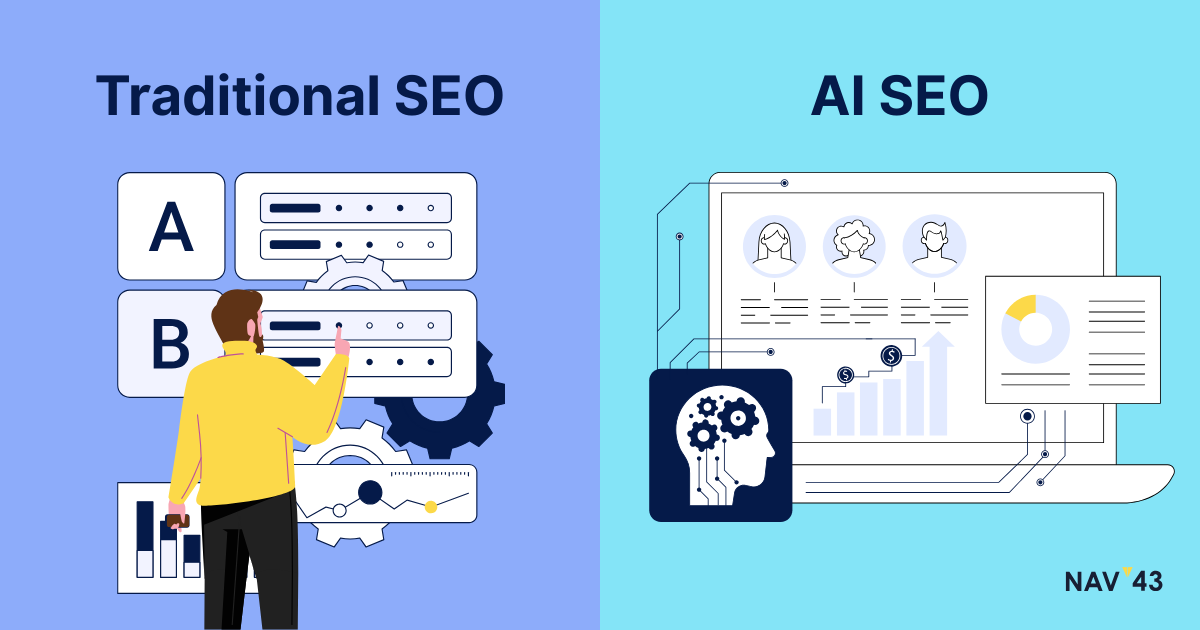
Artificial intelligence is finding practical applications in day-to-day SEO tasks. Businesses apply it to analyze keywords, map content strategies, and hasten the writing processes. If appropriately utilized in AI SEO, it is capable of allowing firms to create superior content in less time. However, it is not solely capable of delivering optimal performance in AI SEO.
This article is a practical explanation of how to apply AI to the creation of SEO content without sacrificing quality, facts, or a consistent brand. There is a mix of information, explanation, and examples.
How AI Supports SEO Today
AI tools can process large sets of data much faster. In SEO, this involves search queries, keyword trends, competitor content, and user behavior. Activities that took hours and days are now completed in a matter of minutes.
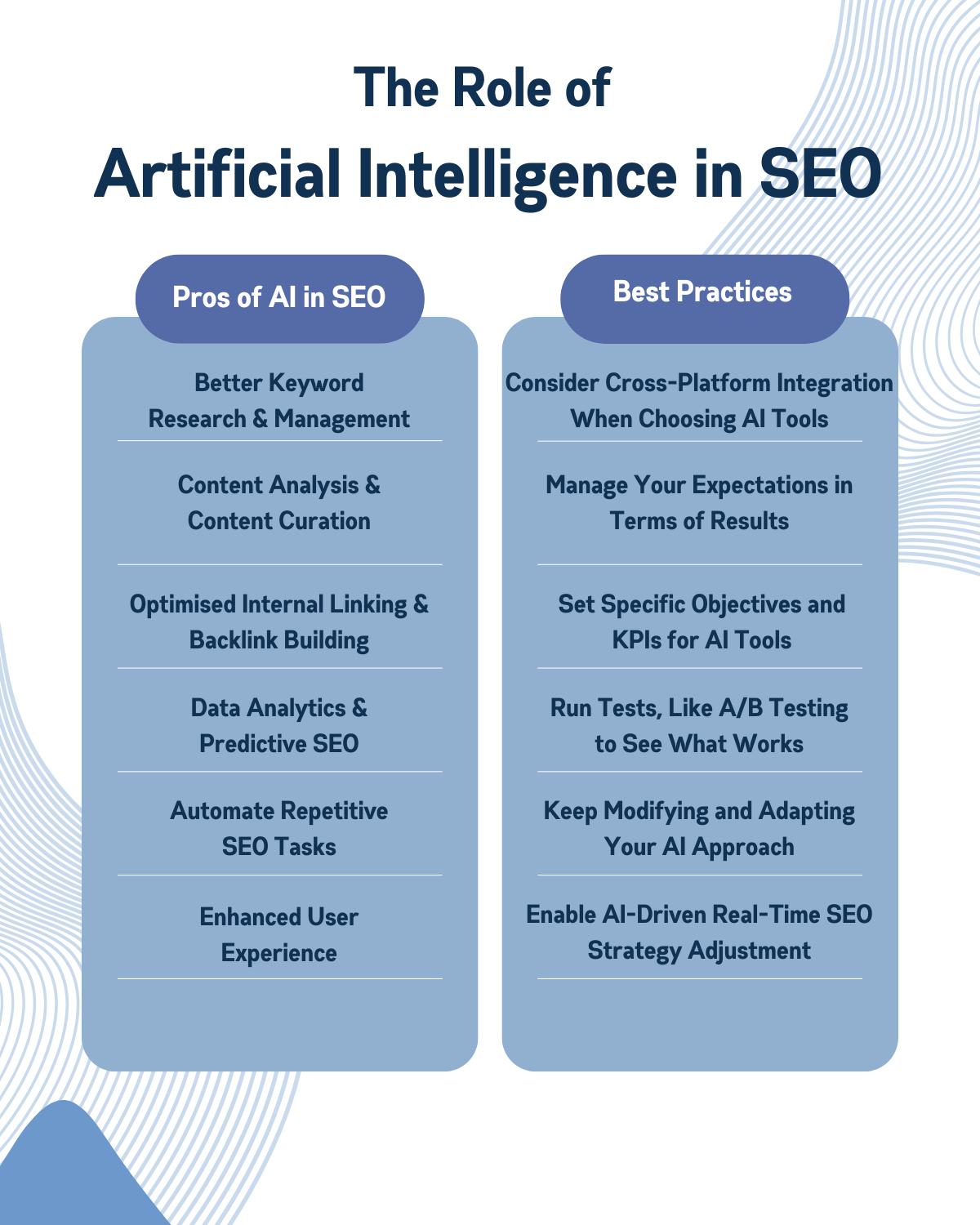
In AI SEO, AI is majorly used for:
- Keyword research and grouping
- Topic discovery and trend analysis
- Overview/Content Outlines and First Drafts
- Performance tracking & Optimization insights
AI is especially good at finding patterns, underlining which topics are gaining traction, which keywords hang together well, and where the competition is missing out. This hastens up decision-making processes with real data in SEO teams.
However, AI does not fully understand context, brand tone, or business priorities, which is why human involvement is crucial at every stage.
Steps in Applying AI in SEO Content
1. Using AI for Keyword Research and Topic Planning
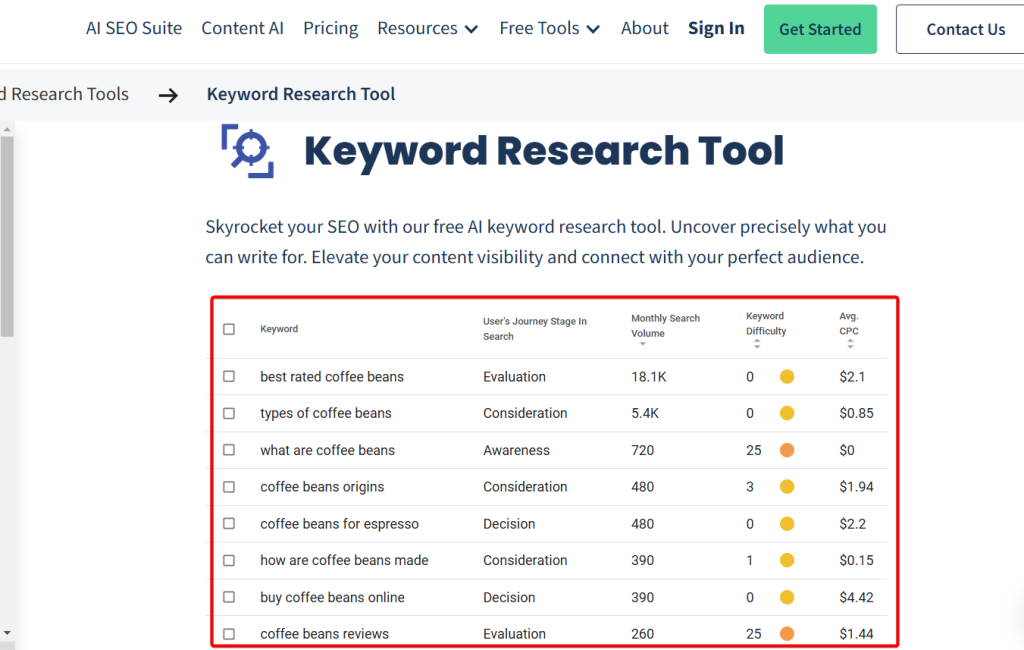
Keyword research is actually one of the best applications of AI technology. Unlike traditional searches where you go through each keyword manually, AI technology allows you to evaluate thousands of words effectively, categorizing them according to their subject or intent.
This way, it becomes easier for the team to shift from targeting specific keywords and settle on topic discussions. Engines, in turn, remain interested in content that is comprehensive in its subject area rather than an article that keeps reiterating the same information using different keywords.
In ai SEO, AI assists with:
- Finding primary and secondary keywords
- Organizing related keywords through topic clusters
- Search intent prominence (informational, commercial, or transactional intent)
These clusters are then analyzed by humans to understand which are most applicable and important to the business.
2. Topic Discovery & Trend Analysis
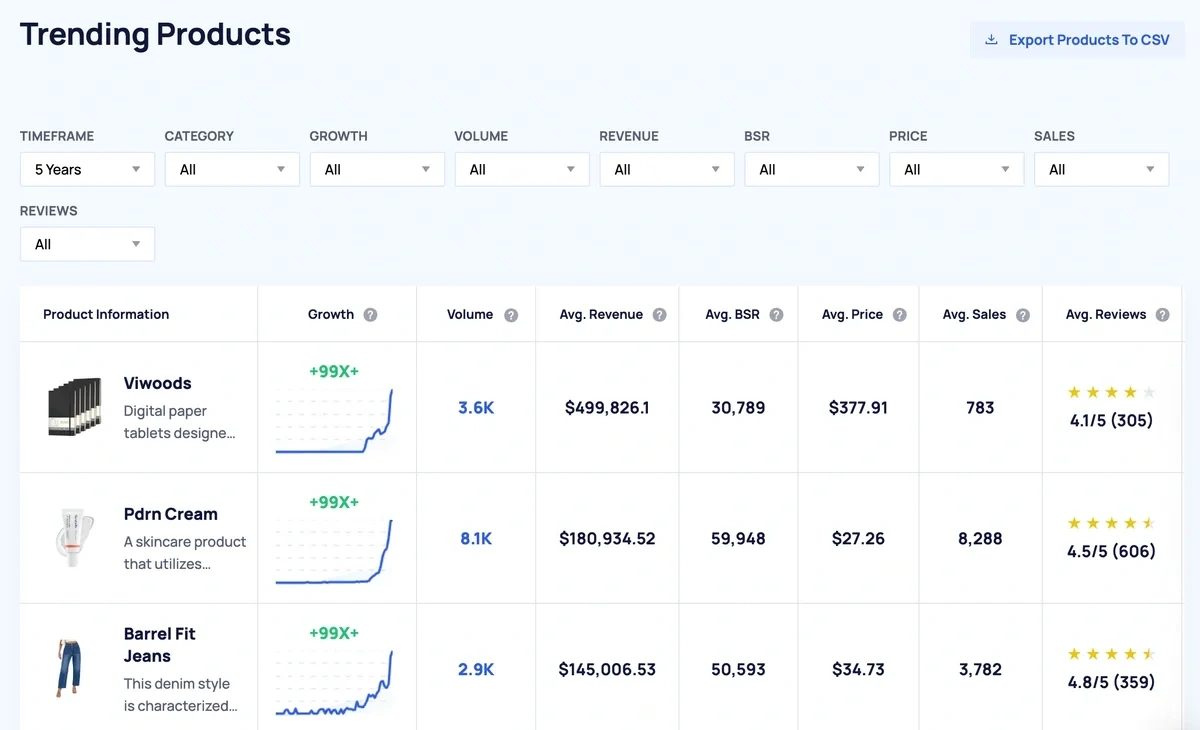
AI shines when it comes to analyzing the trending topics and content gaps that might not have been readily apparent. By analyzing the search pattern trends of the search engines and the content published by the competition, it enables the creation of content around topic discussions that are more focused and more meaningful.
The role of AI in AI SEO involves assisting with the following:
- Identifying trending topics and content opportunities
- Pattern recognition that aids detection of gaps within existing content
- Grouping subjects around themes for full coverage
Prioritizing information according to its relevance and impact value These insights generated from the AI tool are later confirmed and fine-tuned by human experts to make sure they meet the goals of the businesses, the needs of the audience, and the tone of the brand, developing content which is engaging as well as goals-oriented.
3. Blending AI SEO With Human Expertise

AI is more suited to be a support system than a replacement. It carries out data-intensive tasks effectively. Humans make judgments and provide direction.
For instance, an ai could recommend a keyword that has a high search volume. A SEO expert analyses if the keyword suggested by the ai corresponds to the target group, complies with the brand’s offer, and meets long-term strategies. Finding harmony within these aspects forms the basis of successful AI SEO.
Humans also make sure that the content:
- Aligns to audience intent
- Uses clear and natural language
- Complies with the branding tone and guidelines
- Provides accurate and helpful information
By collaborating, AI and human intelligence make content both search engine friendly and user-centric.
4. Topic Clustering for Better SEO Coverage

Topic clustering is a procedure whereby articles that deal with related content are linked through a dominant topic. AI simplifies this procedure by using semantic linkage between topics and keywords.
For instance, instead of writing individual and unrelated articles, you can write:
- One main guide that spans a wide topic
- Some related articles to provide background information
Such architecture enhances internal link building and helps indicate site authority to search engines. Topic clustering represents one of the main approaches utilized by current ai SEO practices.
5. Generating Content Ideas With AI
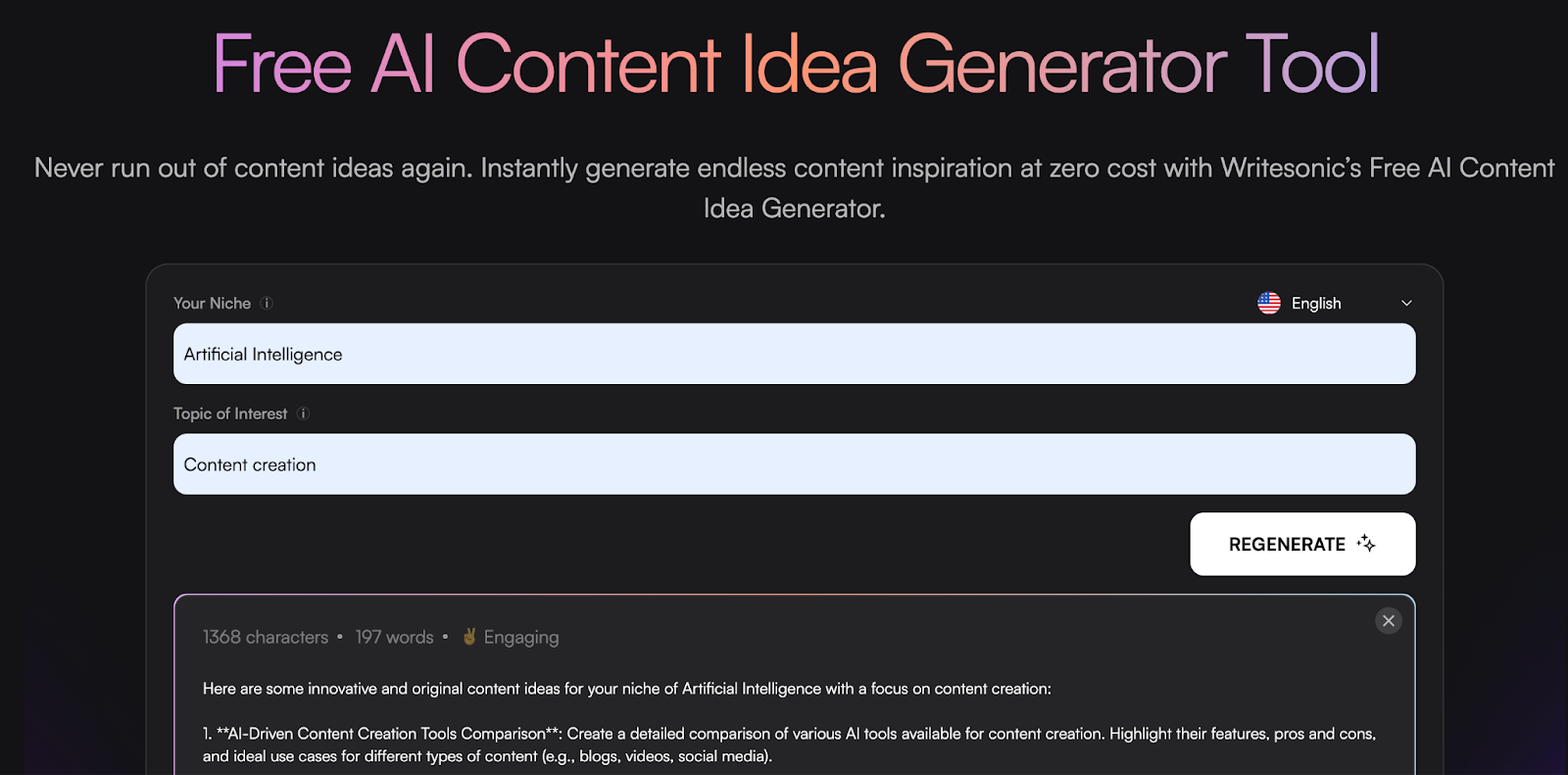
AI can generate many content ideas in a short time. It uses keyword data, user questions, and competitor analysis to suggest topics that people are actively searching for.
This helps content teams:
- Build content calendars faster
- Discover new angles on existing topics
- Avoid missing important user questions
However, AI-generated ideas should always be reviewed. Human editors check whether ideas are relevant, unique, and aligned with business goals. AI provides quantity, but humans ensure quality and relevance.
6. Creating Outlines and Drafts Using AI

After the subject areas have been identified, AI solutions can be applied to offer a systematic structure and write the content. This approach helps to create content very quickly.
In ai seo, AI is often used to:
- Suggest headings and subheadings
- Organize content logically
- Draft initial versions of articles
These are not final content pieces. These are only drafts. Human writers are employed to refine them to make them more understandable, formal, and fluent in language. The writers also ensure that they do not read as they are machine-generated content.
7. Optimizing Content for Readability and SEO
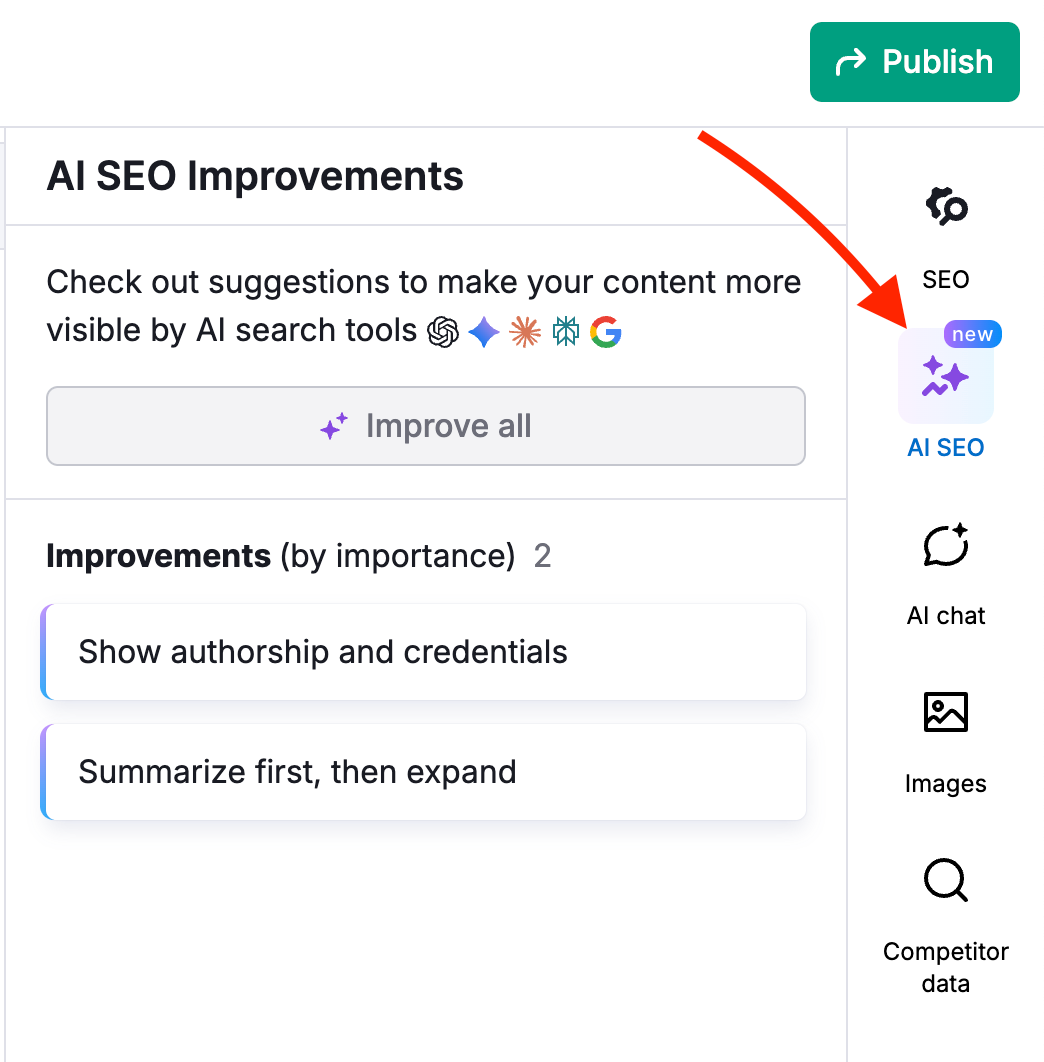
SEO is not all about keywords. Readability also plays a major role in user interaction with content. If content is not easily readable, users leave fast, affecting performance.
AI will analyze the top-ranking pages and provide recommendations on:
- Content length
- Heading structure
- Placing the keywords
Humans take these suggestions and then make sure the content is accessible. Short paragraphs, simple words, and clear explanations enhance engagement. User experience in conjunction with SEO is used in ai seo.
8. Aligning Content With Audience Intent
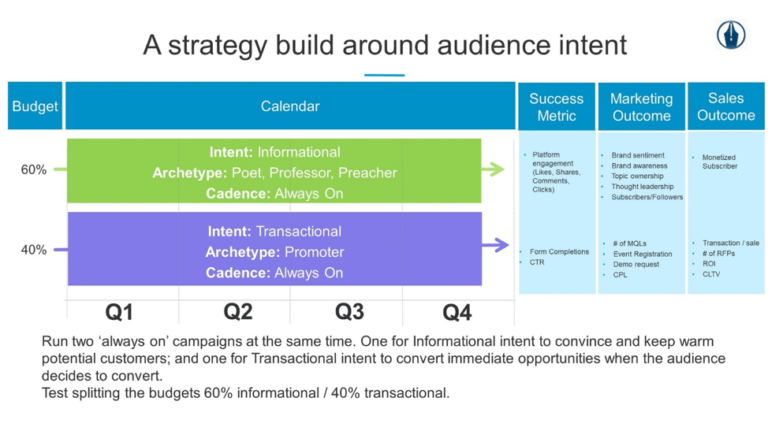
Understanding audience intent is critical. Search engines rank content that best answers what users are actually looking for. AI helps by analyzing search results to determine intent patterns. For example, it can show whether users prefer guides, comparisons, or quick answers for a specific query.
Human editors ensure that content:
- Directly answers user questions
- Avoids unnecessary information
- Matches the expected content format
This step ensures that ai seo content is useful, not just optimized.
9. Editing, Fact-Checking, and Quality Control

AI-generated content can sometimes include errors or unclear statements. Human review is necessary to ensure accuracy and reliability.
Editors focus on:
- Correcting factual mistakes
- Improving sentence clarity
- Adjusting tone to match brand voice
- Removing repetitive or vague sections
This step is essential for maintaining trust. High-quality ai seo content always includes strong human editing before publication.
10. Content Governance and Consistency

Consistency becomes a problem once AI is used on a large scale. Clear content guidelines ensure that quality is maintained in all published material.
Content governance includes:
- Predefined rules regulating tone and style
- SEO best practices
- Review and approval processes
These rules should then guide the AI tools through well-written prompts. Human oversight means each piece of content meets the same standards, no matter the volume.
11. Monitoring Performance and Improving Over Time
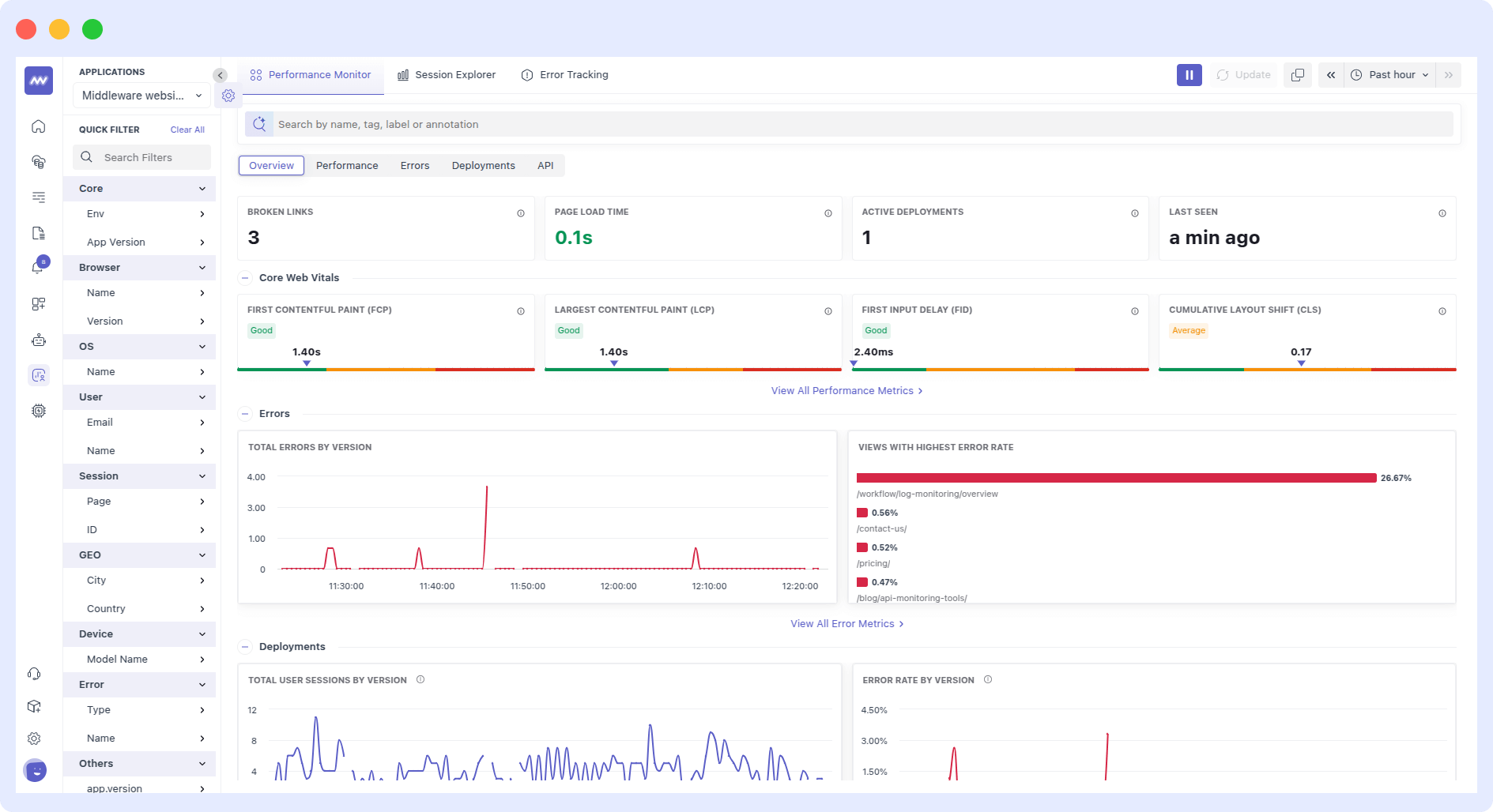
SEO is an ongoing process. Performance data after publishing reveals what works and what doesn’t.
AI tools can monitor:
- Keyword rankings
- Traffic trends
- Engagement metrics
This data helps teams update existing content and plan future topics. In ai seo, continuous improvement is key. AI provides insights while humans decide how to act on them.
The Future of AI in SEO Content
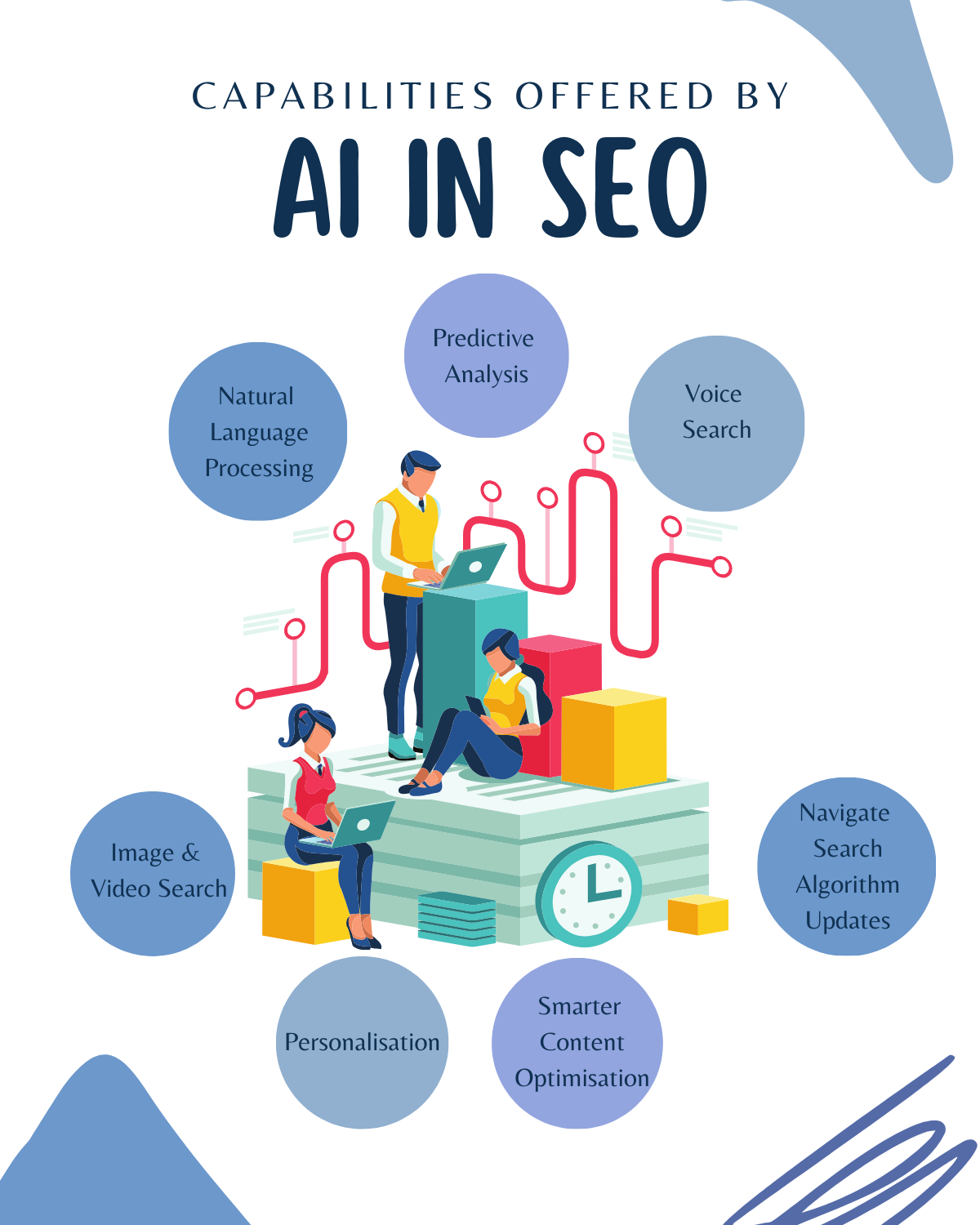
Artificial intelligence will continue to develop and become more precise and useful. It will increasingly become involved in content planning and analysis of performance results.
However, it is essential to note that human expertise is still going to be required. It is not possible to automate strategy, creativity, and judgment. The most effective SEO departments will be those that harness AI in an effective manner while, at the same time, possessing excellent editorial taste.
Final Thoughts
Boosting SEO using AI is not taking the easy way out to rise to the top of search engine rankings. AI assists in minimizing efforts in data analysis, as well as in content production on a mass scale. Human interaction is necessary to
The best AI SEO strategy involves the speed of AI combined with the knowledge of human beings. By doing so, they ensure that companies produce quality content that is ranked well and educates readers.
If you follow a proper procedure and ensure quality control is in place, then AI can be a trustworthy component in your SEO content plan rather than something to be feared.










Rahul M.
B2B Service Provider