
Search is no longer just about typing keywords into Google and clicking blue links, like some old habit. The digital world is basically going through its biggest shift since search engines were everywhere. And now, artificial intelligence is changing how people find stuff, compare items, and decide to buy. Instead of hopping across multiple sites, folks are increasingly leaning on AI assistants like ChatGPT, Google AI Overviews, Gemini, Claude, and Perplexity to give direct, sort of personalized answers.
The next phase of this whole thing is usually called Agentic Search, and yeah it sounds a bit corporate. Unlike the normal AI search which just summarizes, agentic AI systems can grasp what a person really means, then plan multiple steps, cross-check different sources, and sometimes even finish bigger tasks for the user. These AI “agents” are becoming more like digital aides—researching products, judging companies, booking services, building recommendations, and generally helping users choose, with less manual effort from them.
That said, this shift isn’t only sunshine. Businesses get new chances, but also new problems. Ranking on Google by itself isn’t enough anymore. Your site needs to be understandable, trustworthy, and actually usable by AI agents that increasingly steer customer decisions, not just humans with browsers.
At Bloom Agency, we help companies get ready for this new era via Agentic Search Optimization. It’s a future-minded plan combining technical SEO, AI optimization, semantic content, entity building, structured data, and digital authority, so your brand stays discoverable wherever intelligent search shows up.
In this guide, we’ll walk through what Agentic Search Optimization is, why it matters, and how businesses can prepare for AI-powered discovery that keeps evolving, honestly fast.
What is Agentic Search Optimization?
Agentic Search Optimization (ASO) is the act of optimizing your website, your content, and your overall digital footprint. The goal is that AI agents can discover your business, understand it, evaluate it, trust it, and then recommend it while they help users complete tasks.
Traditional SEO is mainly about getting your webpages to show up inside search engine results.
Generative Engine Optimization (GEO) is about helping AI summarize and reference your content, more like it knows what to pull.
Answer Engine Optimization (AEO) is about creating crisp, direct answers for voice assistants and AI search platforms. Agentic Search Optimization pushes past all that, by making sure AI systems can use your business with confidence as part of their decision process.
Instead of just answering questions, modern AI agents can carry out multi-step workflows. They might compare products on several sites, analyze reviews, assess pricing, review technical documentation, and then recommend one business rather than another.
So in effect, your website becomes part of an AI’s knowledge ecosystem, not just another page floating around.Businesses that prepare for this shift now, will likely get a real competitive edge compared with brands relying only on traditional SEO.
How AI Agents Consider Websites Before They Suggest Anything
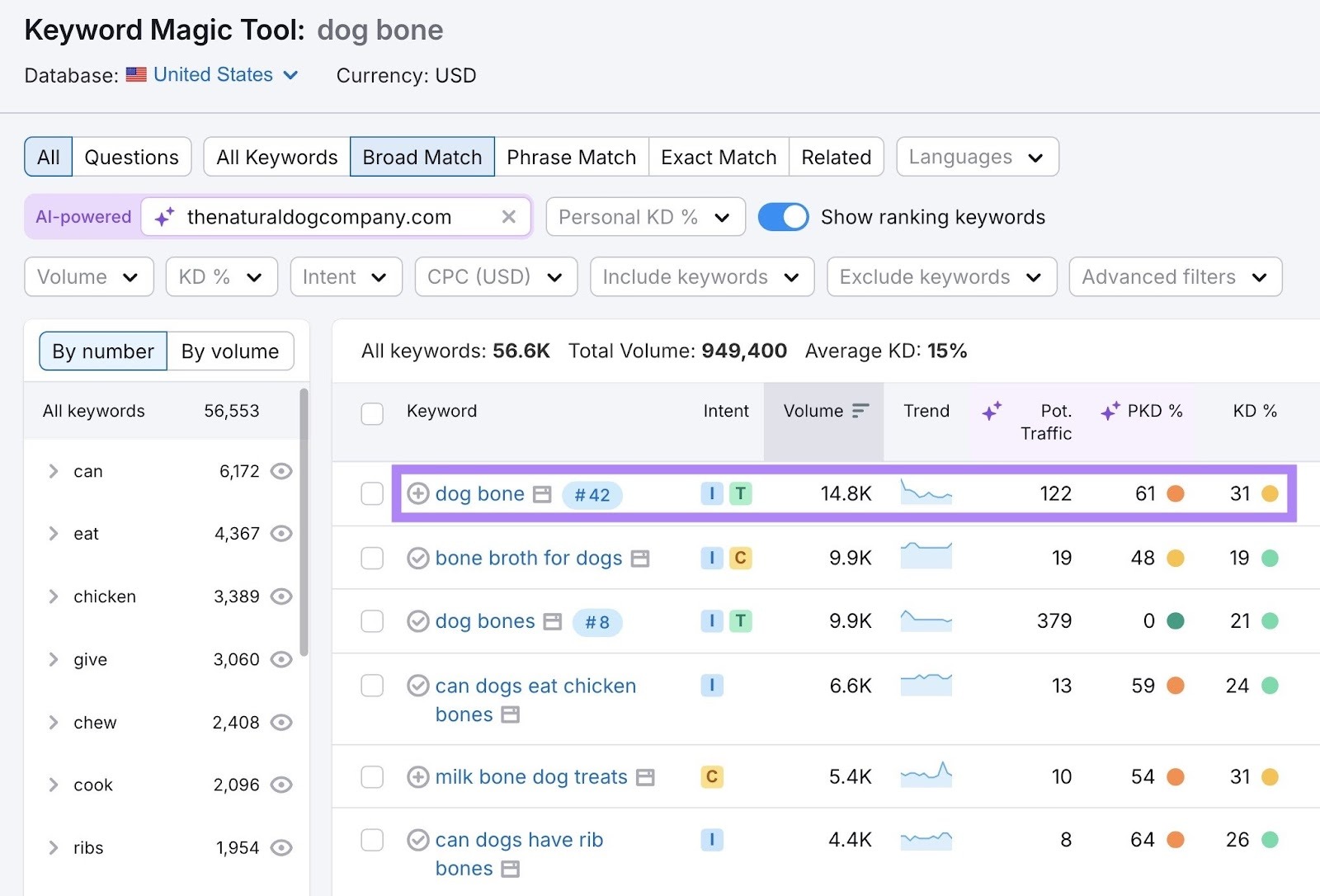
Regular search engines usually put things in order by keywords, backlinks, and lots of tech SEO. AI agents though they look a lot deeper, like really deeper. Their goal is not just to find a page that “matches” a query. Instead they try to figure out which business is actually dependable, trustworthy, and capable of giving the right answer in the real world.
So when somebody asks an AI assistant for the best Shopify agency, digital marketing company, SaaS platform, or legal consultant, it does not just point to one shiny webpage. It collects signals from different credible places, cross checks what it finds, weighs authority indicators, and then makes a suggestion using confidence levels, not just classic rankings.
Because of that, companies can’t only rely on their own site looking polished. AI agents review content quality, brand mentions, customer feedback, press and media presence, technical reliability, author credentials, structured data, and even whether the story stays consistent across channels before deciding if the business should be recommended.
At Bloom Agency, we focus on those trust signals so companies can improve visibility across both standard search engines and the newer AI driven ecosystems.
Traditional SEO vs GEO vs AEO vs Agentic Search Optimization
| Feature | Traditional SEO | GEO (Generative Engine Optimization) | AEO (Answer Engine Optimization) | Agentic Search Optimization |
| Primary Focus | Improving rankings on Google and Bing search results | Optimizing content for AI-generated summaries and responses | Delivering concise, direct answers for voice and AI assistants | Making your brand discoverable and actionable by autonomous AI agents |
| Optimizes For | Search engines | Large Language Models (LLMs) like ChatGPT, Gemini, and Perplexity | Voice search platforms and answer engines | AI agents that research, compare, recommend, and complete tasks |
| Main Goal | Increase organic website traffic | Earn citations and visibility in AI-generated responses | Become the preferred source for instant answers | Become the trusted business AI agents recommend and act upon |
| Content Style | Keyword-focused and search intent-driven | Context-rich, comprehensive, and semantically optimized | Conversational, question-and-answer format | Structured, semantic, entity-based, and action-oriented content |
| Trust Signals | Backlinks, domain authority, technical SEO | Topical authority, factual accuracy, and semantic relevance | Structured content, FAQs, and schema markup | Brand authority, entities, structured data, reviews, digital PR, and knowledge graph presence |
| User Journey | Users click through search results to visit websites | AI summarizes content before users visit a website | Users receive immediate answers without browsing multiple pages | AI agents analyze information, compare providers, and may recommend or complete actions on behalf of users |
| Success Metrics | Rankings, organic traffic, and conversions | AI citations, mentions, and visibility in AI search | Featured answers, voice search visibility, and answer box appearances | AI recommendations, brand mentions, authority signals, and assisted conversions |
| Best Optimization Techniques | Keyword research, on-page SEO, technical SEO, and link building | Semantic SEO, topical clusters, structured content, and EEAT | FAQ pages, schema markup, conversational content, and featured snippets | Entity SEO, knowledge graphs, structured data, AI-readable content, digital PR, brand mentions, and trust signals |
| Future Relevance | High | Very High | High | Extremely High |
Entity SEO: The Digital Identity Problem
One of the biggest shifts in modern search is Entity SEO. Old-school SEO leaned heavily on keywords, while AI systems try to understand people, companies, products, services, and locations as separate “entities” that relate to each other inside a knowledge graph.
For instance Bloom Agency is more than a page online. It’s a recognized business that offers SEO services, AI optimization, Shopify development, web design, and digital marketing solutions. When AI keeps finding consistent, accurate details about Bloom Agency on respected sites, business directories, media outlets, and social platforms, it builds stronger confidence about who the company is and what it delivers.
That “digital identity” helps AI separate real businesses from websites that look low authority or have only a thin footprint online.
Entity optimization usually means keeping business info consistent, publishing credible content, getting mentions on reputable websites, strengthening author profiles, and making sure each digital touchpoint communicates the same brand identity, without random changes.
And as AI turns more and more entity centered, companies that invest in their digital identity tend to win more visibility inside intelligent search tools.
Why Structured Data Beats Guesswork
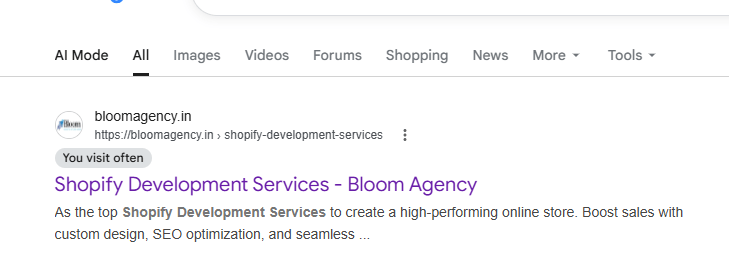
Artificial intelligence handles structured information far more smoothly than messy plain text. Structured data adds explicit context, so AI systems can interpret what you offer—products, services, articles, reviews, FAQs, authors, and organizational details—without having to infer everything. Schema markup has mattered for a while, but in Agentic Search Optimization it plays an even larger role now. When it’s implemented correctly, AI can spot relationships between content pieces, while also cutting down confusion.
Example: structured data can clearly show whether one webpage is about a service, product, event, course, or a local business. It can also spell out things like prices, ratings, location, contact info, business hours, and frequently asked questions.
The cleaner the structure, the easier it is for AI agents to pull accurate facts and use them inside the responses they generate. Bloom Agency includes advanced schema implementation across every AI optimization plan, so businesses can improve both search presence and AI understanding.
Knowledge Graphs: The Base Layer for AI Search
Knowledge graphs are becoming a core part of AI powered search. Instead of treating webpages as isolated pages, AI systems connect relationships between entities, topics, organizations, products, and people.
Those connections help the system answer complicated questions more accurately. For example, if AI “knows” that Bloom Agency focuses on SEO, GEO, AIEO, Shopify development, and digital marketing, it can recommend the agency with more certainty when someone asks for experts in those areas.
But building a knowledge graph footprint is not just publishing content once in a while. Businesses need to reinforce expertise across multiple trusted sources, while keeping information accurate and consistent everywhere the brand appears.
Digital PR, guest articles, citations, author profiles, podcasts, interviews, industry publications, and educational resources all help expand a company’s knowledge graph presence.
AI Ready Content Isn’t the Same as Traditional SEO Content
Traditional SEO content often chased keyword density, search volume, and the usual patterns. AI systems today care more about clarity, completeness, factual accuracy, and topical depth.
Instead of writing separate articles that chase a single isolated keyword, it helps to build topic clusters that answer user questions end to end. Each page should show real expertise and also connect naturally to related pages across the site.
Use descriptive headings, keep a logical layout, write concise explanations, and lean on conversational language, like the style people use when they talk to AI assistants. Adding examples, case studies, statistics, and expert takeaways also makes the content more useful, for humans and for the models too.
Bloom Agency builds AI ready content strategies that blend semantic SEO, topical authority, structured presentation, and reader focused writing—so content is easier to discover across AI search platforms.
Frequently Asked Questions
What is Agentic Search Optimization?
Agentic Search Optimization is the act of tuning your website, your content, and that whole digital footprint so AI agents like ChatGPT, Google AI Overviews, Gemini, Claude, and other clever assistants can grasp what you do, judge it properly, and then recommend your business with confidence. It kind of stretches past normal SEO, because it leans more on AI-driven reasoning not just the usual search rankings, you know.
How is Agentic Search Optimization different from SEO?
Classic SEO mainly helps your site rise in search engine results pages, mostly through keyword tuning, technical tweaks, and link building. Agentic Search Optimization builds on those basics but it also makes your business “AI-friendly” through entity optimization, structured data, semantic writing, brand authority, and trust signals that AI agents actually rely on when they’re suggesting options. Basically it’s not just showing up, it’s being understandable in a more conversational way, even when the assistant is doing the deciding.
Why is Agentic Search important for businesses in 2026?
AI-powered search is shifting how people find products and services. A lot of users now lean on AI helpers to compare businesses, research solutions, and then decide what to buy. By optimizing for Agentic Search, companies can stay present across these newer discovery moments while also building credibility and stronger, long-term digital authority. That’s the long game, not the quick win.
Which businesses can benefit from Agentic Search Optimization?
Nearly every kind of business can benefit here. That includes eCommerce brands, SaaS companies, healthcare providers, schools and educational programs, law firms, real estate agencies, manufacturers, financial services, plus local businesses too. If an organization wants better online visibility and wants to be prepared for what AI search becomes next, Agentic Search Optimization is worth considering, pretty plainly.
Why choose Bloom Agency for Agentic Search Optimization?
Bloom Agency brings together technical SEO, AI search optimization, semantic content development, structured data rollouts, entity optimization, digital PR, and authority-building tactics to help brands win in both traditional search engines and these newer AI-powered search settings. Our future-focused method is designed so your brand stays findable as the tech keeps evolving, even when the rules change a little.
Conclusion
The future of search isn’t just about search engines anymore it’s also being nudged along by intelligent AI agents that research, compare, recommend , and even complete tasks for users, often in the background. With platforms such as ChatGPT, Google AI Overviews, Gemini, Claude, and Perplexity becoming part of the customer journey, businesses have to rethink how they create online visibility and digital authority. Just ranking for keywords , alone, isn’t enough anymore. Brands need to become trusted sources that AI systems can reliably understand, then recommend.
Agentic Search Optimization is the next step in digital marketing, it combines traditional SEO with semantic content, entity optimization, structured data, technical rigor, and brand authority. Companies that adopt this approach sooner will likely attract better leads, increase customer trust, and protect their competitive edge as AI-driven search keeps expanding.
At Bloom Agency, we help organizations prepare for this shift using complete Agentic Search Optimization strategies shaped for how people search today. From technical site optimization and AI-ready content creation, to entity building and digital authority development, our team makes sure your brand is ready for the next generation of search. Since AI keeps reshaping how information is discovered and how decisions are made, partnering with Bloom Agency can help future-proof your online presence and support steady business growth in 2026, and beyond.

Neetu Wadhwa is the Director of Bloom Agency, a Mumbai-based full-service digital marketing and web development company. With a strong focus on performance, innovation, and strategy, she leads the agency in delivering SEO, web design, and growth marketing solutions that drive measurable business outcomes.



Rahul M.
B2B Service Provider