
Google Ads keeps changing, kind of like search habits too, automation, AI, privacy moods, and those customer journeys that move around. So what was good a couple years back might not really work anymore unless you do some tweaking and refinement, even small stuff.
Come 2027, paid search that actually performs won’t be just about picking keywords, then bumping bids, end of story. Advertisers will have to stitch together high-quality first party data, clear audience insights, smart automation, solid creative, landing pages that match the intent, and conversion tracking that is accurate, not guessy.
And the aim isn’t only to pull in more clicks, no. It’s about getting the right people in the first place, then turning those valuable interactions into measurable business results.
Why Google Ads Optimization Is Changing
Google has been integrating artificial intelligence more and more into campaign management, bidding, targeting, creative development, and performance analysis. Automated systems can chew through signals at a scale that would be difficult for marketers to handle by hand, or at least not in the same way, every day.
At the same time, advertisers get less reach to some older, familiar kinds of user data. Privacy updates and browser limitations have made first party information feel more important than it used to.
So these shifts, they kinda force marketers to rethink how their campaigns are organized, and also how they’re actually measured.
Rather than leaning on just one tactic, businesses should craft a flexible plan, sort of a hybrid approach, mixing automation with human oversight. Automated bidding can decide quickly, but marketers still have to figure out what conversions matter, which audiences are truly valuable, and what business outcomes should steer the optimization, not just whatever shows up first.
Build a Strong First-Party Data Strategy
First-party data should become an increasingly important asset for advertisers in 2027.
Customer lists, web site interactions, buying records, enquiry logs, and a few other consented business info can act like useful signals, for both current customers and prospects, in a way that’s kind of telling.
Advertisers can use the right first-party data so platforms are able to figure out which customer groups are actually meaningful, and then point toward users who have similar, kind of matched traits.
Still, the quality of the data is what really matters. A stale customer list, or an incorrectly set-up conversion tracking setup, can send out the wrong signals, and it can look convincing but still be misleading.
So businesses should regularly take a careful look at their customer information, their conversion definitions, how consent is handled, and the integrations tying everything together.
Focus on Search Intent Instead of Keyword Volume
Keywords stay useful, but advertisers should not really pin their whole strategy just on the count of keywords in an account. A really big list does not automatically turn into better performance, not even close. What matters more is the intent behind the searches. Like, someone typing “running shoes” might be just browsing or weighing options. But someone typing “buy men’s running shoes online” is often much nearer to buying, if not already ready to click. Longer, more specific searches can uncover sharp signals, especially when they mention a product, a service, a place, a challenge, or a specific desired result. The goal should be to craft campaigns around meaningful search behaviour not only collecting every possible keyword variation, sort of like hoarding terms that do not add much.
Use Broad Matching Carefully With Better Signals
Automation has kinda shifted how keyword match types really work. Broad matching can help advertisers find searches they might not have had in a normal keyword list, you know.
But broad targeting tends to work best when it’s backed by trustworthy conversion signals and well-defined campaign goals.
If Google gets messy conversion information, the automated systems may start aiming for actions that are easier to generate rather than actions that actually bring business value.
For instance, in a lead-generation campaign, it should try to separate a simple form submission, from a qualified sales opportunity when that’s possible.
When the signals are better, automated systems can push toward outcomes that are more tightly tied to revenue.
Optimize Performance Max With Better Inputs
Performance Max campaigns can access multiple Google inventory sources and use automation to determine where advertisements should appear.
Rather than treating Performance Max as a campaign that can simply be launched and left alone, businesses should regularly evaluate its inputs and outputs.
Advertisers should review conversion quality, asset performance, audience signals, search insights, product information, geographic performance, and other available data.
If a campaign produces a high volume of leads but a low percentage of qualified opportunities, the problem may not be the volume of traffic. The underlying conversion signals may need improvement.
A more useful approach is to ask whether Performance Max is finding the customers the business actually wants.
Improve Conversion Tracking
Accurate conversion tracking is one of the foundations of effective Google Ads optimization.
A campaign can appear successful when measured through clicks and conversions while producing very little actual business value.
For lead-generation businesses, advertisers should consider tracking meaningful stages of the customer journey, such as qualified leads, sales opportunities, appointments, and closed deals.
For ecommerce businesses, purchase value and product-level information can provide more useful signals than transactions alone.
Offline conversion data can also help connect advertising activity with outcomes that happen after the initial website interaction.
Give Landing Pages More Attention
Advertising optimization does not end when someone clicks an advertisement.
The landing page determines what happens next.
A highly relevant advertisement can still produce poor results if the landing page is slow, confusing, difficult to navigate, or unrelated to the user’s search intent.
Businesses should ensure that landing pages clearly communicate the offer, answer important questions, establish credibility, and provide an obvious next step.
Different customer segments may also require different landing experiences.
For example, someone searching for enterprise software may need detailed information about integrations, security, implementation, and support. A smaller business may be more interested in pricing, ease of use, and setup time.
Matching landing page content with customer intent can improve the overall conversion journey.
Create Better Ad Assets
Automation does not eliminate the importance of creative strategy.
Google’s systems may combine different headlines, descriptions, images, videos, and other assets depending on the campaign type and available inventory.
Businesses should therefore provide a useful range of high-quality assets rather than relying on repetitive variations of the same message.
Strong advertising copy should communicate specific benefits and give users a reason to act.
Instead of generic statements such as “Get Started Today,” businesses can communicate a more concrete proposition, such as “Book Same-Day AC Repair in Mumbai.”
Specific messaging can help users understand whether the advertisement matches their needs.
Use Audience Insights to Understand Customers
An audience-first strategy does not mean abandoning keywords. It means understanding who searches, why they search, and what happens after they click.
Advertisers should examine customer segments, device behaviour, locations, purchase patterns, returning users, and other available signals.
First-party audience information can also help businesses distinguish existing customers from prospects.
These insights can influence campaign messaging, landing pages, budgets, offers, and remarketing strategies.
The more clearly a business understands its customers, the easier it becomes to build campaigns around meaningful commercial intent.
Do Not Ignore Negative and Irrelevant Traffic
Automation can expand reach, but advertisers still need to monitor where their budget is going.
Search term insights and campaign reporting can reveal irrelevant themes, low-quality queries, unsuitable locations, or traffic that does not match the business.
Regular reviews help marketers identify waste and improve campaign relevance.
This is especially important for businesses with limited advertising budgets. Every unnecessary click can reduce the amount available for high-value opportunities.
Optimize for Profit, Not Just Clicks
Clicks and impressions are useful diagnostic metrics, but they are not business objectives by themselves.
A campaign generating thousands of inexpensive clicks may be less valuable than one producing fewer visitors who have a much higher probability of becoming customers.
Businesses should establish the metrics that genuinely matter to them.
Depending on the business model, these could include:
- Cost per qualified lead
- Cost per acquisition
- Conversion rate
- Revenue
- Average order value
- Customer lifetime value
- Return on ad spend
- Profit generated from advertising
These metrics create a clearer connection between advertising activity and business performance.
Test Before Making Major Changes
Google Ads accounts can contain many variables, including audiences, bids, creative assets, keywords, locations, landing pages, budgets, and campaign types.
Changing several elements simultaneously makes it difficult to understand what actually caused an improvement or decline.
A structured testing process can provide clearer insights.
Businesses might test different landing page messages, advertisement variations, audience signals, bidding approaches, or budget allocations while keeping other variables relatively stable.
Testing should have a defined objective and a sufficient observation period rather than being based on short-term fluctuations.
Use AI as a Tool, Not a Replacement for Strategy
Artificial intelligence will play an increasingly significant role in advertising management, but automation should not replace business judgment.
AI can assist with data analysis, creative ideation, campaign insights, audience research, and repetitive tasks.
Human marketers still need to establish the business objectives and determine what constitutes a valuable customer.
For example, an automated system may identify that one type of lead converts more frequently. A marketing team still needs to understand why those leads are valuable and whether the pattern is sustainable.
The best approach is likely to combine machine-driven optimization with human analysis.
Pay Attention to Mobile and Local Intent
Mobile devices remain an important part of the customer journey, particularly for local and service-based searches.
People may search for businesses while travelling, comparing nearby options, or looking for immediate assistance.
Local advertisers should therefore ensure that their location information, landing pages, contact options, and business details are accurate.
Campaigns can also be evaluated by geographic performance to understand which areas generate meaningful business.
For companies operating across multiple cities or regions, location-level analysis can help determine where advertising investment is producing valuable outcomes.
Keep Search, SEO, and PPC Connected
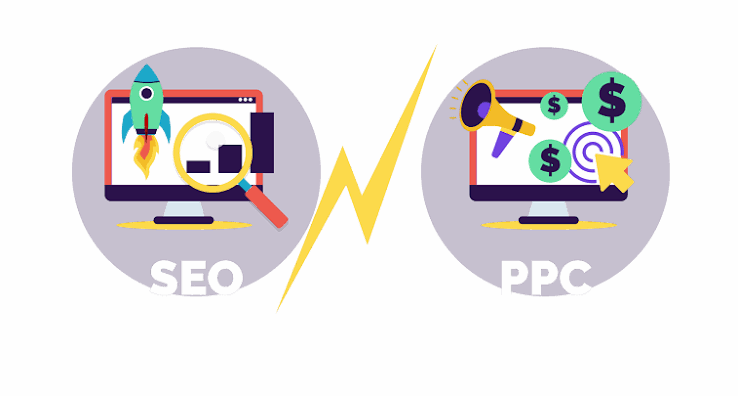
Paid advertising should not operate in isolation from organic search.
Search term data from Google Ads can provide insights into the language customers use. SEO services teams can use these insights to identify content opportunities.
Likewise, organic search performance can reveal topics and landing pages that may support paid campaigns.
Businesses can create a stronger overall strategy by sharing insights between PPC, SEO, content marketing, analytics, and conversion optimization teams.
This becomes even more important as AI changes how people discover information across search engines and conversational platforms.
Revisit Your Campaign Structure Regularly
A campaign structure that worked two years ago may not be appropriate today.
Businesses should periodically review whether campaigns are organized around meaningful objectives, whether budgets are distributed effectively, and whether conversion signals remain accurate.
However, optimization does not mean making constant changes for the sake of activity.
A stable campaign with strong performance may need monitoring rather than unnecessary restructuring.
The objective should be purposeful improvement.
What Should Businesses Stop Doing in 2027?
Several habits can limit PPC performance.
Businesses should avoid expanding keyword lists simply for the sake of adding keywords. They should also avoid judging campaigns entirely by clicks, making frequent changes based on short-term fluctuations, or allowing automated campaigns to run without reviewing conversion quality.
Another common issue is sending every advertisement to the homepage.
A user searching for a specific product or service should ideally arrive on a page that directly addresses that need.
Finally, businesses should avoid treating Google Ads as a set-and-forget channel. Search behaviour, competitors, customer expectations, and platform capabilities continue to change.
What Should Businesses Continue Doing?
Some fundamentals remain valuable even as advertising technology develops.
Businesses should continue researching customers, writing relevant advertisements, improving landing pages, monitoring search behaviour, measuring conversions, and reviewing campaign performance.
They should also continue testing new opportunities while protecting the budget allocated to proven campaigns.
The technology may change, but understanding customers remains at the heart of effective advertising.
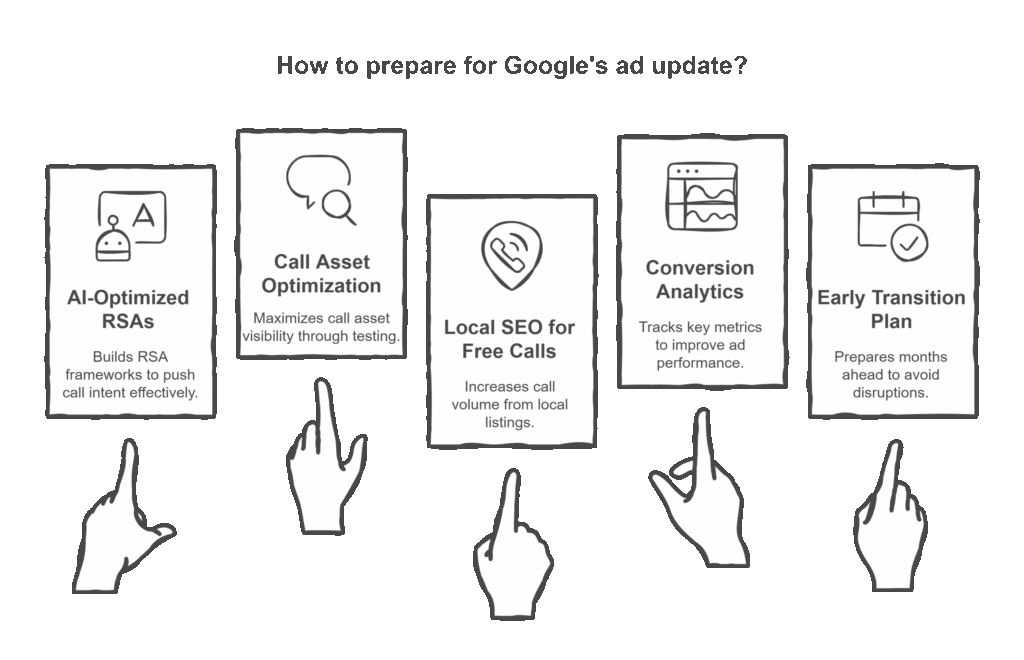
Preparing for Google Ads in 2027
The future of Google Ads is likely to involve more automation, broader use of artificial intelligence, increasingly sophisticated audience signals, and greater emphasis on business-level conversion data.
This does not mean marketers will become less important.
Instead, their role may shift from manually controlling every campaign setting toward designing better strategies, providing stronger data, interpreting performance, and making higher-level decisions.
Businesses that invest in accurate measurement and high-quality customer data can provide automated systems with better information to work from.
Final Thoughts
Google Ads optimization in 2027 should be seen as this ongoing thing, not like a one time setup you do and then forget. You know, it keeps moving, the system changes , the customers change a bit, and you kinda have to keep up. The best campaigns will probably blend automation with human decision-making, use broad discovery alongside audience signals, mix keyword intelligence with real customer understanding, and then connect advertising data to actual business results not just vanity metrics.
Businesses should pay attention to the whole customer journey, from the search query to the ad, then the landing page, the conversion, the sales process, and later the customer relationship. Because the goal is not just “show up more” or “get more clicks”. It’s more like making each piece of the paid advertising path more aligned, more useful, and more commercially meaningful.
And as Google keeps weaving AI into ads, marketers who really understand their customers, keep data dependable, craft experiences that don’t waste attention, and continuously test their approaches will be in a stronger spot as paid search keeps shifting.
If you’re trying to build a performance-focused PPC plan in 2027 the starting point is still kind of simple: understand who you’re targeting, define valuable conversions, set up relevant campaigns, measure what matters, then optimize based on evidence.




Rahul M.
B2B Service Provider