
The hospitality industry is getting way more competitive online, and honestly, it changed how people pick a place to stay. Travellers no longer really rely on just recommendations, travel magazines or that “classic” advertising anymore. Instead, they go straight to Google; they type in hotels, compare the location, read reviews, check what amenities are there, see the prices and even dig for experiences that fit what they planned.
For hotels, this feels like a big chance but also a bit of a struggle. If your hotel shows up in front of the right traveller, at the right moment in the search, it can affect bookings a lot. A solid SEO strategy can pull in people who are already searching for accommodation, destinations, services and experiences that match what you offer.
But it’s not like you can just sprinkle popular keywords on a site and call it done. Hotels need a keyword approach that respects search intent, location, the audience, how hard the competition is, and what each page is supposed to do. This is where strategies can support hospitality brands in building lasting organic presence, so they don’t have to depend on paid ads all the time.
Why Organic Search Matters for Hotels
Paid ads can show up fast, but they also need ongoing money. The second the campaign stops, the traffic tends to fade quickly. Organic search is different. When a hotel’s website starts ranking well for relevant searches, those rankings can keep bringing visitors, month after month.
Think about someone searching for “luxury hotel in Mumbai,” “family-friendly hotel near Mumbai airport,” or “best hotel for business travellers in Mumbai.” These searches aren’t the same; each one shows different expectations and how ready someone is to book. If a hotel builds pages that are genuinely helpful and optimized for those needs, it has a chance to be visible while people are still actively researching.
Organic visibility can also help hotels stand up against the big online travel agencies. OTAs often have strong domain authority and huge ad budgets; still, a hotel website can capture valuable search demand by going after specific queries and answering guest questions clearly.
The goal should not just be more website traffic. The real goal is qualified organic traffic from travellers who actually have a reason to book, like a reason that matches your property.
Start With Your Ideal Guest
Keyword research should start with the audience first, not only with a keyword tool. Hotels serve different kinds of travellers , and knowing who you want to attract helps you understand the exact wording they use when they search.
For instance, a luxury resort might focus on honeymooners, international tourists, premium travellers, and families too, while a business hotel may mostly target corporate travellers, professionals, and companies who arrange stays for employees.
Families might search for a hotel with swimming pools, kid-friendly places, nearby attractions, or roomy rooms . Business travellers often want hotels near airports, conference facilities, reliable Wi-Fi, or easy access to business areas.
Couples, meanwhile, might search for romantic hotels, luxury weekend stays, honeymoon accommodation, or properties with special experiences that feel a bit personal.
These aren’t just “keywords.” They’re intent. A strong hotel keyword plan connects what people type into Google with what your hotel actually delivers.
Build a Balanced Keyword Strategy
Once you understand the target guest, the next step is creating a full keyword strategy. In general, keywords can be grouped into short-tail and long-tail terms.
Short-tail keywords are usually fewer words and can bring higher search volume. Examples are “hotels in Mumbai,” “luxury hotels,” or “resorts in Goa.” They can create a lot of visibility, but they’re often extremely competitive too.
Long-tail keywords are more detailed. Like “luxury hotel near Mumbai airport for business travellers” or “family resort near North Goa beach.” Even if these searches get less volume on average, the traffic can be far more relevant because the searcher has a specific requirement already.
So hotels should avoid putting all their SEO for hotel industry weight on only the big-volume terms. A mix often works better, destination phrases, service terms, location-based searches, and very specific long-tail queries.
Focus on Location-Based Searches
Location is a huge deal in hotel searching. Travellers often include destinations, neighbourhood names, landmarks, airports, railway stations, beaches, business districts, and tourist attractions right in their searches.
A hotel should figure out which geographic terms matter most for its property and then create helpful content around them. For example, a place in Mumbai might go after searches tied to its specific neighbourhood, nearby business hubs, airport convenience, major attractions, and transport links.
Instead of always repeating something basic like “hotel in Mumbai,” the website can make pages and content that answer specific guest needs. That gives search engines better context, while also helping visitors instantly see why your hotel is practical for their trip.
Local SEO also needs attention next to the hotel’s overall website plan. Things like correct business details, reviews, local relevance, and a properly optimized Google Business Profile can help improve visibility in local search, and that can bring more bookings that feel “close to home.”
Give Every Important Page a Primary Keyword
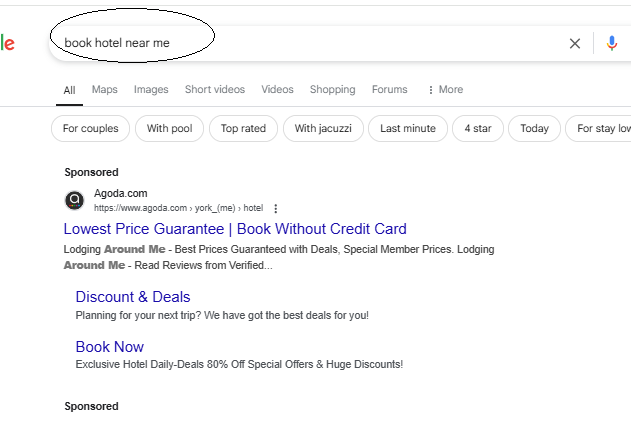
One pretty common thing people do is trying to optimize every page for the exact same group of keywords, but that usually doesn’t really help. Instead, each important page should end up with a clear job, kind of a distinct purpose and a primary keyword, or at least a clear topic it should own.
So for a hotel website, you might have separate pages for accommodation, luxury rooms family rooms, business facilities, wedding and event venues, restaurants, spa services, conference facilities, destination information, and airport accommodation (yeah, it can get a bit long).
Each page can also aim at a different search intent. A room page should talk about the room’s features, occupancy, included facilities, photographs, and booking info. Meanwhile, a conference page could lean into meeting spaces, business facilities capacity, and corporate events.
That setup ends up feeling more organized, because each page gets its own chance to pull in the right kind of visitors.
Use Keywords Naturally
Keyword optimization doesn’t mean you’re supposed to say the same phrase over and over again. Search engines are way more advanced now, they understand topics, entities, context, and what the user is actually trying to do. Too much repetition can make the text annoying to read, and it can feel fake.
Instead, keywords should show up in a natural way in the right places: page titles, headings, the intro section, useful subheadings, metadata, image alt text where it makes sense, and in the body copy itself.
You can also use related phrases and supporting ideas, because those help reinforce topical relevance. For instance, if a page is for a hotel in Mumbai, it might naturally mention accommodation, rooms, check-in, airport access, business districts, nearby attractions, dining, amenities, and transport.
And yeah, write it like the guest is the priority first.
Create Content Around Guest Questions
Hotels have a built-in content advantage since travelers usually have tons of questions before they book.
People might be wondering about attractions close to the hotel, how far the airport is, family accommodation, business facilities, breakfast options, nearby activities, the best time to visit, and what they should know before they travel.
Those questions can turn into real content ideas. A hotel blog can cover destination guides, travel tips, local attraction information, itinerary suggestions, event guides, and practical travel advice.
When you do that, you can reach people earlier in the booking journey. It also helps introduce the hotel to travelers who maybe haven’t even found the property yet.
Optimize the Website for Direct Bookings
Hotel SEO shouldn’t stop at rankings, if we’re being honest. The real outcome is guests.
So once organic visitors land on your site, the booking journey should feel easy and direct. Key information should be simple to locate, pages should load fast, and calls to action for booking should be visible, not overly pushy or annoying.
Room pages should also do their job clearly; they need to communicate the value of the accommodation. Strong photography, specific descriptions, amenities, location details, reviews, and clear booking options all help visitors decide quicker.
A technically solid website plus helpful content usually creates a smoother path from search result to actual booking.
Strengthen Technical SEO

Even the best keyword plan can fall apart without technical support. Hotels should pay attention to mobile usability, page speed, Core Web Vitals, crawlability, indexation, internal linking, structured data, broken links, redirects, image optimization, and secure browsing.
Mobile optimization matters a lot since many travelers browse hotels on their phones while commuting, traveling, or planning last-minute.
Big hotel images can slow pages down too. Proper compression and modern formats can improve performance without killing visual quality.
Technical SEO makes it easier for search engines to find, understand, and index the hotel’s content.
Build a Strong Internal Linking Structure
Internal links help both visitors and search engines move around the website. A destination guide could link to relevant accommodation pages, and a page about business travel might point to conference facilities and business rooms.
Similarly, a restaurant page can connect to dining information and also link back to hotel accommodation pages.
This builds sensible connections between related content. It also helps search engines understand how different topics connect across the site, and that relationship becomes clearer over time.
Measure Business-Focused SEO Results
SEO performance should not be judged solely by keyword rankings. Hotels should monitor organic traffic, engagement, landing pages, search visibility, conversions, booking enquiries, and other meaningful business outcomes.
Some keywords may generate thousands of visits but few bookings. Another highly specific keyword might produce fewer visitors but generate a significantly higher conversion rate.
This is why SEO for hotel reporting should connect search performance with business objectives. Over time, data can reveal which topics, landing pages, locations, and search queries are producing the most valuable visitors.
Build Long-Term Visibility With Bloom Agency
Hotel SEO requires more than adding keywords to existing pages. It involves understanding the target traveller, researching search behaviour, creating useful content, optimizing important landing pages, strengthening technical foundations, and continuously measuring performance.
The hospitality industry is crowded, and hotels are competing not only with other properties but also with OTAs, travel websites, directories, bloggers, and destination platforms.
A strategic approach can help a hotel establish a stronger organic presence and attract travellers at different stages of the booking journey.
At Bloom Agency, our approach to SEO focuses on creating search visibility around the topics and services that matter to a business. For hotels, that means connecting keyword research with location, guest intent, content strategy, technical optimization, and conversion opportunities.
The objective is simple: attract the right visitors, provide useful information, build trust, and create more opportunities for direct bookings.
Conclusion
A successful hotel keyword strategy is not about finding the biggest keyword and repeating it throughout a website. It is about understanding what potential guests are searching for and creating pages that genuinely answer those needs.
From destination and location-based searches to long-tail queries, amenity-related terms, and booking-focused keywords, every search can represent a different opportunity.
When keyword research is combined with useful content, technical SEO, local optimization, internal linking, and a smooth booking experience, hotels can build a stronger foundation for sustainable organic growth.
In a competitive hospitality market, being visible at the right moment can make the difference between a traveller discovering your property and choosing another one. A thoughtful SEO strategy helps ensure your hotel has a better chance of being found when that moment arrives.

Neetu Wadhwa is the Director of Bloom Agency, a Mumbai-based full-service digital marketing and web development company. With a strong focus on performance, innovation, and strategy, she leads the agency in delivering SEO, web design, and growth marketing solutions that drive measurable business outcomes.




Rahul M.
B2B Service Provider