
B2B SaaS companies live in a pretty competitive digital space. Making a strong software product is just one sliver of the growth puzzle. You also need a dependable setup for pulling in the right prospects, catching their interest, guiding them along and turning them into paying customers.
The tricky part is, there really is no single formula for SaaS lead generation. Search visibility, content marketing, paid ads, social media, webinars, partnerships, referrals, and product-led tactics can all nudge your pipeline forward. In practice, the best path is usually to blend multiple channels and keep tracking what each one is doing, so you can see how they’re contributing over time.
Whether you run demand generation in-house or hire a SaaS lead generation agency, the next 29 strategies can help you build a steadier stream of qualified B2B leads.
1. Build a Strong Lead Generation Foundation
Before launching campaigns, you should define what “successful lead” looks like for your SaaS business. Not just, like, some vague thing, but really pin down your ideal customer profile, buyer personas, target industries, company sizes, the decision-makers, and what their major pain points are. Once you know that, you can set measurable goals like qualified leads generated, demo requests, free-trial registrations, sales opportunities and even your customer acquisition cost. Then connect your CRM, analytics, marketing automation, and conversion tracking, so you get a clear view of which channels are actually doing the work and not just making noise. This kind of solid setup makes it easier to evaluate every marketing activity that comes after
2. Create SEO-Focused Content Around Buyer Intent
Content still remains one of the strongest ways for SaaS companies to pull in prospects, before those people are ready to talk to sales. So don’t just publish articles to hit a higher posting cadence, instead choose topics your potential customers are already searching for. Build your content around informational, commercial, and transactional search intent, which is, you know, kinda different vibes for different stages. For instance, a project-management SaaS platform might go after topics about productivity, project planning, team collaboration, workflow automation, and software comparisons. Your content should answer real questions, while also gently but naturally steering readers toward relevant product pages, demos, free trials, or downloadable resources.
3. Create Content for Every Funnel Stage
Also, a single blog strategy typically doesn’t serve every prospect the same way. Top-of-funnel content can introduce the problem and educate new audiences. Middle-of-funnel content tends to explain the solution, using guides, comparisons, tutorials, and case studies. Bottom-of-funnel content should help prospects decide, with product comparisons, customer stories, pricing details, and demonstrations. When you create content for each stage, your SaaS website can support PPC the entire buying journey, not only the beginning and then kind of… stop.
4. Develop High-Quality Video Content
Video can make complex SaaS products easier to understand while giving your brand another channel for discovery.
Create product demonstrations, feature explainers, tutorials, customer interviews, educational videos and short-form industry insights. A detailed video can also be repurposed into social posts, blog content, short clips and email campaigns.
The key is to make every video useful rather than turning every piece of content into a sales pitch.
5. Publish Strategic Guest Posts
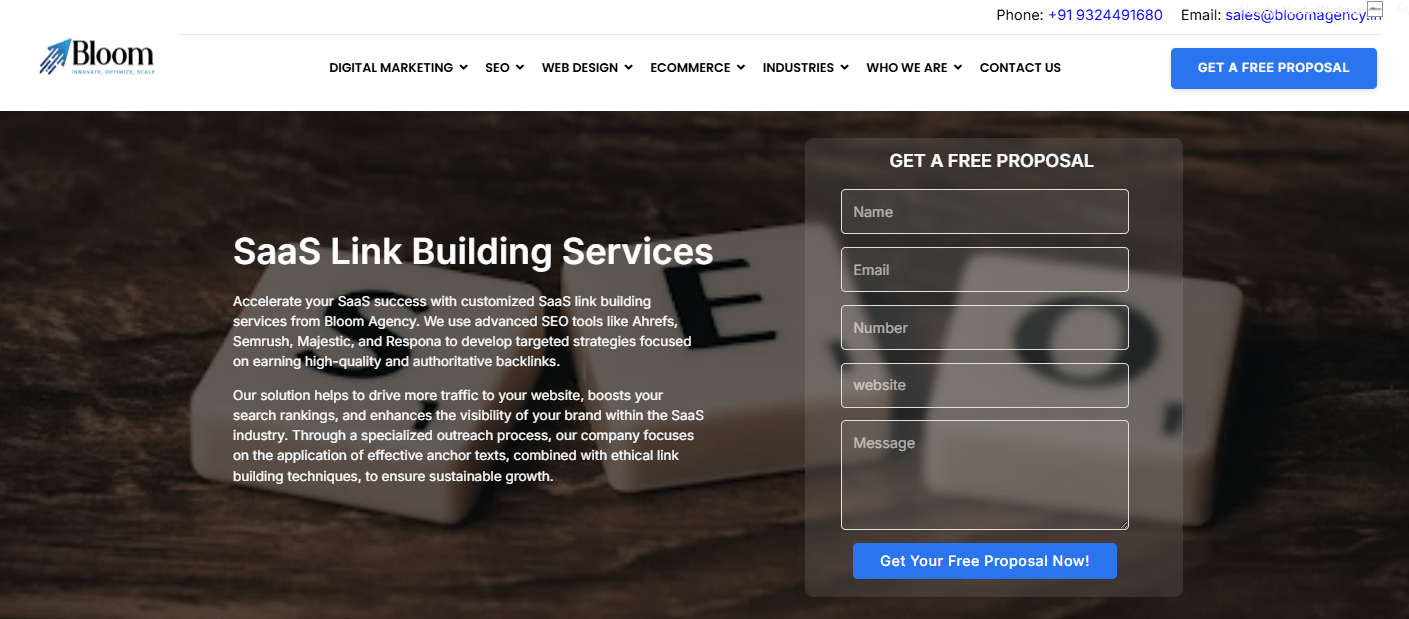
Guest posting can put your saas marketing agency brand in front of audiences that already follow relevant industry publications.
Choose websites based on audience relevance, topical authority, editorial quality and overall credibility. A guest article should provide genuine value rather than exist only to obtain a backlink.
For SaaS companies, strategic guest content can support brand awareness, referral traffic, authority building and organic search visibility when it is part of a broader SEO strategy.
6. Appear on Industry Podcasts
Podcasts provide an opportunity to build familiarity and authority through long-form conversations.
SaaS founders, marketing leaders, product specialists and executives can pitch themselves to podcasts relevant to their industry. Discuss customer problems, emerging trends, lessons learned, technology changes or practical strategies.
Podcast appearances may not always create immediate conversions, but repeated exposure can strengthen brand recognition and generate future opportunities.
7. Host Educational Webinars
Webinars can combine demand generation and lead capture in a single campaign.
Choose a topic that addresses a meaningful problem for your ideal customers. Registration can collect basic business information while the webinar itself demonstrates your expertise.
Instead of spending the entire session promoting your product, focus on providing actionable insights. A useful presentation builds more trust and gives attendees a reason to continue the conversation.
8. Add Live Chat to Your Website
Website visitors often have questions before they are ready to complete a form or book a demo.
Live chat gives potential customers a direct way to ask about features, integrations, pricing, implementation or suitability. Your sales or customer success team can use these conversations to identify high-intent visitors and guide them toward the appropriate next step.
Make sure chat interactions are recorded in your CRM so valuable conversations do not disappear.
9. Use AI Powered Chatbots
Not every visitor really needs to talk to a salesperson right away.
A properly configured chatbot can field the usual questions, point people to useful resources, help qualify them, and guide prospects toward demos or trials. It can also support visitors during those weird after-hours gaps.
The strongest chatbot moments are kinda contextual. Like , if someone hangs out for a while on your pricing page , they may need different help than someone just skimming a beginner guide.
10. Turn Email Signatures Into Conversion Chances
Your team sends out emails every day, which means you get hundreds or thousands of brand impressions without trying.
So instead of treating email signatures as only contact info , add one relevant call to action. Depending on what your campaign looks like right now, that CTA might point toward a product demo, a webinar, a report, a free tool, a case study, or a trial.
Keep the CTA uncomplicated, and update it as your marketing priorities shift.
11. Use Targeted Cold Email
Cold email can work well especially when your SaaS product has a clearly defined ideal customer.
The aim shouldnt be blasting thousands of identical notes. Create a tight prospect list and tailor the outreach based on the prospect role, their business situation, or the challenge they are likely dealing with.
Make sure messages are short, relevant, and actually helpful. Try out different subject lines, value angles, and calls to action, but also track reply quality instead of only counting how many emails you sent.
12. Repurpose Your Best Content
You dont always need to churn out brand-new material nonstop.
A solid research report can stretch into multiple blog posts, a webinar, social media posts, an infographic, an email series, and even a downloadable guide. And if a webinar performs well, it can turn into a video set plus several bite size learning pieces.
Repurposing helps SaaS teams grow content reach without rebuilding every asset from scratch, again and again.
13. Build a Steady LinkedIn Presence
For a lot of B2B SaaS brands , LinkedIn is a key channel for getting in front of decision-makers.
Post practical insights, customer lessons, product education, industry observations, and original research. Also, encourage founders and subject-matter experts to show up, rather than leaning only on company-page posts.
When engagement is real, it can spark conversations with prospects well before they ever submit a traditional lead form.
14. Collect Customer Reviews and Testimonials
Social proof can cut down uncertainty during the SaaS buying process.
Ask satisfied customers to describe specific experiences, like what problem they ran into, what solution they chose, and what results they actually got. Detailed testimonials usually outperform generic lines like “great product” every single time.
Put the most relevant testimonials across your site, including landing pages, pricing pages, product pages, and demo pages.
15. Use Behaviour-Based Website Popups

Popups can capture visitors who might otherwise leave without taking action.
Rather than displaying the same message to everyone, trigger offers according to user behaviour. Exit intent, time spent on a page, repeated visits and interaction with specific sections can all be useful signals.
The offer should also match the visitor’s context. A person reading a detailed SEO guide may be more interested in a related checklist than a generic newsletter subscription.
16. Create Valuable Lead Magnets
A lead magnet gives potential customers a practical reason to exchange their contact details.
Depending on your SaaS niche, you could create templates, calculators, checklists, industry reports, ebooks, research studies, playbooks, frameworks or interactive tools.
The most effective lead magnets solve a specific problem quickly. If someone downloads your resource and immediately gets useful results from it, your brand earns credibility.
17. Build Automated Email Nurturing
Not every lead is ready to purchase when they first enter your database.
Email nurturing allows you to continue educating prospects over time. A sequence could introduce useful resources, explain common problems, share customer examples and eventually present a product-related CTA.
Segment campaigns according to how the lead entered your funnel. Someone who requested a product demo should not necessarily receive the same sequence as someone who downloaded an introductory guide.
18. Develop Co-Marketing Partnerships
Find companies that serve the same audience without directly competing with your SaaS product.
A complementary business can become a valuable marketing partner. Together, you can produce webinars, research reports, guides, podcasts, events or educational campaigns.
Both companies benefit by accessing a new but relevant audience while sharing the work involved in creating the campaign.
19. Invest in Paid Advertising
Paid search and social advertising can provide immediate access to highly targeted audiences.
Google Ads can capture prospects who are actively searching for a solution, while platforms such as LinkedIn can help reach people according to professional characteristics.
Use different campaigns for different stages of the funnel. High-intent prospects may be directed to demo or trial pages, while colder audiences may respond better to educational resources.
20. Create Dedicated Landing Pages
Sending every advertising visitor to your homepage can create unnecessary friction.
Instead, develop landing pages that match the intent behind each campaign. The headline, offer, messaging and CTA should closely correspond with the advertisement or search query that brought the visitor there.
A strong SaaS landing page should communicate the problem, explain the solution, demonstrate credibility and make the next action obvious.
21. Organize Industry Meetups and Events

Digital marketing doesn’t mean every interaction has to happen online.
Hosting small events, workshops and industry meetups can create valuable relationships with prospects, partners and customers. Events can also generate content that can later be reused across your website and social channels.
Keep the event educational and relationship-focused rather than turning it into an extended sales presentation.
22. List Your Product on SaaS Directories
Software directories can help potential customers discover and compare solutions.
Create complete profiles on relevant platforms and keep your product information, screenshots, features and company details updated. Encourage genuine customers to leave reviews when appropriate.
Directory visibility can also contribute referral traffic and support broader brand discovery.
23. Offer Free Trials or Freemium Access
A free trial or freemium model can reduce the barrier to trying a SaaS product.
Free trials are particularly useful when users can understand the product’s value quickly. Freemium plans can provide ongoing access to a limited set of features while giving customers an opportunity to experience the product before upgrading.
The right model depends on your product complexity, customer acquisition economics and sales process.
24. Use Influencer and Expert Marketing
Influencer marketing isn’t limited to consumer brands.
B2B SaaS companies can collaborate with respected consultants, industry experts, educators, creators and niche publishers whose audiences overlap with their ideal customers.
An expert does not necessarily need to promote your software directly. Educational collaborations can introduce your brand to a relevant audience in a more authentic way.
25. Build Interactive Tools and Assessments
Interactive content usually grabs attention more strongly than the static stuff. So you might want to craft some mini tools like calculators, assessments, quizzes, benchmarks, recommendation engines, and even self-audits that tie directly to your product space.
For instance, an analytics SaaS firm could make a business performance calculator, where users type in their info, and then it gives tailored suggestions based on what they entered. These kinds of interactive moments can also pull in leads, while at the same time delivering real, useful insights.
26. Create a Customer Referral Program
Often your happiest customers can turn into one of your best ways to acquire new people. Start by spotting customers who actually use your product, and who have reached meaningful outcomes, not just trial signups. Then, reduce the effort it takes for them to recommend your SaaS to coworkers, or other organizations.
Depending on how your business works, referral perks might be account credits, longer subscriptions, extra features, or other suitable rewards that feel fair.
27. Participate in Relevant Online Communities

Online communities can be a straight shot to folks actively talking about the problems you solve. Jump into LinkedIn groups, professional associations, industry forums, and similar places. But aim to answer questions, and share know-how, rather than trying to push your product every few minutes.
If your contribution is genuinely helpful, people might drift over to your company on their own, and that can become future lead momentum.
28. Answer Questions on Q&A Platforms
Q&A platforms are a solid way to build credibility around specific subjects. Search for questions that match your industry, your product category, and the pain points your customers keep mentioning. Write full answers that stand on their own, and bring up your business only when it actually helps add context.
Good responses can drive referral traffic, build brand awareness, and improve long-term visibility, even when you’re not “selling” anything directly.
29. Turn Your About Us Page Into a Conversion Asset
Your About Us page isnt only for saying when your company started. Use it to share your mission, your expertise, the people behind it, your values, your customer focus, and your story. Then include clear routes to product pages, case studies, resources, or demos.
Prospects who are researching you may already be pretty close to buying. So give them an obvious next step, instead of sending them off at the very end of the page, with no real direction.
How to Choose the Right SaaS Lead Generation Strategies
You don’t need to implement all 29 strategies simultaneously. Start by identifying where your current funnel is weakest.
If your website has little organic visibility, prioritize SEO service and content. If you receive traffic but few conversions, focus on landing pages, lead magnets, CTAs and conversion optimization. If you have plenty of leads but weak sales progression, improve nurturing, qualification and follow-up.
Paid campaigns can accelerate demand capture, while partnerships, podcasts, communities and thought leadership can strengthen long-term brand authority.
The right combination will depend on your product, audience, sales cycle, market and available resources.
Measure More Than Lead Volume
Generating a large number of leads does not automatically mean your marketing is successful.
Track metrics such as marketing-qualified leads, sales-qualified leads, demo-to-customer rate, lead-to-opportunity rate, customer acquisition cost, pipeline contribution and customer lifetime value.
This helps you identify which campaigns are producing valuable customers rather than simply inexpensive form submissions.
Build a Sustainable B2B SaaS Growth Engine
Successful SaaS lead generation is rarely based on one viral campaign or one advertising channel. It is built through a connected system of search visibility, useful content, targeted campaigns, strong conversion experiences, nurturing and customer advocacy.
Start with a few strategies that closely match your audience and business objectives. Measure the results, learn from the data and gradually expand the channels that demonstrate meaningful pipeline impact.
For SaaS businesses looking to strengthen their organic visibility, paid acquisition, content strategy and overall digital growth, working with an experienced digital marketing agency can provide the specialist knowledge and execution needed to scale efficiently.
At Bloom Agency, the focus should be on building marketing strategies that connect visibility with measurable business outcomes. The objective isn’t simply to generate more traffic or collect more form submissions. It is to attract the right audience, create meaningful engagement and turn qualified prospects into long-term customers.

Neetu Wadhwa is the Director of Bloom Agency, a Mumbai-based full-service digital marketing and web development company. With a strong focus on performance, innovation, and strategy, she leads the agency in delivering SEO, web design, and growth marketing solutions that drive measurable business outcomes.





Rahul M.
B2B Service Provider