
Why Ecommerce SEO Matters in 2025

Ecommerce SEO is one of the major factors that have led to the success of online stores. With consumers shopping online more than ever, being ranked high on search engines has become necessary. Unlike traditional marketing or paid ads, Ecommerce SEO is how your business can still get new customers without the need for ads, thus creating a traffic base that is both sustainable and profitable.
Competition is really harsh in 2025. Online shoppers are making use of more advanced searches, voice searches, and AI-driven product recommendations to find what they need. Hence, your store must have a well-planned and data-driven SEO plan if you want to be the one at the top when it matters most.
This manual will parse the entire procedure beginning with profound keyword research, product and category page optimization, content marketing, technical SEO, link building, analytics, and future trends.
Understanding Ecommerce SEO

Ecommerce SEO is the method of changing an online store so that it ranks for the most relevant searches that bring about sales. The main point is not only traffic but the traffic to be buyers who are willing to make a purchase.
Why Ecommerce SEO is Different from Regular SEO:
- Emphasizes product and category pages instead of only blog posts
- Focuses on keywords with transactional intent (e.g., “buy wireless headphones online”)
- Needs technical optimization for big product catalogs and pages that change frequently
Makes use of content and UX to help buyers move from search to checkout
Benefits of Ecommerce SEO:
- More organic traffic from search engines
- Sales and revenue are increased
- Improved brand exposure and trust
- Lowered dependence on paid advertising campaigns
Ecommerce SEO is a situation that takes time. While a traffic boost through paid ads can be done instantly, SEO, on the other hand, gradually over time, creates authority that ensures steady traffic and sales.
Core Ecommerce SEO Strategies
It is great to know from the first chapter of this guide that Ecommerce SEO is different from Regular SEO, yet just as important, or even more. Now the question is, what are some real-life strategies one can use to get new visitors to their site, make them stay longer and turn them into loyal customers? We discuss the essential tactical steps of an e-commerce website necessary for success in this section.
Sticking to a well thought out plan that includes keyword research, technical optimization, content marketing, and link building will make these strategies work like a charm. Your store, thus, will not only attract the traffic needed but will also amplify conversions.
1. Ecommerce Keyword Research: Finding High-Intent Opportunities

Without a doubt, keyword research is the foundation of an Ecommerce SEO strategy. It is a factor that essentially leads the users of the Internet audience and the terms that those words get chosen by the price of a term.
Types of e-commerce keywords:
Product-specific keywords: These are the very products for which the audience is searching.
Example: “wireless noise-canceling headphones”
Category Keywords: These are the wider search terms that refer to product groups.
Example: “best running shoes for women”
Long-Tail Keywords: These are very specific search phrases that have less competition and high user intent.
Example: “affordable organic skincare for sensitive skin India“
Keyword Research Tools:
- Google Keyword Planner – to get volume and competition data
- Ahrefs / SEMrush – to find out the competitors and their keywords, and gaps
- Ubersuggest – for content creation and finding long-tail keywords
Tips for Effective Ecommerce Keyword Research:
- Immerse yourself in understanding what a buyer wants rather than just focusing on the volume of searches.
- Use a mix of short-tail and long-tail keywords for your targeting
- Competitor analysis is a great way to find out which keywords are bringing them the most traffic
- Keywords relating to a particular product, category, or type of content can be combined to form a group
- Strategically if your business chooses the right keywords, SEO through a webshop campaign will deliver you not only quantitatively high traffic but also qualitatively and conversion-wise profitable.
2. Optimizing Product Pages for SEO and Conversions
Product pages are your store’s core online assets, the place where SEO work is directly linked with revenue growth. With the right optimization, a product page will rank higher and keep users engaged longer.
Pertinent features of product pages optimization:
Title Tags:
- Put the focus keyword in the title in a natural way
- Example: “Men’s Leather Sneakers | Brand Name”
Meta Descriptions:
- Tell briefly and engagingly what the product is about
- Put in importunately the unique selling points and advantages
Header Structure (H1, H2, H3):
- Help with content organization for both users and search engines
Unique Product Descriptions:
- Do not plagiarize the manufacturer’s product description
- Explanation of features, benefits, and user should be included
High-Quality Images & Alt Text:
- Use images that show the product from different sides
- For SEO purposes, insert descriptive alt text
Schema Markup:
- Offer organized data for price, availability, and ratings
- Facilitate your page to get noticed in SERPs through rich snippets
Internal Linking:
- Links to similar products, categories, and articles
- Helps user navigation and site navigation that is implemented by bots
Example: A product page optimized for “wireless earbuds” would contain: a descriptive title, engaging meta description, multiple high-quality images, customer reviews, detailed specifications, and links to related accessories.
4. Category Page SEO: Turning Browsers Into Buyers
By definition, category pages represent the routes for customers who require different products. Working on the pages not only raises their rank but also the conversion rate.
Category Page Optimization Strategies:
- Open the page with a concise, keyword-rich description
- Make best-sellers or most popular products the main focus
- Put up (size, color, price) filters to facilitate user experience
- Employ internal links to direct users to the accompanying categories or blog posts
- Use both informational and transactional keywords to attract users of all stages of the buying journey
Example: The category page of “Women’s Running Shoes” could have:
- H1: Women’s Running Shoes
- Welcome paragraph talking of running the shoes of style, performance, and comfort
- Filter choices: size, brand, color
- Guide: “How to Choose the Perfect Running Shoes“
4. Content Marketing for Ecommerce SEO

Content marketing is the lifeblood of Ecommerce SEO. Product and category pages cater to those buyers who are at the stage of making a purchase decision, content, on the other hand, attracts potential customers at the very beginning of the buying journey.
Why Content Marketing Matters:
- Ranks for informational queries and thus makes organic traffic grow
- Gives the business brand authority and trustworthiness
- Lets internal linking occur naturally from there to product and category pages
- Matches well with long-tail keyword strategies
Content That Works for Ecommerce SEO:
Blog Posts:
- Cover topics of customer questions, trends, or guides related to your products
- Example: “Top 10 Running Shoes for Marathon Training in 2025”
Buying Guides:
- They make it easy for users to understand what to buy
- Example: “How to Choose the Best Wireless Earbuds for Work and Travel”
Video Content:
- Tutorials, demos, unboxings can keep your visitor’s time with you, and the content will be visually and verbally appealing, which will result in engagement
- Example: “Step-by-Step Guide to Installing Your Smart Home Security System”
FAQs and Knowledge Base:
- They solve the most frequent questions from customers directly on product and category pages
- Enhances the visibility in search for question-based queries
User-Generated Content:
- Includes reviews, testimonials, and social media posts
- Helps to establish confidence and encourage conversions
Actionable Tip: Align your content calendar with high-intent keywords and seasonal trends to keep attracting and converting visitors at a consistent pace.
5. Technical SEO for Ecommerce
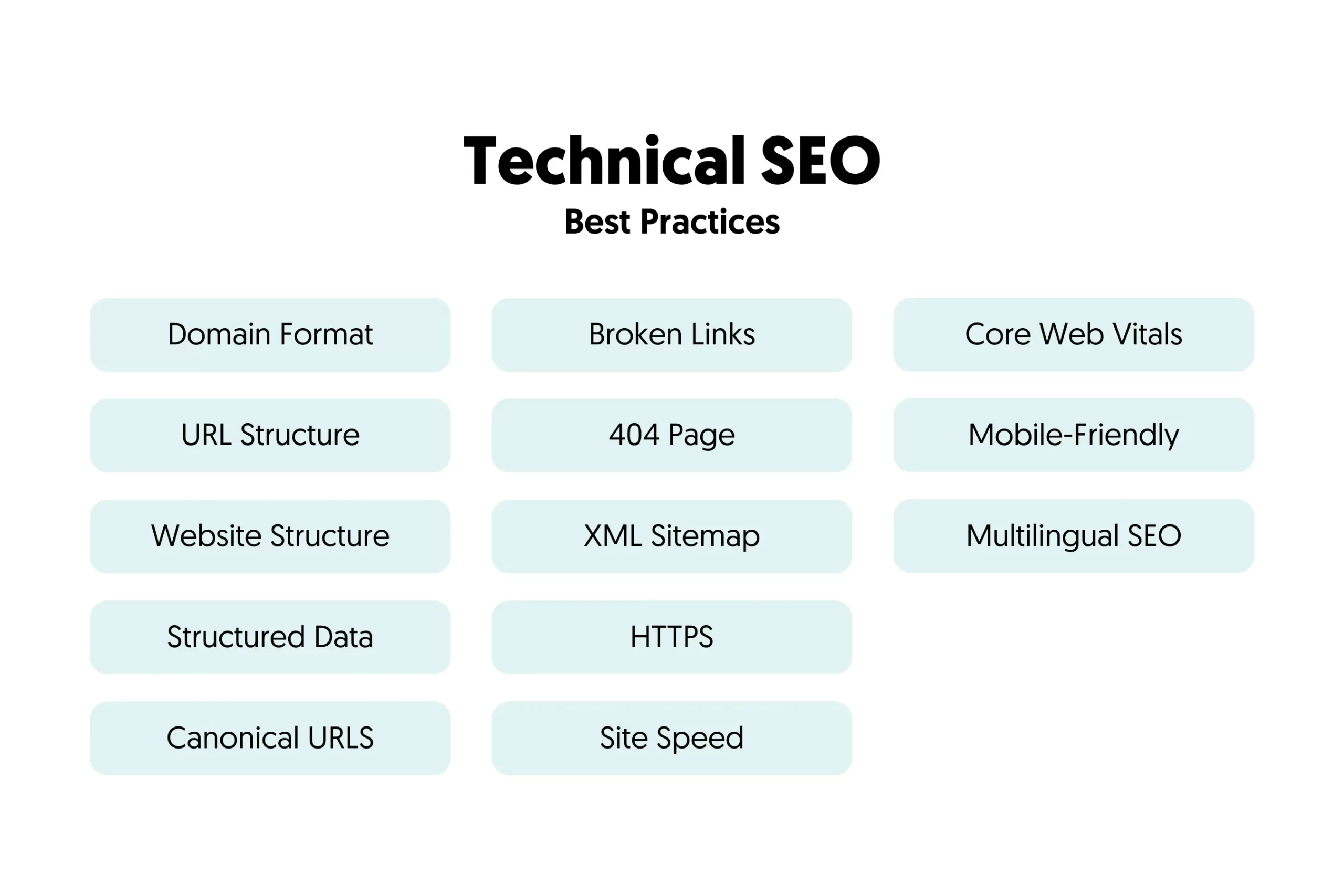
Technical SEO is the time when a designer makes the site elegant from inside so that the search engines can do their job (crawling, indexing, and ranking) efficiently. Without it, the best work may remain unseen.
Key Technical SEO Areas:
Site Speed:
- Try to have your pages load in 3 seconds or less
- Make images smaller, make use of caching, and optimize your code
Mobile Optimization:
- After all, most buyers use mobile devices in shopping
- Use responsive design and make the site navigation user-friendly
URL Structure:
- Go for URLs with no clutter that explain the content
- For instance: www.example.com/womens-running-shoes
HTTPS Security:
- Make the transaction data secure
- Give your site a boost in Google rankings too
Canonical Tags:
- Help to resolve duplicate content problems from different variants of a product
XML Sitemap & Robots.txt:
- Go over all pages that need to be indexed
- Keep off those pages that are of no use to the search engines
Structured Data / Schema Markup:
- Product, review, and breadcrumb schema are the ways that a website can be more visible to the user in the search engine results
- Can be used for displaying ratings, availability, and price snippets
Pagination & Crawlability:
- Employ rel=”next/prev” tags or infinity scroll options
- Allow search engines to access all products
Example: A store that sells electronic items online may have as many as 1000s of products. Proper technical SEO is what makes every product, category, and content page reachable not only to Google but also to users, thereby increasing the store overall rankings.
7. Link Building for Ecommerce SEO

Backlinks are still one of the main factors that affect the ranking of an Ecommerce SEO in Google. Quality links raise domain authority that makes product and category pages get more traffic from the first page of the search results.
Ecommerce Link Building Strategies:
Guest Posting: Contribute articles to niche blogs and insert handy links to your store
Influencer Collaborations: Use influencers to test your products and provide links that direct to your website
Press Releases: Committing to product launches or campaigns through press releases to get media coverage
Product Reviews: Contact bloggers, YouTubers, or industry sites for reviewing your products
Internal Linking:
- Connections between similar products, categories, and blog content
- Assisting search engines in comprehending the site structure as well as giving them ranking power
Pro Tip: Limit your work to only a handful of authoritative links instead of several low-quality links.
7. Tracking and Measuring Ecommerce SEO Success
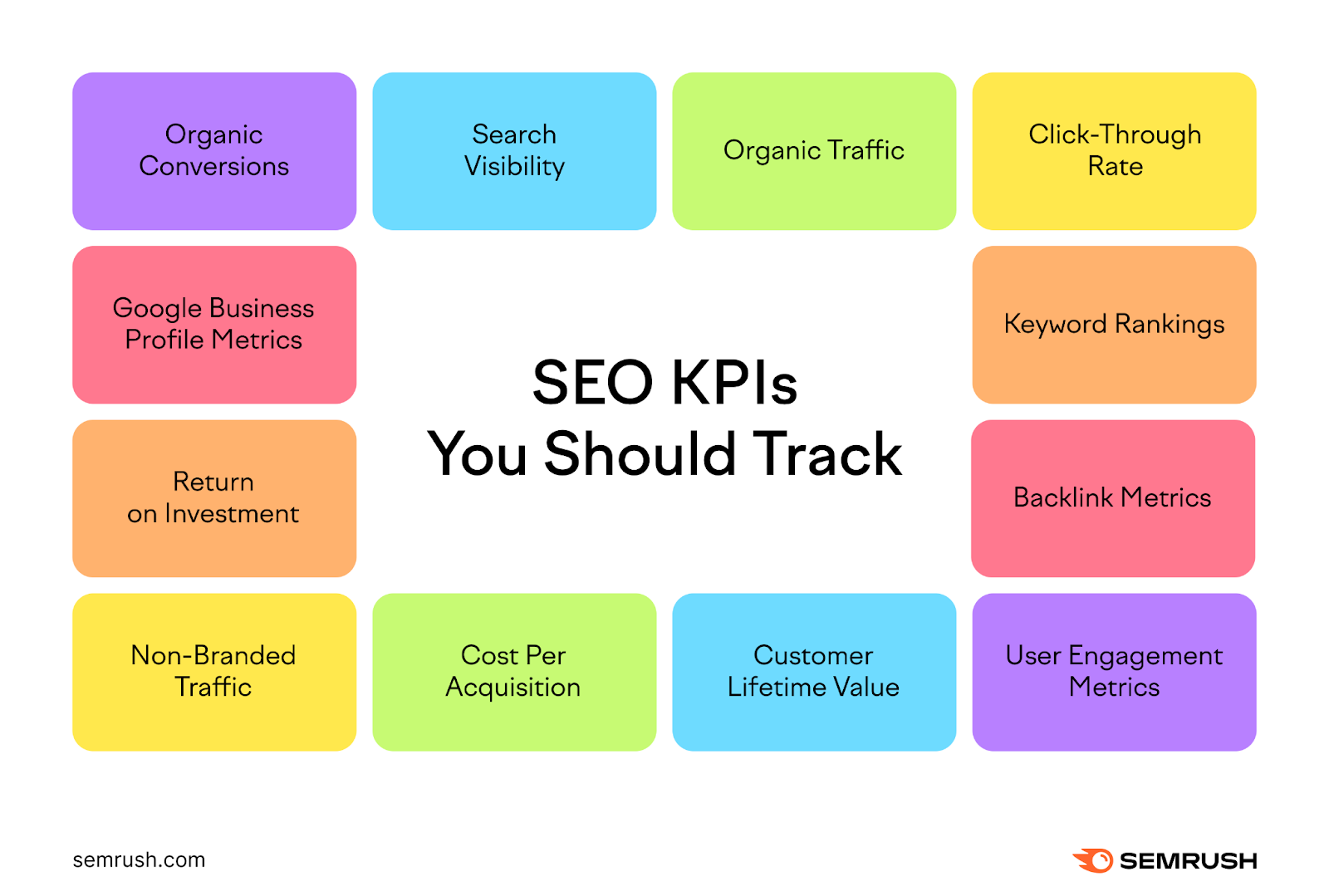
It is impossible to make changes to your e-commerce SEO without measuring first. If you want to be effective with your strategies, checking the SEO condition of your e-commerce website should be your daily routine.
Essential metrics to monitor:
- Organic Traffic:The amount of traffic from search engines can be tracked by Google Analytics.
- Keyword Rankings: You should keep an eye on product and category keywords that matter the most with the help of a tool such as Ahrefs, SEMrush, or Moz.
- Conversion Rate: The number of buyers from the total visitors should be recorded.
- Bounce Rate & Dwell Time: A low bounce rate signals not only that the content is interesting but also that it is valuable.
- Backlink Profile: Stay on top of the quality and quantity of the changes referring domains made.
- Page Load Times: Slow-loading pages lose both rankings and user experience.
Actionable Tip: Monthly KPIs for traffic, rankings, and conversions should be set. Through trend analysis, you will be able to decide on content, product pages, and technical SEO changes.
Common Ecommerce SEO Mistakes to Avoid
Even the best-tier ecommerce businesses are making SEO mistakes that result in lower their ranking and conversions. Such mistakes include:
- Duplicate Product Descriptions: It is very imperative that you create new content for each product in your store.
- Not Optimizing for Mobile: Since mobile-first indexing is already in place, this step is absolutely imprescindible.
- Poor Internal Linking: This limits the site being crawled and ranking power being spread to different pages of your site is weakened.
- Giving Up on Content Marketing: Just having product pages will not be enough to let significant organic traffic.
- Slow Page Speed: This is mostly the case why bounce rates are getting higher and thus, rankings are getting lower.
- Keyword Stuffing: Overdoing keywords in the pages makes them less readable and users lose their trust in you.
Tip: Doing SEO audits should be a regular quarterly activity in your schedule so that you are always aware of issues.
Future Trends in Ecommerce SEO
Being on par with the most recent trends will keep your store not only reachable and competitive but also profitable. The trends below will not only affect ecommerce SEO in 2025 but also later on:
1. AI-Driven Search and Predictive Queries
AI is a tool that is mainly used by search engines to understand the user’s intent. Therefore, in such a case, the most efficient way is still to focus on naturally targeting questions and conversational phrases which a user would normally say.
Example: Instead of “wireless earbuds” the optimization has to be for “best wireless earbuds for long flights“
2. Voice Search Optimization
Voice searches, which are the result of the use of smart devices such as Alexa or Google Home, are gaining a lot of popularity. Hence, the most effective way to get to such a public is through the use of question-form, long-tail keywords.
Example: “What are the best running shoes for flat feet?“
3. Visual and Shoppable Search
One of the features of Google Lens is that it allows the users to find something through images. The product you are selling has to be accessible for the visual search engines. Therefore, make the alt text, filename, and structured data of the product image more detailed.
4. Mobile-First and App SEO
The mobile trend in shopping is still quite popular. The design given to mobile users during the festive season should be responsive and the page should be fast loading. If you have an app, then your users will be glad if you make use of it to provide them with a hassle-free experience.
5. Personalization and User Experience:
Search engines are very hard to satisfy, but they seem to be mostly content when their users are given personalized and user-friendly experiences on the accessed sites. To get higher positions and better conversions, implement personalized content, smart navigation, and relevant material.
6. Integration with Marketplaces:
SEO is not only the work that has to be done on your site but also the work that needs to be done outside your site. Optimizing products on marketplaces like Amazon, Etsy, and Flipkart will open the door to new audiences for you and will be a great way to enhance your brand’s visibility.
Conversion-Focused Ecommerce SEO
Ecommerce SEO is the core of a business and cannot be measured by ranking alone; rather, it is all about the conversion of visitors into customers. The optimization steps for conversions are as follows:
- High-Quality Product Images: Let customers see the product from every side and additionally make available a zoom feature
- Clear Call-to-Actions (CTAs): “Buy Now, Add to Cart,” and messages created out of the urgency are examples of what CTAs do to attract customers
- Customer Reviews & Ratings: Gain the trust of customers and social proof
- Easy Navigation & Filtering: Allow users to quickly find products
- Fast Checkout Process: Make the process simple and secure so that the number of those who abandon their carts is limited
- Internal Linking: Users from blog posts and category pages to product pages
Once you merge SEO with conversion optimization, your store will not only be able to attract targeted traffic but also these visitors will be the ones who are willing to make a purchase, thus the return on investment will be at its highest level.
Real-World Ecommerce SEO Examples
Examples of Ecommerce SEO that were successful:
Example 1 – Fashion Retailer:
The store employed unique descriptions, sizing guides, and rich schema markup on the product pages of the fashion retailer. Blog content on style tips was linked to product pages. Result: 6-month gradual organic traffic growth of 70%.
Example 2 – Electronics Store:
The focus was on using long-tail keywords such as “best noise-canceling earbuds under $200.” The store also introduced tutorial videos and FAQ sections. Result: Conversion increased by 35% and the store was able to rank high for over 100 product-related keywords.
Example 3 – Home & Kitchen Ecommerce Site:
The home & kitchen ecommerce site employed structured data for products and recipes, optimized category pages with buying guides, and gained backlinks from lifestyle blogs. Result: Featured snippets and higher click-through rate from organic search result pages.
Actionable Ecommerce SEO Checklist
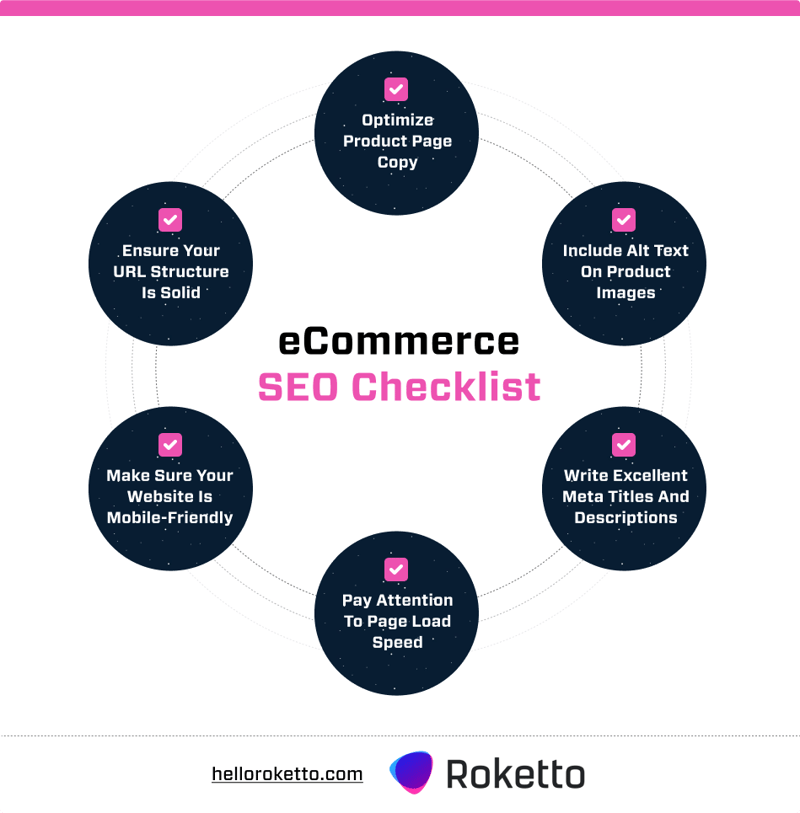
If you are determined to carry out your Ecommerce SEO strategy then you need to adhere to this checklist:
- Conduct keyword research focusing on buyer intent
- Ensure that product pages are SEO-friendly through having good titles, meta descriptions, unique content, images, and schema
- Enhance category pages both SEO-wise and user-wise
- Create content marketing assets like blogs, guides, videos, and FAQs
- Comply with technical SEO rules: site speed, mobile-friendliness, HTTPS, canonical tags
- Obtain quality backlinks via guest posts, influencer partnerships, and PR
- Implement conversion optimization with the help of reviews, CTAs, and simple navigation
- Monitor performance with the help of analytics, rankings, and KPIs
- Inspect your site periodically to find duplicates, slow-loading pages, and crawling problems that need fixing
- Be up to date with trends such as AI search, voice search, and visual search
Conclusion: Mastering Ecommerce SEO in 2025
Ecommerce SEO is multilayer work that needs to be technically optimized, content-wise, link building, and conversion-focused all at the same time for a long period of time.
If you implement the ways described in this manual your eCommerce store will be able to:
- Organically attract high-intent traffic
- Rank better in search engines
- Increase the conversion rate and sales
- Establish brand authority for long-term brand equity
Keep in mind that Ecommerce SEO is not a single-performance. Continuous optimization, trend tracking, and customer-centric strategies mainly are what keep you ahead of the competitors.
By a continuous and well-balanced effort, your online store will be the search results winner in 2025 and, therefore, be able to convert the visitors into loyal customers and create sustainable revenue.









Rahul M.
B2B Service Provider