
Ecommerce SEO has grown from just keyword positioning to beyond product page optimization. Today, factors that determine visibility on Google for ecommerce sites involve technical authority, comprehensive content, alignment with user intentions, and emerging increasingly, the role of AI-powered search engines that value entities, trust, and context.
This industry-leading e-commerce SEO guide from the team at Bloom Agency is set to help new and small to medium-sized ecommerce sites learn about what is involved in ecommerce search engine optimization and how to implement a scalable ecommerce SEO strategy that will get them the leads they need to be successful. New ecommerce sites and existing ecommerce sites that have been in operation for some time can both benefit from what is presented here.
What Is Ecommerce SEO?
E-commerce SEO refers to the process of optimizing online stores to rank higher in natural search engine listings. It essentially deals with ensuring that product pages, category pages, and detail pages rank higher in search engine results, including but not restricted to Google.
In contrast to an ordinary website, an ecommerce website encounters its own set of challenges like duplicate content, crawl budget, faceted navigation, and huge product databases. An efficient ecommerce SEO enables search engines to crawl, index, and index the most valuable pages efficiently with a hassle-free experience for visitors.
The Most Important eCommerce SEO Functions
When optimizing an online store, there are several core eCommerce SEO functions that should be prioritized first. At Bloom, we focus on strategies that directly impact visibility, traffic, and conversions.
The most critical SEO tasks include optimizing collection and product pages to ensure they rank for high-intent keywords, submitting accurate product feeds through Google Merchant Center, and creating new collection pages to capture emerging search queries and seasonal demand.
Beyond these essentials, other high-impact activities include improving page load speed, writing compelling and informative product descriptions, and executing strategic backlink outreach to strengthen domain authority.
Once these foundational SEO elements are in place, Bloom recommends expanding into informational content marketing. Blog posts, buying guides, and help-center articles can attract users earlier in the purchase journey by answering common pre-purchase questions. This type of content not only builds trust but also creates additional organic entry points into your store.
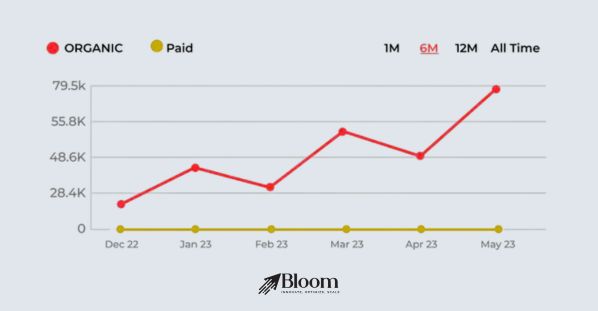
Leading brands use this approach effectively. For example, some apparel companies dedicate entire sections to explaining fabric types, fits, and usage scenarios—allowing shoppers to fully understand the product before making a decision. At Bloom, we apply the same principle to help eCommerce brands educate, engage, and convert their audience through smart SEO-driven content.
Why Should eCommerce Websites Care About SEO?
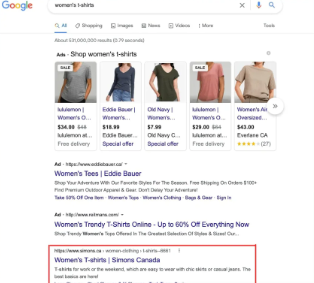
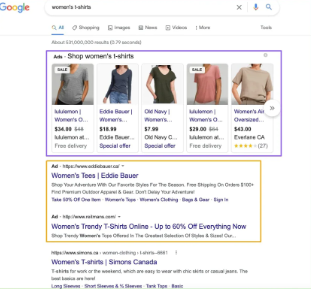
Every time a user searches for a product or solution on Google, they land on a search engine results page (SERP). This page typically displays paid ads at the top, followed by Google Shopping listings, and then organic search results.
For eCommerce brands, SEO is the key to appearing in those organic results—the listings users trust most and click on most often.
The reality is simple:
If your product or collection pages don’t rank on the first page of Google, they’re unlikely to be seen at all. Websites ranking outside the top 10 results receive minimal traffic, and even positions three to five attract significantly fewer clicks than the top spots.
Industry insight: Research shows that less than 1% of users ever click on results found on page two of Google. Additionally, the number one organic result alone captures more than one-quarter of all clicks on a search page.
This makes one thing clear—SEO isn’t optional for eCommerce; it’s essential.
At Bloom, we help online stores rank higher for:
- Product-focused keywords
- Collection and category searches
- Niche-specific and intent-driven queries
The goal is simple: dominate the first page and capture customers exactly when they’re ready to buy.
How to Create an eCommerce SEO Strategy
If you’re new to search engine optimization or looking to strengthen your store’s organic performance, a structured SEO strategy is crucial. Bloom follows a proven framework that focuses on both visibility and conversions.
1. eCommerce Keyword Research
Identify high-intent keywords customers use when searching for products, categories, and comparisons. This includes commercial, transactional, and long-tail keywords.
2. On-Page SEO for eCommerce
Optimize product titles, descriptions, URLs, headings, images, and internal links to align with target keywords and improve relevance.
3. Site Architecture for eCommerce
Create a clean, logical site structure that helps users and search engines easily navigate from categories to products.
4. Technical SEO
Ensure fast page load speeds, mobile responsiveness, proper indexing, schema markup, and error-free crawling for optimal performance.
5. Google Merchant Center Product Feeds
Submit and optimize product feeds to improve visibility across Google Shopping and enhance organic product discovery.
6. Publishing Informational Content
Develop blogs, buying guides, FAQs, and comparison content that answers pre-purchase questions and attracts users earlier in the funnel.
7. Link Building
Earn high-quality backlinks through outreach, PR, and content partnerships to boost authority and improve rankings.
1. eCommerce Keyword Research
Every successful eCommerce SEO strategy begins with identifying the right keywords—the exact search terms your potential customers use when looking for products online. This process is known as eCommerce keyword research, and it plays a critical role in driving qualified traffic that actually converts.
Unlike traditional SEO, eCommerce keyword research requires a more balanced approach. While informational keywords are still important, online stores must also prioritize commercial and transactional keywords—search terms that clearly indicate purchase intent.
For example:
- Informational keywords: Users searching for guides, explanations, comparisons, or tips
- Commercial keywords: Searches that signal buying intent, such as “women’s leather handbags” or “affordable running shoes for women”
At Bloom, we focus on building a keyword mix that attracts users at every stage of the buying journey—from research to checkout.
Using Google Autocomplete for Keyword Ideas
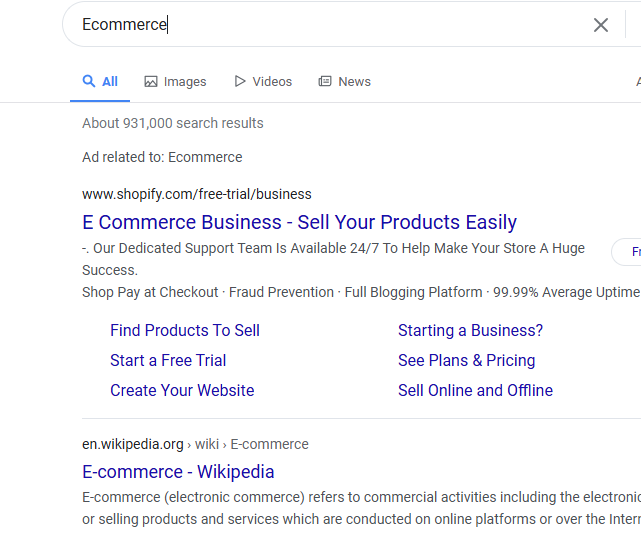
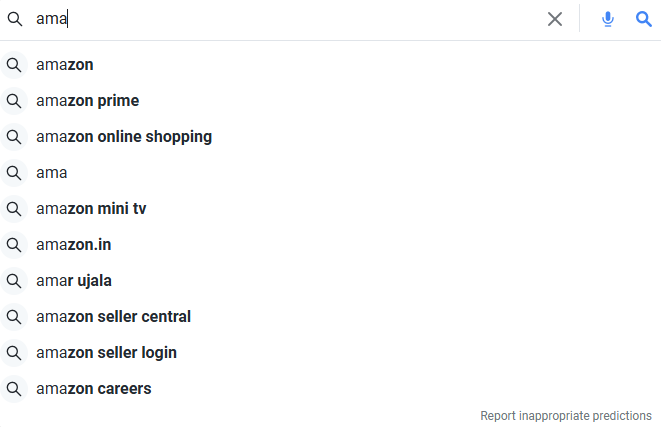
One of the simplest yet most effective keyword research methods is using Google’s autocomplete feature. As you begin typing a query into the search bar, Google automatically suggests related searches based on real user behavior.
These suggestions reveal:
- Popular keyword variations
- Long-tail search phrases
- Emerging product trends
In addition to autocomplete, the “related searches” section at the bottom of the results page can uncover even more keyword opportunities worth targeting.
Leveraging Amazon Autocomplete Insights
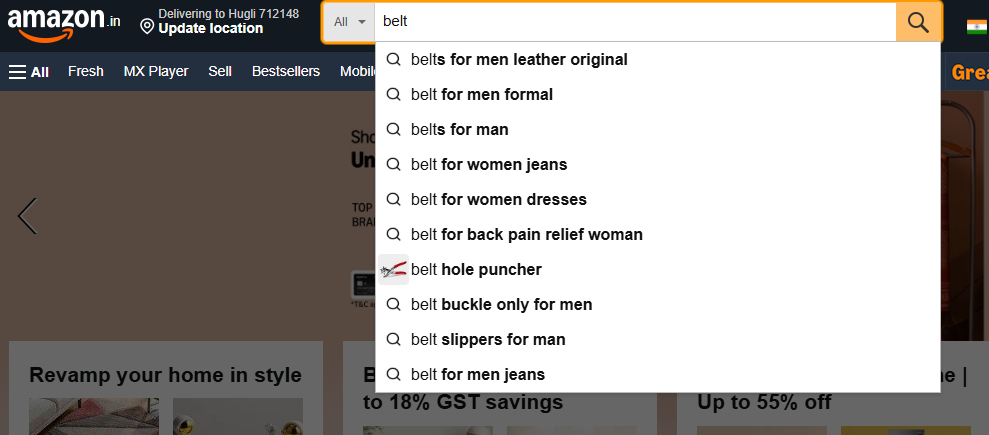
Amazon is another powerful resource for eCommerce keyword research. Since it’s a product-driven marketplace, its autocomplete suggestions are often highly transactional and conversion-focused.
Amazon’s search predictions frequently include:
- Product attributes
- Price-based searches
- Size, color, or material modifiers
This makes Amazon an excellent platform for discovering buyer-ready keywords that users are actively searching for.
Focus on Long-Tail Keywords
Long-tail keywords are longer, more specific search phrases that describe exactly what a shopper wants. While they may have lower search volume, they usually come with:
- Less competition
- Higher relevance
- Stronger conversion potential
For eCommerce websites, targeting long-tail keywords often delivers faster and more consistent results than broad, highly competitive terms.
Analyzing Competitor Site Structure
Another effective strategy is studying how major eCommerce platforms organize their products. Marketplaces like Amazon structure their categories and subcategories based on real search demand.
For example, if you sell women’s fashion products, exploring how Amazon segments that category can reveal:
- Popular product types
- Sub-category keyword ideas
- Filtering and attribute-based searches
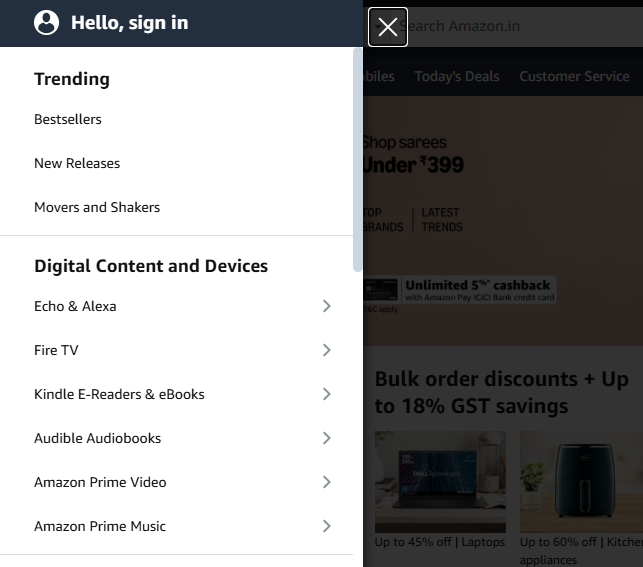
Repeating this process across other leading competitors can help uncover valuable keyword and category opportunities you may have missed.
1.Keyword Research Tools
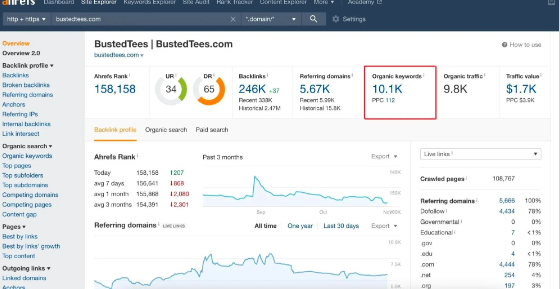
To move beyond basic keyword discovery, eCommerce brands need advanced keyword research tools that allow large-scale analysis. At Bloom, we rely on industry-leading SEO platforms such as Ahrefs to uncover keyword opportunities, evaluate competition, and understand how competitors are performing in search results.
These tools make it possible to analyze thousands of keywords at once—saving time while providing data-driven insights.
Competitor Keyword Analysis
One effective strategy is analyzing competitors that already rank well in your niche. For example, if you compete with an online t-shirt store, you can enter their domain into a tool like Ahrefs and review the keywords they rank for organically.
This analysis reveals:
- Keywords driving traffic to competitor sites
- Current ranking positions
- Search volume and keyword difficulty
By understanding your competitor’s search visibility, Bloom helps you identify keyword gaps, prioritize realistic opportunities, and decide where it makes the most sense to compete.
Choosing the Right Keywords for Your Store

No eCommerce website can (or should) try to rank for every keyword. The key is selecting keywords that align with your products, audience, and conversion goals.
Here are the most important factors Bloom considers when choosing eCommerce keywords:
Long-Tail vs Head Keywords
Head keywords are short, broad, and highly competitive. While they offer large search volumes, they are often difficult to rank for.
Long-tail keywords, on the other hand, are more specific, less competitive, and usually indicate stronger buying intent—making them ideal for product and collection pages.
Search Volume
Higher search volume means greater traffic potential. Tools like Ahrefs and Google Keyword Planner help estimate how often users search for a keyword.
Competition
Keyword difficulty shows how hard it will be to rank. Lower-competition keywords provide faster ranking opportunities, especially for newer or mid-authority stores.
Relevancy
Relevance is one of the strongest ranking factors. Bloom only targets keywords that your product or category pages genuinely fulfill. Misaligned keywords lead to poor rankings, higher bounce rates, and lost trust.
Search Intent
Understanding intent is critical. Is the user trying to buy, compare, or learn?
For example, a keyword describing a specific product type shows far stronger commercial intent than a general lifestyle term. Reviewing the pages currently ranking for a keyword helps ensure your content matches the same intent.
Product Type Strategy
If your store carries multiple variations of the same product, Bloom targets keywords using collection pages.
If only a few products exist, we focus keyword targeting at the individual product page level for better relevance.
The ideal keyword combines strong search volume, manageable competition, clear intent, and perfect alignment with your content.
2.On-Page SEO for eCommerce
Once keyword research is complete and your site structure is solid, the next step is on-page optimization. Bloom focuses on the two most valuable page types:
- Product category (collection) pages
- Individual product pages
eCommerce SEO Foundations
Platforms like Shopify come with built-in SEO features such as:
- Automatically generated canonical tags
- Sitemap and robots.txt files
- Default title tag structures
- Social sharing integrations
However, high-performing SEO still requires manual optimization.
At Bloom, we fine-tune:
- Title tags, meta descriptions, and headings
- Image alt text and file names
- URL structures for products, collections, and content pages
Title tags and meta descriptions serve two purposes:
First, to help pages rank. Second, to encourage users to click. Strategic modifiers like Free Shipping, Limited Offers, or Wide Selection can significantly improve click-through rates when used naturally.
Optimizing eCommerce Product Descriptions

Search engines rely heavily on on-page content to understand what a product page should rank for. Thin content or manufacturer-copied descriptions give Google very little context and can harm rankings.
Instead, Bloom creates original, detailed, and conversion-focused product descriptions that:
- Clearly explain product features and benefits
- Include relevant keywords and variations
- Use structured headings and readable formatting
Well-optimized product pages often include longer descriptions, customer reviews, specifications, and FAQs—elements commonly found on top-ranking pages.
If writing unique content for every product isn’t feasible, Bloom prioritizes pages already ranking near the bottom of page one. Small improvements there can produce outsized gains in traffic and conversions.
Using Related Keywords Strategically
Related keywords are variations and supporting phrases connected to your primary keyword. These can be discovered using tools like Google Keyword Planner or by analyzing recurring terms in Amazon search results.
For example, product attributes such as size, power, capacity, or material often appear repeatedly in searches—signaling what buyers care about most.
By naturally integrating these related keywords, Bloom helps pages rank for multiple relevant queries, not just one.
Internal Linking for eCommerce SEO
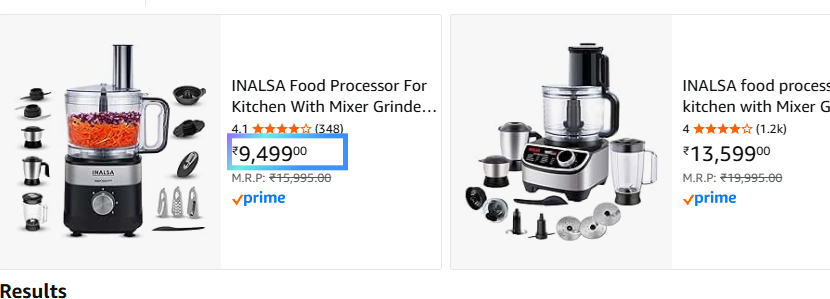
Internal links guide both users and search engines through your site. Thoughtful internal linking:
- Keeps visitors engaged longer
- Distributes link authority
- Helps search engines understand page relationships
Bloom places internal links strategically using descriptive anchor text that includes target keywords. These links connect product pages, collections, blogs, and educational content—without overwhelming the user.
SEO insight: Well-planned internal linking supports customers throughout their buying journey and improves conversion rates.
3.Site Architecture for eCommerce
Site structure plays a crucial role in both SEO performance and user experience. A clean, logical structure makes it easier for search engines to crawl your site and for visitors to find what they need.
At Bloom, we ensure:
- Key collections are linked from the main navigation
- Supporting collections are connected via internal links
- Every product belongs to a parent collection
- The structure remains scalable as inventory grows
- Important pages are reachable within a few clicks
A simple structure prevents confusion, reduces bounce rates, and strengthens rankings.
Because most external links point to the homepage, pages that are fewer clicks away from it tend to receive more SEO authority. Bloom structures stores so valuable products don’t get buried deep within the site.
Page Indexing Strategy

Indexing refers to whether a page is included in a search engine’s database. Not every page needs to be indexed.
As part of Bloom’s SEO strategy, we decide:
- Which pages should be indexed and ranked
- Which pages should remain unindexed to avoid dilution
- How crawl budget is distributed across the site
By controlling indexing strategically, Bloom ensures search engines focus on the pages that matter most—products, collections, and high-value content.
Strategic Page Indexing for eCommerce SEO
When it comes to page indexing, not every page on an eCommerce website deserves to rank in search engines. At Bloom, we follow a strategic approach inspired by industry best practices: index only the pages that genuinely meet user demand and add value.
SEO experts emphasize that one of the most common challenges for eCommerce websites is thin content and duplicate content.
Thin content occurs when pages contain very little useful text—something common on product and category pages compared to blogs or SaaS websites. Duplicate content, on the other hand, happens when similar or identical descriptions appear across multiple products or collections, confusing search engines and weakening rankings.
One effective way to counter thin content is by adding supporting content—such as blogs, buying guides, FAQs, or enriched category descriptions—to your store. This strengthens topical relevance and gives search engines more context to work with.
Managing Duplicate Content Effectively
The simplest way to deal with duplicate or low-value pages is to prevent them from appearing in search results through noindexing. However, this isn’t always the best long-term solution.
At Bloom, we often recommend:
- Enhancing pages with unique, useful content
- Differentiating similar products through detailed specifications, use cases, and FAQs
- Making pages genuinely competitive instead of hiding them
Another powerful solution is canonicalization. Canonical tags tell search engines which version of a page should be treated as the primary (or “master”) version. Without proper canonical signals, search engines may:
- Waste time crawling duplicate URLs
- Split ranking authority across multiple pages
- Rank the wrong page version

Good to know: Shopify automatically adds canonical tags to prevent many common duplication issues—but strategic oversight is still essential for complex stores.
Deciding Which Pages to Index
Once the basics are covered, Bloom goes a step further. Before indexing a page, we ask:
- Is there real search demand for this page?
- Do users search for this product’s attributes or variations?
- Does the page contain enough content to compete on page one?
If the answer is yes, the page should be indexed—but only after expanding and optimizing the content to match how users actually search.
The key takeaway?
Not every level of your site architecture needs to be indexed. Strategic indexing ensures search engines focus their attention where it matters most.
Improve Navigation with Breadcrumbs
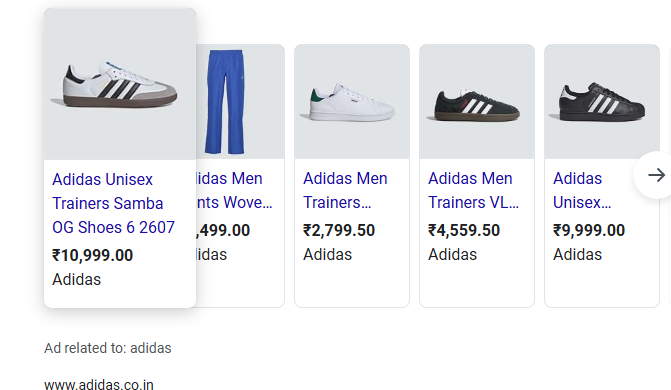
Breadcrumb navigation is another powerful yet often overlooked SEO and UX element. Breadcrumbs:
- Help users understand where they are on your site
- Improve internal linking and crawlability
- Clearly communicate site structure to Google
At Bloom, we recommend adding breadcrumbs to all product pages, especially for stores with multiple categories and collections. This allows users to easily navigate back to broader categories or explore alternatives—reducing friction and improving engagement.
4.Technical SEO for eCommerce
Technical SEO focuses on the behind-the-scenes elements that help search engines crawl, understand, and rank your website efficiently. While customers don’t see it, technical SEO directly impacts performance and usability.
Strong technical SEO leads to:
- Faster page load times
- Better mobile usability
- Improved crawl efficiency
- Higher engagement and organic visibility
Key technical SEO actions Bloom prioritizes include:
- Creating clear, logical internal navigation
- Submitting and maintaining sitemaps via Google Search Console
- Optimizing images for fast loading and responsiveness
For larger or complex stores, a professional technical audit ensures nothing critical is holding rankings back.
5.Google Merchant Center Product Feeds
To maximize visibility across Google Search and Shopping, your product feed must be accurate, verified, and compliant within Google Merchant Center.
A properly configured feed ensures your products appear in:
- Google Shopping free listings
- Paid Shopping ads
- Enhanced product search results
Bloom’s Google Merchant Center Setup Process
- Website verification and claim
Confirm ownership of your site and link it to Google Merchant Center using supported verification methods. - Product feed submission
Upload product data using approved formats such as spreadsheets or XML feeds. All required attributes—titles, descriptions, pricing, availability—must meet Google’s standards. - Feed monitoring
Google reviews submitted data for compliance, typically within a few business days. - Issue resolution
Any errors or disapprovals—such as price mismatches or missing identifiers—are flagged in the dashboard. Prompt fixes ensure uninterrupted visibility.
An optimized feed improves discoverability, builds trust with Google, and creates a smoother shopping experience for customers.
6.Publish Relevant Informational Content
Beyond product and category pages, informational content plays a crucial role in eCommerce SEO. Bloom uses SEO to power long-term content strategies that attract, educate, and convert customers.
Effective informational content includes:
- Help center articles answering pre-purchase questions
- Brand and About Us content that builds trust
- Blog posts targeting problem-based and comparison keywords
Every well-optimized blog post can:
- Establish your brand as an authority
- Increase organic search visibility
- Drive consistent, long-term traffic
For example, a store selling running gear can publish content around training tips, injury prevention, or gear selection—naturally positioning products as solutions without aggressive selling.
Successful eCommerce blogs strike the right balance between education and promotion. They address real problems, provide helpful insights, and subtly guide readers toward relevant products.
Blogging Best Practices for eCommerce SEO

At Bloom, we recommend focusing on three core principles:
- Keyword-driven topics
Publish content based on what your audience is actively searching for during research and decision-making stages. - SEO-focused optimization
Each blog post should target a clear keyword and follow on-page SEO best practices. - Product-led solutions
Not every article needs to sell—but when appropriate, include CTAs and links to relevant product or category pages.
7. Link Building for eCommerce SEO
Link Building still remains among the best ranking factors for Google’s algorithm. The main thing behind this is the PageRank algorithm, which assesses link quality to webpages by examining the number of incoming links to them.
There are three most important factors by which search engines evaluate backlinks:
- Quantity – how many sites link to you
- Quality: the authority of the websites
- Relevance – the extent to which they’re related to your niche
New eCommerce sites tend to lack authority precisely because they don’t have many backlinks. Although it is true that a site’s authority develops over time, nevertheless, high-quality links help a lot in developing site authority quickly.
A link from trusted domains like .com websites, learning platforms, and official websites carries more weight. In addition, links from well-ranked websites in your niches are more precious, which will also highlight your expertise to the search engine.
Partnership-Driven Link Building
At Bloom, we focus on relationship-based link building rather than spammy tactics. The most sustainable approach is creating content that genuinely benefits other websites.
When you publish something useful—such as research, guides, tools, or expert insights—other sites are far more likely to reference and link to it naturally.
Guest Posting
Guest blogging remains an effective backlink strategy when done correctly. The key is relevance.
Bloom identifies authoritative websites in your niche by:
- Conducting eCommerce keyword research
- Analyzing backlink profiles using tools like Ahrefs
- Evaluating content quality and audience alignment
Publishing high-value guest content on relevant platforms helps you earn authoritative backlinks while also positioning your brand as an industry expert.
Press Mentions & Digital PR
Press mentions are another powerful way to earn backlinks, though traditional PR can be costly. A simpler alternative is responding directly to journalist and writer requests.
Platforms that connect brands with writers allow you to:
- Pitch expert insights or data
- Participate in interviews
- Earn editorial backlinks when quoted
Whenever Bloom secures press coverage, we ensure a proper backlink is included, strengthening SEO authority while increasing brand credibility.
Best eCommerce SEO Tools
The right tools make eCommerce SEO more efficient, measurable, and scalable. At Bloom, we rely on a combination of analytics, research, and audit platforms to guide strategy and execution.
Google Analytics
Google Analytics is essential for understanding how users interact with your website. It tracks:
- Traffic sources
- User behavior
- Conversion paths
- Revenue attribution
For Shopify stores, integrating Google Analytics allows deeper tracking of eCommerce metrics, helping Bloom optimize SEO performance and marketing ROI.
Ahrefs
Ahrefs is one of the most powerful SEO platforms available and a core tool in Bloom’s workflow. It is widely used by eCommerce SEO professionals to improve rankings and outperform competitors.
Key Ahrefs capabilities include:
- Keyword research for Google, Amazon, and YouTube
- Backlink profile analysis
- Competitor SEO benchmarking
- Tracking keyword rankings over time
Ahrefs competes with platforms like Moz and Semrush, but stands out for its backlink data and keyword depth.
SEO Audit & Site Hygiene Tools
Maintaining a technically clean website is critical for long-term SEO success. Audit tools help identify issues that may impact rankings, such as:
- Slow page speed
- Broken links
- Missing metadata
- Unoptimized images
For Shopify stores, Bloom often uses optimization tools that help improve site performance, image loading, and technical hygiene—ensuring the site remains fast, crawlable, and search-friendly.
Want Bloom to Handle Your Ecommerce SEO?
Let our experts build a customized SEO strategy designed to rank your products, grow organic sales, and outperform competitors.
Bloom – Where SEO Meets Growth.




Rahul M.
B2B Service Provider