
Medical Keyword Research: Finding the Right Search Terms for Healthcare Businesses
Introduction
When a patient requires medical care, one of the first actions they perform is to search on Google. They look for a hospital, a medical professional, a diagnostic centre, or specific medical treatments. The visibility of a healthcare business on search engines is often directly linked to its ability to acquire new patients and website visitors.
However, businesses need to go beyond the simple act of adding medical keywords on a webpage – keyword research uncovers what searchers are looking for and why. This process helps hospitals, clinics, diagnostic laboratories and other healthcare facilities identify search terms that can be integrated into an informative blog, a treatment or service page, or a location-specific landing page in order to improve the chances of them being found by the right patients. The right healthcare SEO services will use this data to build a keyword list around the patient’s intent, the competitive environment and the unique offerings of each business. In turn, healthcare organisations can utilise these keywords to build a list of relevant search terms, rather than attempting to optimise for an umbrella term that will bring irrelevant traffic. Hospitals, for instance, may choose to optimise for “cardiology consultation” while a diagnostic laboratory would focus its resources on “blood tests and preventative health check-ups” in the search region. The intent and offerings of each facility will shape the list of medical keywords that can improve its online visibility.
This article discusses how medical keyword research works, the types of search terms that are relevant for healthcare businesses, and the role of healthcare SEO agencies in transforming this data into a working strategy.
1. Understand the Importance of Medical Keyword Research
In short, medical keyword research is the process of discovering what search terms patients use to find healthcare professionals, treatments, and facilities online. Keyword research for healthcare organisations is important because it powers the creation of relevant and informative website content. Businesses can use these terms to optimise web pages, blog posts and other resources to increase their visibility in front of searchers with a genuine interest in the services on offer. In addition, keyword research helps organisations understand the intent of these searchers, the level of competition for specific terms, and the local relevance of certain treatment types and services.
Keyword research can power the following activities in a healthcare organisation:
• Optimise pages to appear for relevant search terms
• Grow organic traffic from patients searching for similar services
• Create informative blog posts that answer the most common questions
• Build location-specific pages for hospitals and other medical facilities
• Optimise existing service pages for better search intent
• Avoid creating irrelevant pages that target the same keyword
When performed by professional healthcare SEO services, keyword research will include a comprehensive list of terms that each organisation can realistically target. It will further involve keyword clustering to organise the list of terms into categories and remove duplicates. It will finally involve a prioritisation strategy that enables businesses to allocate resources based on keyword competitiveness and the likelihood of generating conversions.
2. Identify Your Healthcare Business and Target Audience
Healthcare businesses should begin the keyword research process by defining what services they provide and who their patients are. It is important to recognise that the same keyword will not work for every type of healthcare organisation. A hospital, for instance, will have different departments and services to offer compared to a clinic or a diagnostic laboratory.
Organisations should begin by defining the services that they provide and the treatment categories that they fall into. This includes:
• Types of hospitals – general, maternity, orthopedic, cardiac, emergency, children’s, etc.
• Types of clinics – dental, skin, physiotherapy, general, etc.
• Diagnostic laboratories – blood tests, pathological checks, preventative health screening, etc.
• Doctor specialism – relevant treatments and diagnoses
• Medical software companies – telemedicine, hospital management software, etc.
The organisation can then define the questions that these patients may ask before they decide on a medical professional or facility. Healthcare SEO services can assist in identifying the list of questions that patients regularly ask and categorise them based on the offerings of the business.
3. Understand the Different Types of Medical Keywords
Healthcare organisations should plan to target multiple keywords rather than a single search term. Businesses must also understand the intent behind each keyword and optimise the relevant page for that search term. There are several categories of medical keywords that healthcare businesses can utilise, including:
Short-tail keywords
These are brief keywords that can attract a large audience but do not specify what the searcher is looking for. Some examples of short-tail keywords for healthcare organisations include:
• Cardiologist
• Dental clinic
• Blood test
• Physiotherapy
Long-tail keywords
These are longer keywords that specify a treatment, a service, or a region. Some examples of long-tail keywords for healthcare organisations include:
• Cardiologist for heart consultations in Navi Mumbai
• Dental clinic with root canal treatment
• Diagnostic laboratory for thyroid testing
• Physiotherapy clinic for post-surgery rehabilitation
Local healthcare keywords
Location-based keywords tend to be highly relevant with lower competition. Some examples of local healthcare keywords for healthcare organisations include:
• Paediatrician in Vashi
• Orthopedic hospital in Mumbai
• Diagnostic centre in Thane
• Dentist near Nerul railway station
Informational keywords
These keywords specify what a patient wants to find out about a medical condition, treatment, or procedure. Some of the most common informational keywords include:
• What is an MRI scan?
• How to get ready for a blood test?
• What does a dermatologist do?
• When should I see an orthopedic specialist?
Organisations can use these keywords to publish blog articles and informative resources about various treatments and conditions. The information on the page should be recent, relevant, and free from unsubstantiated medical claims.
4. Analyze Search Intent Before Choosing Keywords
Search intent refers to the reason why a patient initiates a search online. Understanding intent will help healthcare organisations target the right audience and optimise the appropriate page for a keyword. There are four broad categories of search intent, including:
Informational intent: The searcher is looking for information about a medical procedure, treatment, or condition. An example of an informational keyword includes “What is an ECG test?”.
Navigational intent: The searcher is looking for a specific website. An example of a navigational keyword includes “ABC Hospital cardiology department”.
Commercial investigation: The searcher is comparing healthcare providers or services. An example of a commercial investigation keyword includes “Best diagnostic centres in Navi Mumbai”.
Appointment or transactional intent: The searcher is looking to make a reservation or transaction. An example of a transactional keyword includes “book a dental appointment in Vashi”.
Healthcare organisations must optimise separate pages for different types of intent. Informational searches, for instance, should be optimised with a blog or a treatment page. Transactional searches, on the other hand, should be directed to a service page that includes booking options or a contact page with appointment options. A healthcare SEO services professional will combine keyword intent with volume to select the terms that a healthcare organisation can realistically target. The keywords should be relevant to the services on offer and the target audience.
5. Use the Right Tools for Medical Keyword Research
SEO tools can assist healthcare organisations in finding keywords that are relevant for their offerings and target location. The tools may include:
Google keyword planner
This tool helps organisations find a list of relevant keywords, along with an estimate of monthly searches and costs associated with paid advertising.
Google Search Console
This tool shows which keywords trigger impressions and website visits. It will also help organisations understand which keywords they have already optimised.
Google Trends
This tool helps organisations understand the intent behind a keyword and compare its popularity across regions and time periods.
Google autocomplete and related searches
This feature will help organisations compile a list of additional keywords that they can utilise.
SEO research tools
Tools like Semrush and Ahrefs can help organisations analyse the competitiveness of keywords, find related keywords, and view the list of keywords targeted by competitors. Organisations can utilise these tools to find keywords that are relevant to their offerings. A diagnostic centre, for instance, may target keywords related to blood tests and preventative health screening and localise the keywords to a specific region. It can then cross-reference the keywords against its own website to determine which terms it can realistically optimise. Tools will provide an estimate, but organisations should always verify if the keyword is relevant to the offerings in that region. A healthcare SEO services professional can utilise data from multiple tools to help organisations develop a list of keywords that they can realistically target.
6. Research Competitors to Discover Keyword Opportunities
Keyword research for healthcare organisations should also involve a review of competitors to determine what opportunities they have missed. This will enable the organisation to repurpose relevant content and remove unviable keywords.
Healthcare organisations should begin by reviewing the websites of similar hospitals, clinics, diagnostic laboratories, and other healthcare facilities in their chosen region. They should then note the following:
• The services offered by these organisations and the types of pages created – For instance, a clinic that offers cardiology consultations will include a cardiology page.
• The local keywords utilised by these organisations – Locations often play an important role in healthcare SEO.
• The types of questions that these organisations have addressed – This will help the organisation identify topics that they can utilise.
• The services that these organisations have not included – This will highlight potential gaps that the organisation can fill.
• The general topics covered by these organisations – This will help the organisation avoid keyword stuffing.
• Any opportunities to improve upon the competitor’s offerings – Similar to the above point, this step will also help the organisation avoid unviable keywords and utilise competitive keywords.
If a competing organisation has an optimised page for a particular treatment that the organisation does not currently offer, for instance, it may be a good opportunity to build a similar page. It is important to remember, however, that the organisation should not plagiarise any content from competitors. Instead, it should leverage the insight to create unique content that provides similar information.
Healthcare SEO services can help organisations determine whether there are gaps in their offerings and utilise this information to build content. The organisation can utilise a combination of long-tail and informational keywords.
7. Build Keyword Clusters for Healthcare Services
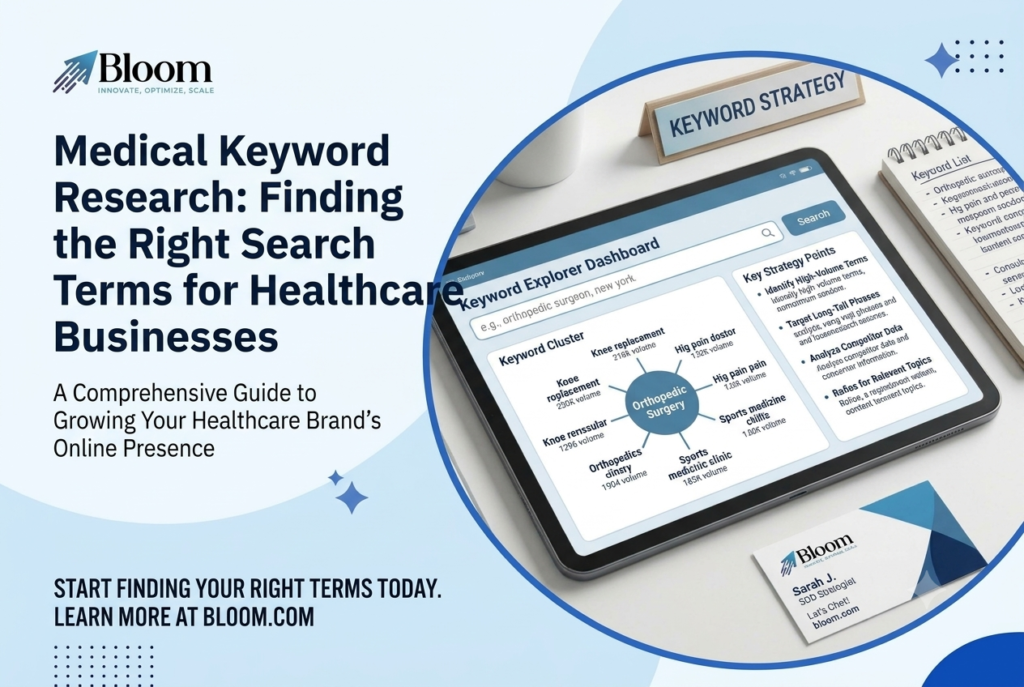
Keyword clustering involves grouping keywords according to their intent. This method will help healthcare organisations avoid keyword cannibalisation while improving the organisation and segmentation of content. A cardiology department, for instance, may utilise the following cluster of keywords:
• Cardiology
• Cardiologist
• Cardiology treatment
• ECG test
• Echocardiography
The department will likely utilise a single page for these keywords, depending on the offerings and the intent behind each keyword. It is also possible that some of these keywords will be placed on separate pages, depending on the services on offer. A keyword mapping should therefore include the following details for each keyword:
• The main page that will utilise the keyword.
• The related keywords that will appear on the same page.
• The target audience and search intent.
• The type of page – treatment or service page, informational page, blog post, etc.
• The local region, if applicable.
• The web page URL, if the page already exists.
A keyword mapping tool will help healthcare organisations keep track of important keywords and ensure that each keyword is utilised on the appropriate page. It will also help prevent the duplication of content across multiple pages.
8. Optimize Healthcare Website Pages With Target Keywords
The healthcare organisation should finally utilise the list of keywords to optimise the appropriate pages on its website. The keywords should be added in a natural manner and utilised across the following elements:
• Title tag – A brief description of the web page’s contents. It should appear at the top of a web browser when someone searches for the page.
• Meta description – A brief summary of the page’s contents that appears below the page’s title in search results.
• Headings – The main body of the text should appear in an H1 tag, with additional headings for subheadings.
• Content – The body of the text should include detailed information about the specific treatment or service. A general overview of the department and the types of treatments on offer should appear on a cardiology page, for instance.
• Image tags – Descriptive tags should appear beneath any relevant images.
• Internal links – Web pages should link to other pages on the website, including treatment or service pages, blog articles, and other relevant websites.
• URL – The web address should be brief, include the targeted keyword, and indicate the general contents of the web page.
The above considerations will apply across all website pages, including the homepage, blog posts, and treatment-specific pages. A page targeting orthopedic treatments in Navi Mumbai, for instance, should describe the available services and treatments succinctly. It should also mention the location if the page targets patients in that specific region. Healthcare organisations should avoid keyword stuffing and utilise the keywords in a manner that improves readability and does not sacrifice the quality of information.
Healthcare SEO services will typically utilise a combination of the elements above to improve the visibility of web pages. In short, the organisation should build web pages that directly address the intent of the searcher. The organisation should also ensure that the page contains relevant, easy-to-read information that helps the patient make an informed decision about their treatment.
9. Prioritize Local Keywords for Patient Acquisition
Patients often look for healthcare providers in their local area. In fact, local healthcare keywords such as “ortho in Navi Mumbai” can be highly relevant and have lower competition. Healthcare organisations can utilise local keywords to acquire patients in their region by building location-specific pages or optimising the appropriate web pages for these keywords.
Healthcare organisations should consider the following when targeting local keywords:
• Build location-specific pages for services that the organisation actually provides. A location-specific page should also include relevant contact details.
• Ensure that the organisation’s Google Business page is updated for every region that it serves.
• Update the organisation’s contact page with the correct phone number and address.
• Add location details in the appropriate pages if the organisation has multiple branches.
• Encourage patients to leave reviews about their experience with the organisation. This step will also improve the organisation’s credibility.
• Link the organisation’s location pages to the relevant treatment or service pages.
Healthcare organisations with multiple branches should update each branch’s page with the specific treatments and services that it provides. Local keyword research should also reflect the organisation’s actual service region, rather than a completely different region. If implemented correctly, local keyword targeting and optimisation will improve the organisation’s visibility in front of patients searching for similar services in the same region. Healthcare SEO services can assist with the above considerations to help the organisation improve its visibility.
10. Track Keyword Performance and Update Your Strategy
Medical keyword research is a continuous process that requires organisations to keep track of the performance of their keywords on a regular basis. In addition, organisations should update their strategy depending on changes in online searches, shifts in competition, and the services that they provide. The following considerations will assist organisations in tracking keyword performance:
• Website impressions – This metric will indicate how many times a page has appeared in search results.
• Organic clicks – This metric will show how often patients have clicked on an organisation’s web page.
• Search position – This metric will indicate the average position on the first page of search results.
• Click-through rate – This metric will indicate the percentage of impressions that resulted in a click on the organisation’s web page.
• Traffic to each page – This metric will determine whether the organisation’s pages are attracting patients.
• Bookings or other conversions – If the organisation has a method of tracking these conversions, it should keep track of its bookings, treatment costs, and patient commitments.
Google Search Console will also help organisations keep track of keywords that generate impressions without resulting in a click. This issue may occur if the page’s meta description or title is unappealing or does not adequately represent the page’s contents. Other factors may also impact this metric. Pages that attract website visits but do not generate conversions, on the other hand, may require a change in contents. Organisations should finally utilise this information to update their list of keywords and refine their strategy. Updates to clinical services, patient expectations, and website contents will also impact keyword targeting. Healthcare organisations should update their keyword research strategy at least once every quarter or when there is a significant change in services. This process will require ongoing effort and strategic planning but will deliver substantial rewards in terms of online visibility and patient engagement.
Frequently Asked Questions (FAQs)
1. What is medical keyword research?
Medical keyword research is the process of finding out what search terms patients use to find healthcare professionals, treatments, and facilities online.
2. Why is keyword research important for healthcare SEO?
It helps organisations identify what patients are searching for, understand their search intent, and create relevant content that can improve online visibility and attract patients.
3. Which keywords should healthcare businesses target?
They should target keywords that reflect their offerings, such as treatment types, and the services that they provide. Organisations should also consider location-based keywords, long-tail keywords, and informational keywords.
4. Which tools are useful for healthcare keyword research?
Tools such as Google Keyword Planner, Google Search Console, Google Trends, and SEO research tools such as Semrush and Ahrefs will help organisations identify what keywords they can utilise.
5. How often should healthcare keywords be reviewed?
Organisations should review keywords at least once every quarter and update their strategy if there are significant changes to online searches or their offerings.
6. Can healthcare SEO services help local clinics attract patients?
Yes – healthcare SEO services can assist local clinics in targeting local keywords, building relevant location-specific pages, and improving the overall visibility of their website for local patients.
Conclusion
Medical keyword research is a crucial aspect of building a successful healthcare SEO strategy. This strategy will enable healthcare organisations to identify the types of patients that they need to target and the appropriate web pages that they should optimise. The process will also help organisations build informative blog posts and web pages that can improve online visibility and deliver patients to the organisation’s website. The most crucial considerations when building a keyword research strategy include understanding the intent behind keywords, utilising long-tail keywords, and analysing the competitive environment. Healthcare organisations should also avoid using the same keywords on multiple pages and utilise a consistent strategy across all web pages. The organisations should also update this strategy regularly and ensure that the contents on their web pages are informative and relevant. Healthcare organisations can leverage the expertise of healthcare SEO services to develop a keyword strategy that improves online visibility and delivers patients to the organisation. Rather than focusing on the volume of keywords, organisations should utilise keyword research to build offerings that are relevant to their target audience.

Neetu Wadhwa is the Director of Bloom Agency, a Mumbai-based full-service digital marketing and web development company. With a strong focus on performance, innovation, and strategy, she leads the agency in delivering SEO, web design, and growth marketing solutions that drive measurable business outcomes.




Rahul M.
B2B Service Provider