
Paid advertising is usually seen as a kind of direct marketing channel meant to pull in clicks, leads, sales, and trackable returns. But a managed paid advertising account can do way more than just show immediate campaign results. It can hint at how real customers search, what words they pick, which headaches they want fixed, and which story lines make them actually take action.
That kind of input can get even more useful as search behavior keeps shifting. People are using AI-powered search experiences more and more to dig into businesses, products, services, comparisons, and solutions. Stuff like Google AI Overviews, AI Mode, ChatGPT, Perplexity, and Microsoft Copilot is changing how folks find what they need.
Now, paid ads don’t automatically land a business inside AI-written answers. Still, the signals coming out of paid campaigns can help businesses build stronger, more relevant, and more helpful website content—content that AI-powered search systems can actually interpret.
For companies trying to connect paid advertising with organic and AI-first search efforts, Bloom Agency can help blend paid search insights with SEO, content marketing, technical improvements, and broader digital marketing work.
How Paid Search Can Support AI Visibility
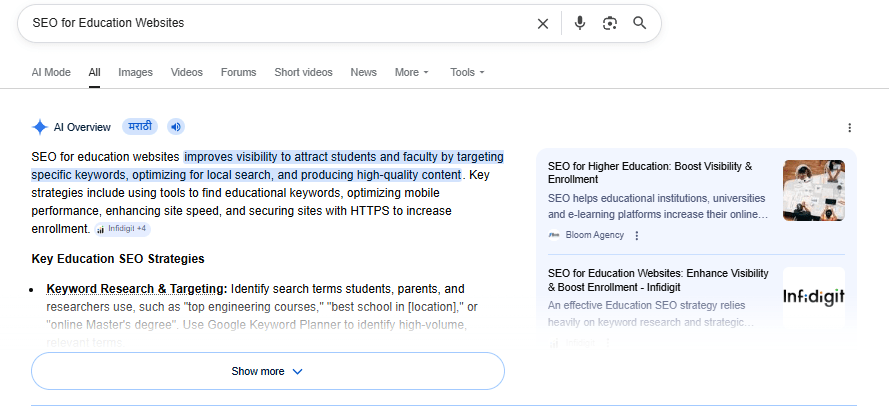
Paid search and AI search work differently, but they’re tied closely to customer intent. Paid ads show what people are actively looking for, and what messages get them to engage. AI-powered search aims to respond with helpful answers in more conversational ways, to questions that are pretty much in the same neighborhood.
So there’s room for businesses to use paid campaign data to sharpen their website content.
Example: a paid campaign might show customers often search for a specific service problem. If the site doesn’t cover that problem in a thorough way, an AI-powered system may have limited context to understand the business expertise.
By digging into paid search data and then building genuinely useful website resources around real customer questions, companies can strengthen the link between paid media learnings and AI search visibility.
Why Your Paid Ads Account Is a Valuable Data Source
A paid advertising account can be a pretty detailed window into customer behavior. Search term reports can show the exact language people use when hunting for products or services. Ad performance can point to which messages grab attention, while conversion tracking can show which queries connect to real business outcomes.
That’s a key difference from broad keyword research alone.
A keyword tool might call out a phrase with decent search volume. But paid campaign data can reveal whether actual people searching that phrase are clicking, submitting forms, buying, or reaching out.
These insights help marketers decide what themes deserve more focus inside organic and AI search strategies.
Turning Search Terms Into Useful Content
One of the best ways to connect paid advertising with AI visibility is to treat search term data like a content idea engine.
Teams can scan campaign search terms and spot repeated questions, recurring problems, comparison intent, product research, service-related concerns, and even location-specific queries.
Then those searches can become website content that directly answers what customers want.
For instance, cost-related questions can turn into pricing guides or FAQs. Problem-driven searches can turn into educational articles. Comparison searches can become in-depth comparison pages. Local queries can guide location-focused content, and product research can improve product descriptions and buying guides.
The goal isn’t to stuff paid keywords into pages in some unnatural way. The goal is to understand customer language, and use it to publish information that’s genuinely useful.
Turning Winning Ad Copy Into Website Content
Paid ads also offer another data-like advantage: tested messaging.
If a headline or ad message reliably performs—strong engagement, steady conversions, good click-through—then it can signal that customers respond to that value proposition.
But businesses shouldn’t leave their best messaging trapped inside the ads only.
The main idea behind an ad can be expanded into solid website content. A quick ad line can grow into a detailed explanation of a service benefit, process, feature, guarantee, availability, or customer outcome.
For example, if an ad claims “fast service,” the website shouldn’t just say it. It should explain what “fast” means, when it’s available, how people can request it, and what the process looks like.
That gives users more clarity, while also giving search engines and AI systems content they can read and connect back to the offer.
Improving PPC Landing Pages for AI Search
PPC landing pages are often built primarily to drive conversions. A short headline, a brief description, a clear call-to-action, a form, plus trust signals can work well for paid traffic.
Still, some landing pages don’t include enough context for search engines—or AI systems—to fully understand what the business really does.
A stronger landing page should clearly cover what the business offers, who it serves, which problems it solves, where it operates, what makes the service different, and why customers should trust it.
This doesn’t mean every landing page must become an extremely long article. Instead, it means key information needs to be easy to find, and communicated in a straightforward way.
Bloom Agency can help businesses review landing pages from both conversion angles and search/AI angles, so there’s a balance between persuasive messaging and useful, understandable information.
Creating Content Around Customer Intent
Customer intent should stay right in the center, like the core, of any strategy that connects paid ads and AI search. Different searches show different stages of the buyer journey. An informational search might mean someone is just learning about a trouble, while a commercial search often suggests they are comparing ways to solve it. Then a transactional search… yeah, that one usually signals the customer is ready to buy or reach out to a provider.
Paid advertising data can help spot these different intent rhythms, and once you know that, you can build content that matches the mood of each stage. Educational materials for awareness, comparison pages for consideration, and very specific service or product pages for conversion. What you end up with is a linked content ecosystem not those lonely pages that chase single keywords like it’s some kind of isolated task.
Using Product Information for AI Visibility
Ecommerce businesses also get a very useful structured source of information via product feeds. Product titles, descriptions, categories, prices, availability, images, specs, and other product attributes help advertising and shopping platforms understand what exactly a business sells.
It’s important that product info stays accurate and consistent, across the website and across the relevant advertising platforms too. If product descriptions are partial, or they dont match what’s shown elsewhere, people struggle to understand the offer. Search systems can end up having less context about the product, which is not great for performance.
So detailed, accurate product information can end up supporting both paid ad results and broader search visibility.
The Role of Structured Data
Structured data can help search engines get clearer on specific details that appear on a website. Businesses can add relevant schema markup to provide extra context, for products, services, organizations, locations, FAQs, events, reviews and other suitable information.
Structured data should always mirror what is actually on the website. it should not be used to “create” misleading signals. When it’s implemented correctly, structured information can make it easier for systems to understand a site’s content, plus the business entities behind it.
For businesses investing in AI search optimization, structured information can become part of a wider technical SEO approach, not a separate universe.
Connecting Google Ads With SEO
Paid search and SEO are often handled as separate channels, but data from one can strengthen the other, in a pretty practical way. Paid campaigns can uncover high-performing search terms that are worth organic content investment. Organic search can also surface themes that could be tested through paid campaigns.
Together, these signals can make customer intent feel more complete, not guesswork. For instance, a company might find in Google Ads that a certain long-tail query generates qualified leads. Instead of only funding that query with ads, the business can create a dedicated organic resource that addresses the customers underlying need.
That approach can open room for visibility across both paid and organic search, at the same time without wasting effort.
How AI Search Changes Customer Discovery
AI-powered search is shifting how people find information. Instead of typing several quick searches, users can ask detailed questions in natural language.
A customer might ask an AI system which provider fits a particular situation, what features to pay attention to, how different solutions compare, or which questions to ask before making a purchase. That conversational behavior makes those long-tail search insights more valuable, and honestly more actionable.
Paid search data helps you spot the language customers already use. Businesses can then turn that into content that answers conversational questions in a natural, informative tone.
Using Paid Data to Build FAQs
Frequently asked questions are one practical way to convert paid search insights into usable website content. If customers keep searching about pricing, service availability, timelines, features, locations, compatibility, or internal processes, those questions can be answered directly on the right pages.
The answers should be clear, correct, and genuinely useful, not just filler paragraphs to “cover” a topic. For Bloom Agency clients, customer search data can reveal FAQ opportunities across service pages, landing pages, blog content, and industry resources.
That can improve the overall user experience, while also making critical business info easier to find.
Monitoring AI Search Visibility

AI search visibility is still evolving, so businesses should monitor changes instead of assuming optimization is a one-time thing. Companies can review important queries on a regular cadence, and check which brands, websites, and sources are being surfaced.
Also, keep an eye on branded search activity, organic traffic, referral sources, engagement, and conversions when reliable measurement is available. When content gets updated based on paid search insights, document those changes, then compare performance over time.
This creates a continuous feedback loop. Paid search points at customer intent, content addresses that intent, and performance results show where attention should go next.
Common Mistakes Businesses Should Avoid
One common mistake is treating paid advertising and AI search like they are completely unrelated channels. Ads aren’t the same thing as AI-generated search results, sure, but paid campaign data still gives real clues about customer behavior.
Another mistake is keeping strong customer-facing messaging trapped inside campaigns only. Messages that work in ads can often be reworked into helpful website content, and that’s usually where the long-term value shows up.
The Future of Paid Advertising and AI Search
Paid advertising will continue to play an important role in digital marketing, but its value extends beyond the clicks and conversions generated by individual campaigns.
The data collected through paid advertising can provide businesses with an ongoing understanding of customer language and intent.
As AI-powered search continues to evolve, this information can help companies create more relevant website content and answer the questions customers are already asking.
Businesses that connect paid search insights with SEO and content strategies can create a stronger and more integrated approach to digital visibility.
Conclusion
A paid advertising account is more than a tool for generating immediate traffic. It is a valuable source of customer intelligence.
Search terms reveal what people are looking for. Ad performance reveals which messages attract attention. Conversion data identifies valuable intent. Landing page performance shows which information helps customers take action.
When these insights are used to improve website content, FAQs, service pages, product descriptions, landing pages, and structured information, they can support a broader strategy for AI-powered search visibility.
Paid advertising and AI search should not be viewed as competing marketing channels. Instead, they can complement one another. Paid campaigns can reveal what customers want, while SEO and content strategies can turn those insights into useful, accessible, and authoritative information.
With the right strategy, businesses can use their existing advertising data to strengthen their broader digital presence. Bloom Agency can help businesses connect PPC insights with SEO, content marketing, technical optimization, and AI search strategies to build sustainable visibility in an increasingly AI-driven search landscape.
Frequently Asked Questions About Paid Search and AI Visibility
How Can Paid Ads Support AI Search Visibility?
Paid ads provide valuable data about customer searches, preferences, and behavior. Businesses can use this information to create relevant website content, FAQs, landing pages, and resources that support broader AI search visibility.
Can Google Ads Directly Improve AI Visibility?
Google Ads do not guarantee placement in AI-generated search results. However, Google Ads data can reveal high-value search terms and customer questions that businesses can use to improve their SEO and AI search content strategies.
How Can PPC Data Help With SEO?
PPC data can identify search terms that generate clicks, leads, and conversions. Businesses can use these insights to develop organic content, improve service pages, create FAQs, and target valuable search intent through SEO.
How Can Bloom Agency Help With Paid Search and AI SEO?
Bloom Agency can combine PPC insights with SEO, content marketing, technical optimization, landing page improvements, and AI search strategies to help businesses build stronger and more sustainable online visibility.
Why Are Landing Pages Important for AI Search?
Landing pages should provide clear information about a company’s services, products, expertise, audience, and value proposition. Well-structured and informative landing pages can support both conversion performance and broader search visibility.

Neetu Wadhwa is the Director of Bloom Agency, a Mumbai-based full-service digital marketing and web development company. With a strong focus on performance, innovation, and strategy, she leads the agency in delivering SEO, web design, and growth marketing solutions that drive measurable business outcomes.



Rahul M.
B2B Service Provider