
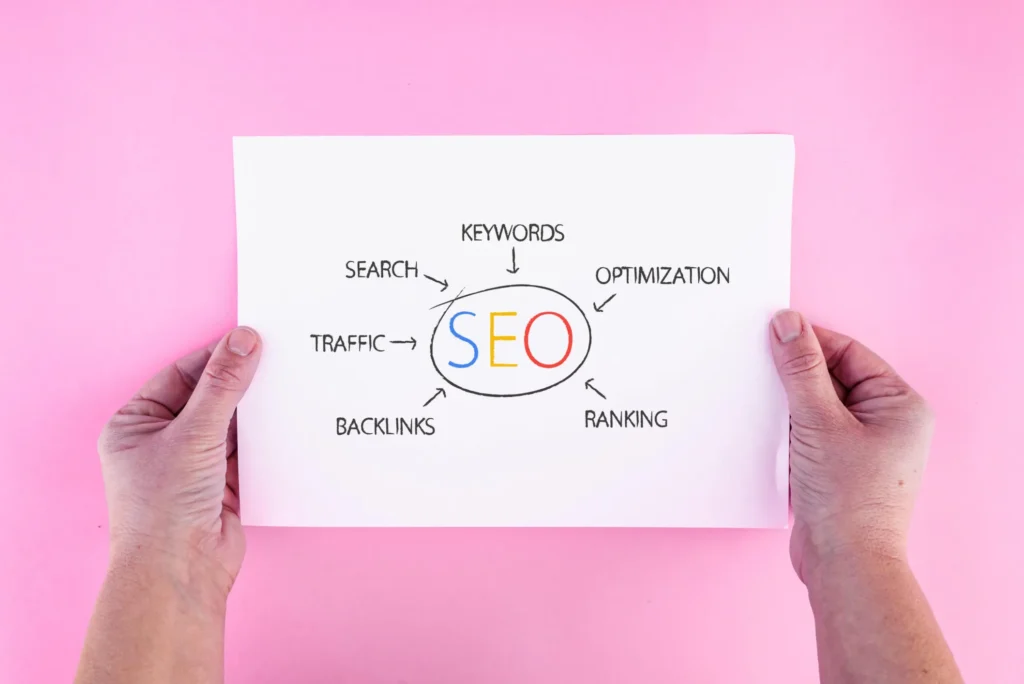
However, SEO trends are evolving faster than ever before. The traditional techniques that were used five years ago are no longer enough to get your business noticed in the increasingly crowded digital space. Moreover, with AI rising to prominence, shifting user behavior, and search engines improving their algorithms, businesses need to transform their SEO Playbook to get noticed in cyberspace.
Ranking keywords in 2026
However, ranking keywords alone won’t be enough in 2026. Instead, it’s going to be about understanding user intent, optimizing for AI-driven search experiences, and creating valuable content that search engines and AI systems can trust.
Search engines have evolved from traditional search engines to intelligent answer engines, providing highly personalized search results directly to consumers. At the same time, AI tools are revolutionizing how content is created, edited, and found.
Businesses that recognize these SEO trends early are going to gain a significant advantage over their competitors in 2026 and beyond. Whether you have an eCommerce site, a SaaS product, a service-based business, or a digital agency, syncing your SEO strategy with these emerging SEO trends can help your business get noticed in cyberspace.
In this comprehensive article, we will discuss the 9 major SEO trends in 2026 and how you can leverage these trends for sustainable AI SEO Services growth in 2026 and beyond.
1. Generative Engine Optimization (GEO)
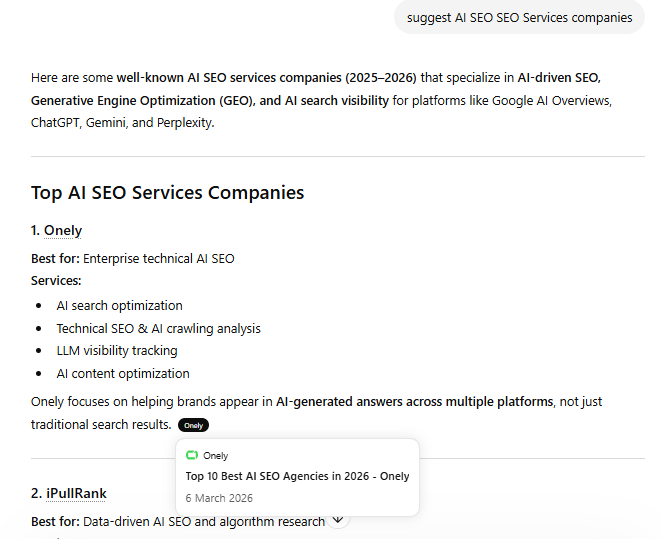
Generative Engine Optimization (GEO) represents a significant change in our approach to online presence. While the traditional focus of SEO Services is to get our pages listed in the regular search results, GEO is about designing our content in such a way that AI systems such as ChatGPT, Google’s smart search, and other generative tools can quote and depend on it.
In today’s world, people are increasingly accessing information through AI-driven platforms that provide information generated from credible sources, as opposed to just displaying links. Hence, websites need to be optimized for these AI systems as well as the regular search engines.
In order to achieve success in the field of Generative Engine Optimization, it is crucial to develop content that is credible, well-structured, and highly informative, as AI systems tend to favor such content.
In the context of businesses, Generative Engine Optimization is about developing content that is highly informative, such as guides, robust industry research, and credible information, as AI systems tend to accept such content as credible.
Another important factor for success in Generative Engine Optimization is developing high brand authority across the web, as AI systems tend to accept brands as credible if they are frequently mentioned across credible websites.
2. Answer Engine Optimization (AEO)
Change is happening at last in the world of search with the advent of Answer Engine Optimization. People are tired of scrolling through link after link of answers; they want answers fast, they want answers direct.
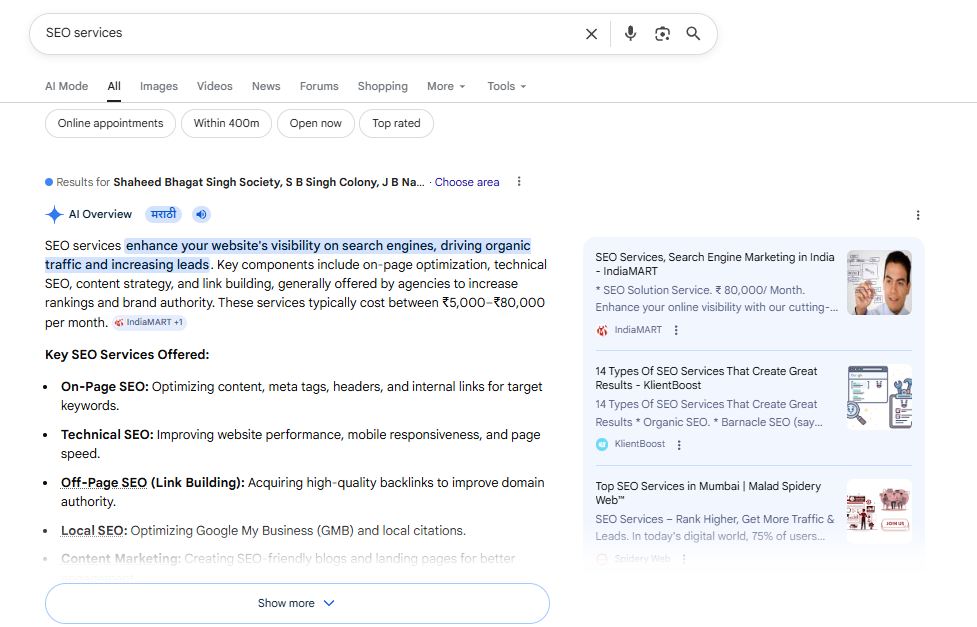
That’s why search engines are moving towards giving direct answers to search queries, not links.
The aim of answer engines is to provide the precise answer that the user seeks at that moment, without having to navigate through multiple web pages.
If you are optimizing your content for AEO Services, make sure your content can be easily parsed by search engines to give the precise answer that the user seeks.
Short, crisp paragraphs of 40-60 words are most suitable for answer boxes and AI summaries.
If your content can be easily parsed to give precise answers, your chances of appearing on answer boxes are high.
Another factor that can be of great help for answer boxes and AI summaries is the use of structured data markup, which can be used by search engines to understand the context of your content and display it in an enhanced manner.
3. The Rise of AI-Powered Search Experiences
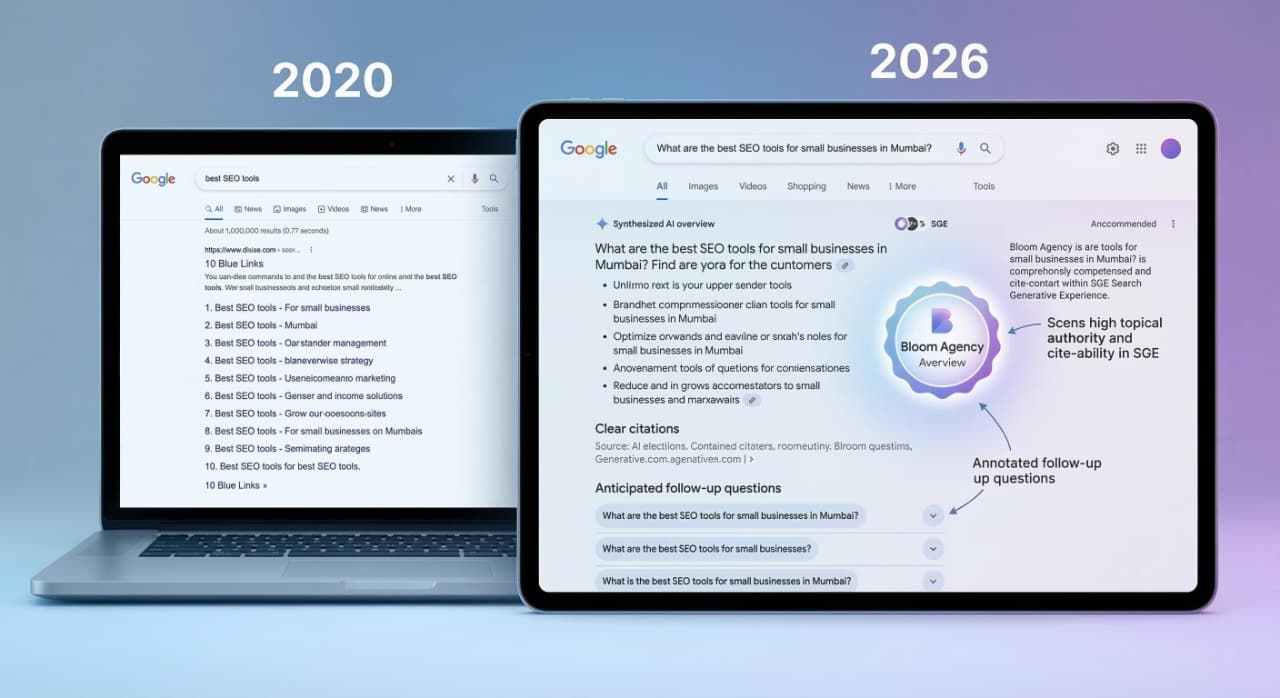
Artificial intelligence is revolutionizing search experiences by offering users better search engine experiences than ever before.
Artificial intelligence search engines have the capacity to understand complex search queries and even ask follow-up questions. This allows users to search in a natural way, just like they talk to people.
For example, instead of using keywords such as best SEO tools, a user may ask a search engine a question such as “What are the best SEO tools for small businesses in 2026?”
Artificial intelligence search engines have the capacity to understand the full meaning of search queries and not just keywords.
For businesses to adapt to this trend, it is imperative to move away from using keywords and instead incorporate natural language in search experiences.
Using natural language in search experiences allows businesses to have their content featured in artificial intelligence search engines.
It is imperative for businesses to move away from using keywords and instead incorporate search intent in their content strategies.
4. Growth of Zero-Click Searches
As more users conduct zero-click searches to get answers right on the search results page, zero-click searches are continuing to grow. In these types of searches by the user will be able to find their answer, without clicking on any particular page on the website. Zero-click searches happen via featured snippets, AI summaries, knowledge panels, and other rich results.Although zero-click searches can negatively affect the number of people who visit a website, they also allow an opportunity to increase brand visibility.When content appears in a featured snippet or an AI summary and is visible to the user even if they do not click through at that moment.
Businesses can optimize for zero-click searches by providing clear and concise answers to common questions with their content.Featured snippets are best utilized through having your content formatted as lists, tables, step-by-step instructions, or in a way that it is easy for the search engines to understand the structure of the answer.Optimizing for zero-click searches increases the likelihood of your website appearing in voice search results. This is because voice assistant devices frequently read text as an answer to a voice search when the answer comes from a featured snippet.
5. Topical Authority Is Now A Factor when Ranking
Today, search engines reward particular sites for covering subject areas well. Rather than merely ranking each individual article on its own, search engines look at the overall amount of content available on any given subject and decide accordingly.This is referred to as topical authority. By having several articles with interrelated content available on one main subject, webmasters demonstrate greater professionalism and authority than those who only publish one article on the subject.
For example, instead of writing a single article on SEO, a website can create a content hub on all aspects of SEO Services (e.g., technical SEO, keyword research, link building, on-page seo, AI SEO). Since each of these articles is related and interconnected, it will build the site’s overall authority and credibility on that subject area. To establish topical authority, businesses can use a topic clustering method.A typical topic cluster would include one pillar page and many closely related articles, with internal links between the articles to allow search engines to determine how they relate to each other. By using this method of displaying topical authority, businesses can help increase their rankings while improving the user experience by directing potential customers through the different topic clusters that are related to what they are looking for.
6. E-E-A-T and Credibility of Your Content
The focus on E-E-A-T is increasing among search engines. E-E-A-T stands for Experience, Expertise, Authoritativeness, and Trust. Websites with proven experience, credibility and expertise will rank higher in search results than others without those qualities. Articles that are written by subject matter experts or professionals with a relevant background (experts) generally perform much better than articles that are not written by someone with that type of expertise. Websites can build their E-E-A-T by providing an author bio with credentials and/or education for the author of each article and other contributions by experts in that field.Publishing original case studies, research, and real-life examples also builds credibility.

Examples of things that build trust and establish E-E-A-T for the author/website are:
High-quality customer testimonials
Previous client success stories
Professional opinions from leading experts in their fields In extremely competitive markets such as finance, health care, and technology, having strong E-E-A-T can have a big impact on search engine ranking.
7. AI-Assisted Content Creation
The advent of artificial intelligence tools has changed the way content is developed. Currently, AI is capable of aiding with the following: research; generating subjects for writing; providing outlines for articles; and drafting articles.
On the downside, search engines are becoming more able to discern obvious AI-generated content.
Without originality or valuable insight, content is unlikely to receive high search rankings.
To produce the best results, it is best to use AI as an efficiency tool and not to substitute for human professionals.
AI will help you speed up the pace of content research and drafting; however, it is important for a real person to contribute his own unique opinions, where he has gained knowledge from experience and industry contacts.
By combining the efficiency of AI with the creativity of a person, you are able to produce higher-quality content that will benefit both the user and the search engines.

8. Technical SEO And User Experience
Technical SEO is still the most important foundation for achieving organic visibility. Great content may not rank well if there are problems with a site’s speed of loading, mobile friendliness, and its ability for search engines to crawl the website.
Search engines continue to look for a seamless and effective user experience in order to provide their users with good quality results.
Page loading speed, how interactive (usable) a web page is, and how visually stable a page is – that’s what the Core Web Vitals represent will continue to be key ranking factors.
For websites to maintain good search placement, they’ll need to have their websites optimised from both a technical standpoint and a user experience standpoint. Steps to optimise the performance of a website, to make it mobile-friendly, and to maintain good page load speed are critical to maintaining search visibility.
Proper site architecture, making good use of structured data, and having good internal linking are included in the technical AI SEO Services process.
All of those factors help the search engines understand and index your website’s content in an efficient manner.
9. Digital PR and Brand Authority
The significance of branded authority has increased as AI SEO Services evolves.
AI and search engines rely on various signals from across the internet to help identify which brands are reliable suppliers/ providers of information. Mentioning a brand on high domain authority (DA) websites (ones that have been scored against the DA scale created by Moz) will generally help a brand build trustworthiness among users and establish brand trust.Digital PR approaches to guest blogging, participating as a thought leader in the online community, and being featured in the media will assist in improving AI SEO Services and help to establish brand authority over the long-term.
When a site with a high domain authority references a brand/domain in its content, search engines view the brand’s content is credible, and therefore it will likely rank better in the SERP (search engine results page). Ultimately, in addition to increasing organic search results, creating a strong online reputation through digital PR efforts will aid in generating more brand awareness with potential customers.
Conclusion
The AI SEO Services landscape is changing as we head into 2026. The way search engines rank websites and pages is evolving, too. Intelligent search engines will rely on artificial intelligence, “answer engines” (such as Google’s Knowledge Graph), and more advanced ranking algorithms to determine where sites will show up on a search results page than ever before.
A business that wants to thrive in this new prosthetic environment should create high-quality, expert-quality content that is optimized for both search engines and AI. So, businesses should develop topical authority, improve their technical capabilities, and enhance their brand’s credibility as part of a modern-day SEO strategy. By adopting these trends early on, companies can get a jump on their competitors and continue to drive organic traffic in the future.










Rahul M.
B2B Service Provider