
What Are Backlinks?
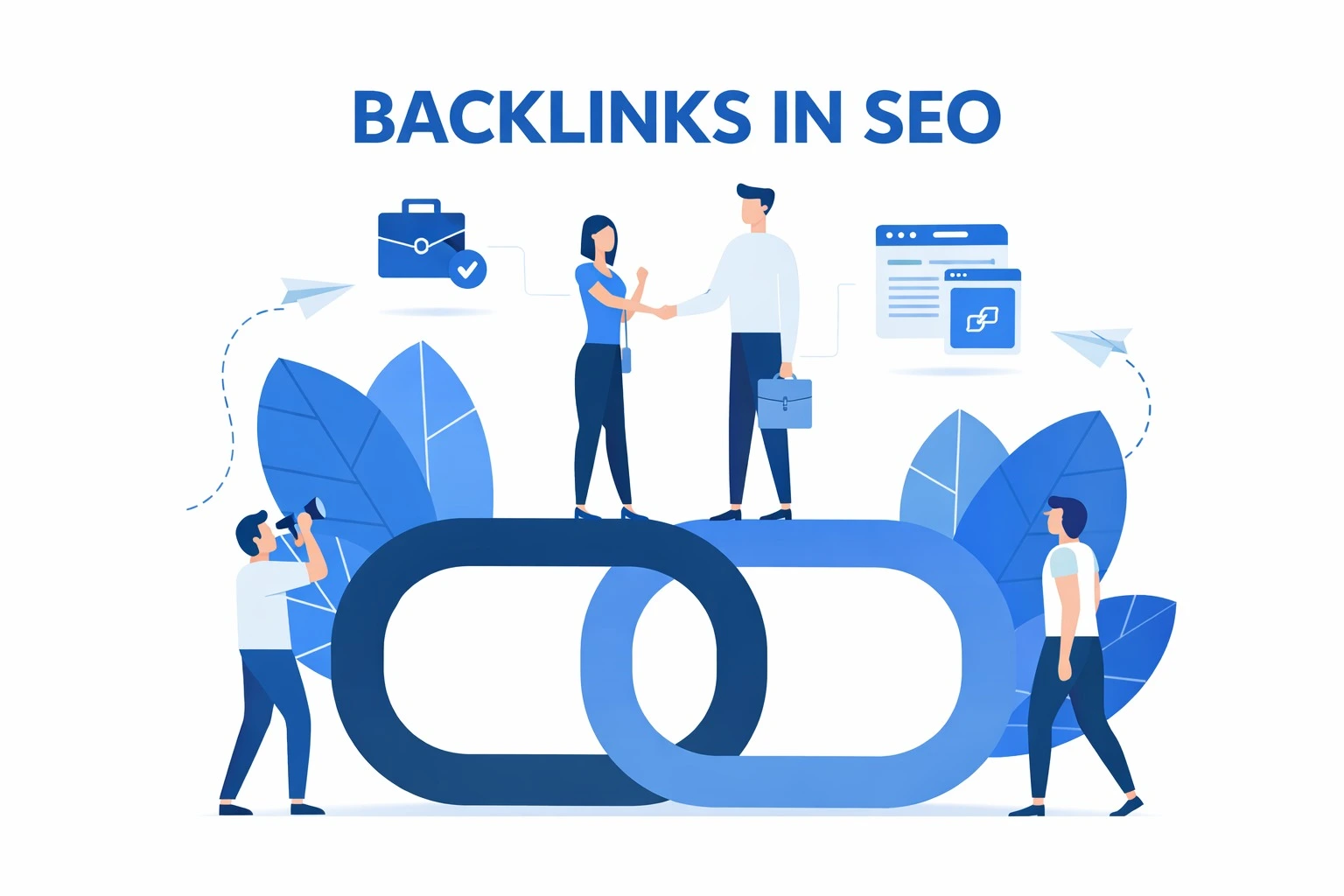
Backlinks refer to the hyperlinks coming from third-party sites that lead visitors to your webpage. For search engine optimization (SEO), backlinks serve as clicking indicators entrusted with the role of endorsing credibility on your webpage as search engines perceive it as such and hence rank it better.
In short, backlinks services essentially tell Google and other search engines that your content is good enough to be linked to.
For instance, if a popular website or a website associated with your industry links to a page within your website, it gets converted into a back link. Since this link directs to your website, it is considered to be a significant endorsement of your website’s quality and relevance.
Why Backlinks are Important?
The importance of backlinks to authority and website reputation cannot be overlooked. Backlinks are referred to as “votes of confidence” by an internet search engine.
Every backlink communicates its own message to search engines like this:
“This content is credible, valuable, and functional for users.”
The more high-quality and relevant backlinks that point to your website, the more authoritative it is judged to be. This is because search engines such as Google favor authoritative websites and give them a higher ranking in order to outperform others. In the case of Bloom, the backlink approach is all about quality and relevance and the steady, cumulative SEO growth that comes with it, knowing that each link you get contributes to your success.
The Relevance of Backlinks to the Google Algorithm
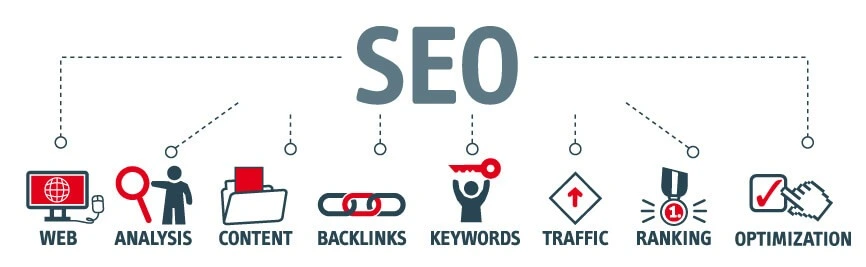
The use of links as a ranking factor is not novel. Indeed, back-links were the cornerstone of Google’s first search engine algorithm, named Page Rank. Right from the outset, Google relied on links to assess the value and authority of web pages.
Although Google has issued thousands of updates in its algorithmic process, the backlink still holds the position of the most prominent factor in search engine results.
Various industry studies have proved that pages that rank at the top of the Google search pages always possess a larger number of backlinks than those that rank lower. In reality, the number one spot in Google possesses roughly four times as many backlinks as pages ranking from number two to number ten.
Google has also verified that back links remain one of its top three ranking factors, proving that back links are still essential to modern SEO.
Backlinks and Traffic Growth
Backlinks have applications beyond their use in bettering search engine rankings. Backlinks are additionally significant in generating direct traffic on your website.
When you click on a link from another trusted site, you are directed straight to your content. This increases visits on your site, as well as your brand visibility, and gets your business noticed by a new audience organically. Hence, your authority and trust on that particular market will be developed over a period of time.
What Kinds of Backlinks to Prioritize?
A backlink does not necessarily contribute an equal amount of value in improving search engine rankings. In the matter of achieving greater visibility in search engine results, it should always be remembered that “quality trumps quantity.”
In fact, having just one good-quality backlink from an authentic source can be more effective than having low-quality ones in the thousands.
Valuable backlinks will usually have a number of factors in common.
Trait #1: Links from Trusted, Authoritative Websites
Links that come from authoritative domains are much more valuable in Google’s ranking algorithm. This is often described as domain authority, a measure of how trustworthy a domain is in the eyes of search engines.
When an authority site links to your page, the authority is transferred to your page. Consequently, the search engine giant is assured to see your pages as authoritative and worthy of high ranking.
In this case, getting a link from an established tech/industry publication could result in some noticeable improvements in terms of visibility in the organic search results.
Although it is more difficult to get backlinks from high-authority domains, the power of these backlinks is unparalleled. At Bloom, backlink plans include the acquisition of high-authority and relevant backlinks to boost SEO performance.
Trait #2: Keyword-Relevant Anchor Text
Anchor Text Definition: Examples & Tips
An anchor text refers to the noticeable and clickable text in a link. This anchor text informs engines about the content of the link page, which, in turn, explains why using your intended keyword in anchor text can improve the value of a link in terms of SEO.
But it is important to achieve a balance.
Using the exact phrase as the anchor text repetitively is likely to get the website or webpage flagged as spam by the Google filters. The main design criteria of the Penguin algorithm developed by Google is to counter any tactics of manipulation, like the excessive use of anchors containing keywords
At Bloom, anchor text optimization involves various techniques, including natural variation, branded anchors, and relevance, so that the links look and feel organic and safe in the algorithms.
Trait #3: Topical Relevance Between Sites
The importance that Google gives to back links from websites and pages more inclined to your field of interest or topic of study relates to acquiring quality links. Quality links are typically from websites and pages that have relevance
For instance, if the niche is marathon training, getting back-links from fitness sites or sites established around running could mean so much to the search engine optimization aspect compared to getting back-links from any other niche.
These are referred to as contextual backlinks. They point search engines to the fact that your content is relevant, authoritative, and relevant within a given space and in terms of a given topic.
Trait #4: The Link Is ‘Dofollow’
Dofollow links help search engines to transfer link authority from one site to another. These types of links tend to directly impact rankings and are essential in link-building techniques.
Links that have the nofollow attributes, however, do not carry ranking signals. Some typical sources for nofollow links are:
- Comments Area
- Comments
- Press releases
Paid advertisements Although nofollow links can be traffic and brand awareness generators, their SEO benefits are limited when compared to dofollow links. Thankfully, a high percentage of backlinks generated from content-oriented sources are dofollow links.
Trait #5: Links From New Referring Domains
Not all backlinks carry equal long-term impact. When multiple links come from the same website, each additional link tends to provide less SEO value than the first.
This is why referring domains matter more than total backlink count.
In simple terms, it’s more effective to earn links from many different authoritative websites than to receive dozens of links from a single source. Search engine studies consistently show that top-ranking pages have backlinks from a higher number of unique domains.
Best Practices: Create Linkable Assets
The foundation of successful link building is content that people genuinely want to reference.
These are known as linkable assets.
A linkable asset can be a comprehensive blog post, in-depth guide, research study, tool, video, interactive content, or original data—anything that provides real value to users.
High-quality content naturally attracts backlinks, which is why SEO and content marketing go hand in hand. At Bloom, link-building strategies begin with creating authoritative, share-worthy assets that earn links organically and support long-term search growth.
Once strong linkable assets are in place, building high-quality backlinks becomes a scalable and sustainable process rather than a manual chase.
How Linkable Assets Fuel Explosive Backlink Building
At one point in time, it was quite well-established that Google considers hundreds of ranking signals to determine search visibility. Obviously, a very important question arose: what is most influential on actual rankings?
Since Google does not make the complete algorithm public, SEO professionals started to look for recurring patterns in official statements, patents, and real-world ranking data. The result? In-depth, research-driven content tends to garner consistently strong backlink profiles.
That brings us to an important principle: in-depth, original, data-visualized content will attract links organically. In cases where content solves real-world issues, explains how complicated topics work, or puts together insights in one place, other websites reference it for credibility.
Comprehensive guides, built around real experience—especially if they’re full of examples—continuing to attract backlinks and organic traffic well into the future. When people cut through superficial advice and give a real example about how things work, that tends to be very noticeable within highly competitive search results.
This is the bedrock method at Bloom for sustainable link-building strategies.
Build Backlinks Using Link Roundups
There are some publishers who regularly compile and publish content showcasing the best sources on a particular subject. This is referred to as link roundups.
Link roundups tend to be posted daily, weekly, or monthly and contain valuable or up-to-date articles or guides. The bonus of being included in a link roundup is an excellent backlink from an authoritative publication and additional social media exposure.
It is easy to see why:
- First, you need to begin finding link roundups in your niche. This process involves looking for keywords that relate to your business along with terms such as ‘link roundup’ and ‘best resources.’
- Finally, contact them with a polite suggestion that perhaps your content may be suited for their audience as well. Adding value to the internet via your asset can lead to it being featured – obtaining you a high-quality backlink in the process.
Use the Moving Man Method
The Moving Man Method is a proactive backlink strategy that focuses on outdated or discontinued resources.
Here’s how it works:
- First, identify websites, tools, or brands that have shut down, rebranded, or changed URLs.
- Next, find websites that still link to those outdated resources.
- Finally, reach out and notify them of the issue while suggesting your relevant, updated content as a replacement.
Because you’re helping site owners fix a problem, response rates are typically high. This makes the Moving Man Method both ethical and effective for earning authoritative links.
Broken Link Building
Broken link building is closely related to the Moving Man Method, but focuses specifically on 404 errors.
Many resource pages across the web contain broken links. By identifying these links and alerting the site owner, you create an opportunity to suggest your content as a replacement.
The most effective approach is helpful—not promotional.
Rather than asking directly for a link, inform the site owner about the broken URLs first. If your content genuinely fits, they often choose to link to it naturally.
This strategy works particularly well on curated resource pages within specific industries.
Guest Blogging (Done Right)
Guest posting is far from dead-but only when done strategically.
The more one publishes high-quality guest articles on reputable, niche-relevant websites, the better it remains one of the most effective ways of earning authoritative backlinks and increasing brand visibility.
The key is relevance.
Publishing on unrelated sites sometimes can come off as manipulative, which hurts trust. On the other hand, when you publish high-value, insight-driven content on well-respected industry publishing platforms, you’re sending a strong indication of authority to the engines. A smart way to find guest posting opportunities is to analyse where industry leaders already contribute content and target similar publications.
Infographics & Visual Assets
The presence of visuals entices the generation of backlinks as it is promoted.
Visuals such as infographics, charts, original graphics, and data graphics can be particularly useful because they can convey complex data in an easy-to-review form.
While visual content alone cannot provide links, when paired with link-building approaches, such as sharing them with linkable publishers, it can help build backlinks consistently.
In the Bloom application, graphics are referred to as linkable assets and not as pieces of content.
Submit Testimonials
Websites of many organizations post client testimonials to instill confidence. You can get a nice backlink by submitting authentic testimonials of the tools and/or services you use.
This method is most effective when it comes to genuine testimonials with specific values. In other cases, business owners can track back to the website of the person sharing the testimonial without any need to follow up.
Blogger Reviews
If you offer a product or service, blogger reviews can be an effective link-building method.
The strategy involves identifying relevant bloggers, offering them access to your product, and allowing them to decide whether it’s worth featuring. The key is transparency—never request a backlink explicitly.
When bloggers genuinely find value, mentions and links happen naturally and comply with search engine guidelines.
Link Reclamation
Link reclamation focuses on unlinked brand mentions.
Often, websites mention a business, product, or resource without linking back to it. These are missed backlink opportunities.
The process is simple:
- Monitor brand mentions across the web.
- Identify instances where no link is included.
- Reach out with a polite request asking them to add a link for user convenience.
In most cases, publishers are happy to update the content.
PR Link Building Platforms
PR-style link-building platforms connect journalists with expert sources. By responding to relevant queries, businesses can earn high-authority backlink services from news and media websites.
This strategy works because journalists are actively looking for expert input. Providing concise, insightful responses often results in both brand mentions and editorial links.
Reverse Engineer Competitor Backlinks
Analyzing competitor backlink profiles reveals opportunities that already exist within your niche.
If competitors earn links through podcasts, interviews, partnerships, or guest contributions, those same channels can be explored strategically.
Rather than guessing where to build links, competitor analysis shows exactly where links are already being earned—and where Bloom can outperform.
Focus on Content Formats That Attract Links
Certain content formats consistently earn more backlinks than others.
In-depth guides, “why” and “what” articles, original research, visual explainers, and curated resources tend to attract links over time—even if they don’t go viral on social media.
At Bloom, backlink strategies are built around content that earns links naturally, supported by ethical outreach and long-term SEO planning.
Final Thought
High-quality backlinks are not built through shortcuts. They are earned through authority, relevance, and value.
Bloom’s approach to link building focuses on sustainable strategies that improve rankings, increase referral traffic, and strengthen brand credibility—without risking penalties or relying on outdated tactics.







Rahul M.
B2B Service Provider