
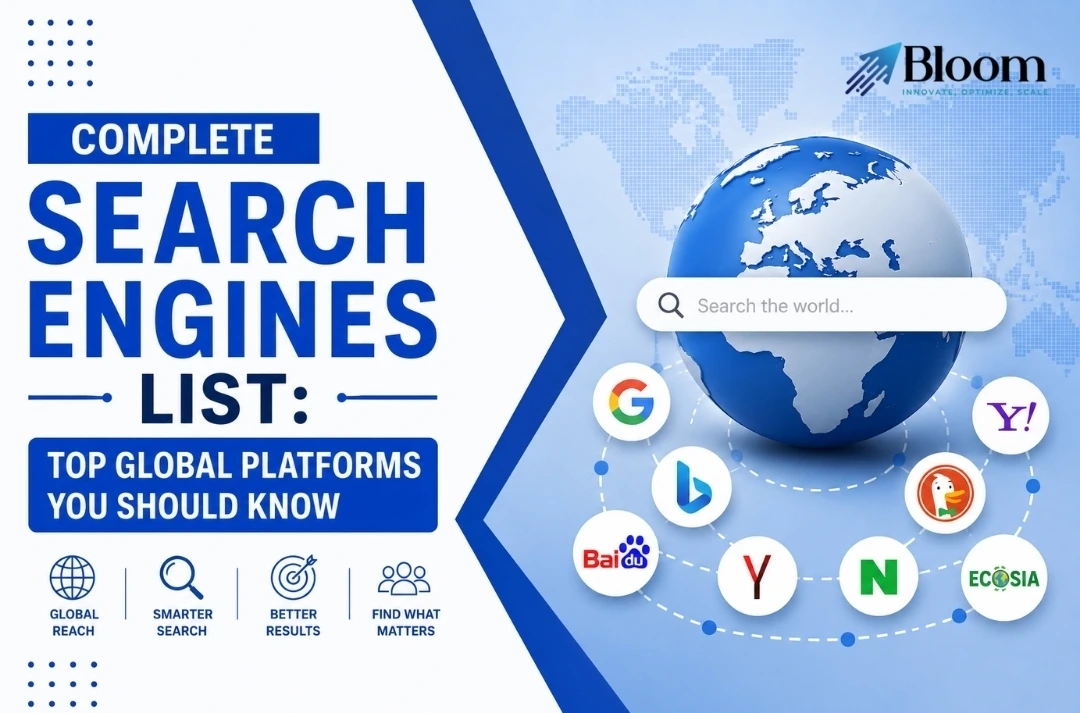
In today’s digital landscape, search engines have become essential tools for everyday life. From checking traffic during the morning commute and discovering new movies to choosing where to eat, search engines guide our daily decisions. Beyond information and entertainment, they keep us connected to the latest trends, news, and ideas shaping the world.
For businesses, search engines are critical to visibility and growth. They play a major role in staying competitive and reaching the right audience at the right time. This is where AI SEO Services serves as the foundation of digital marketing—helping brands get discovered, attract traffic, and succeed online.
While Google remains the most widely used search engine, it is far from the only option available. Platforms like Bing, Yahoo, and several emerging search engines offer distinct features designed for different user needs. If you’re exploring alternatives, this search engine list showcases some of the most popular and specialized platforms in use today. Whether your goal is personal exploration or expanding your business reach, this list of search engines introduces powerful tools to help you navigate the digital world more effectively.
1. Google

As of April 2025, Google leads the worldwide search engine market with an overwhelming market share of 89.66%. The key reason behind Google’s dominance is its highly sophisticated algorithm, along with its prime focus on providing a phenomenal user experience. Even though Google provides a whole range of services through Google Workspace (formerly known as G Suite), the search engine service remains its stalwart.
Google’s algorithm is highly optimised to understand the searcher’s intentions, yielding highly relevant results for the search engine. The factor of adapting to the changing search patterns of the user has facilitated Google Search to become the number one search engine among billions of users around the world, thus ensuring its continued supremacy over others.
2. Bing

As of April 2025, Bing holds a 3.88% share of the global search engine market, showing gradual growth despite its limited impact on mobile search. Launched by Microsoft in 2009, Bing has steadily positioned itself as the second-largest search engine worldwide.
In January 2024, Bing recorded a global market share of 3.42%, with robust performance in desktop search. By 2025, its desktop market share reached 10.5%, marking a significant 63.04% increase since 2021. However, Bing’s mobile presence remains relatively small, with a 0.52% market share—largely unchanged from 2020 to 2023.
Although Bing trails far behind Google overall, its growing dominance in desktop search presents valuable opportunities for businesses looking to diversify their SEO strategies beyond Google.
3. Yandex

As of April 2025, Yandex stands as the most widely used search engine in Russia, commanding a dominant 72% share of the local market. Globally, it holds a 2.53% market share, making it a significant regional player despite a smaller worldwide footprint.
In January 2024, Yandex’s global market share was recorded at 1.63%, but its strength lies in regional dominance. In Russia, Yandex leads with nearly 71% of the search market, outperforming Google by a wide margin. The platform also has a strong presence in Turkey, where it captured 41% of the market in 2022.
For businesses targeting audiences in Russia, Turkey, or neighbouring regions, optimising for Yandex can deliver meaningful visibility and localised search advantages.
4. Yahoo

As of April 2025, it holds 1.32% of the global search engine market, while Google dominates; however, millions upon millions worldwide continue to go there. Beginning almost three decades ago, Yahoo Search continues to be a popular alternative; in 2023, it recorded over 4 billion monthly active users across its ecosystem.
Powered by Bing, Yahoo provides an efficient, easy-to-navigate searching experience. Its design is for accessibility, and further options such as email composition directly from within its search result page are more service-oriented. Its market share is a little limited compared to the leading platforms, but it continues receiving steady traffic, mainly because the brand has been around for quite a while now and has integrated other useful services on the platform.
5. DuckDuck Go

As of April 2025, DuckDuckGo currently has a search engine market share of 0.84% in the United States and continues to expand its customer base with its strong focus on privacy, having processed billions of searches for over 46 million customers.
Known for having a very strict policy when it comes to user privacy, DuckDuckGo is a search engine that does not keep records of search history or profiles on their clients. As of November 2024, DuckDuckGo has a 1.92% market share in the US search engine market with 35.3 billion annual searches and 3.1 billion monthly searches. Other than search engine capabilities, DuckDuckGo provides browser extensions that deal with privacy issues such as encrypting connections.
6. Baidu

As of February 2025, Baidu dominates the Chinese search engine market with a 47.07% market share. Bing follows with 30.74%, while Haosou (360 Search) holds 9.02%. Globally, Baidu accounts for 0.72% of the total search market, as Google’s presence in China remains extremely limited due to regulatory restrictions.
Founded in 2000 by Eric Xu, Baidu has grown into China’s largest search engine, at times capturing over 76% of the local market. While Google is technically accessible in China, it holds only around 2% of the market. Baidu offers a wide range of services beyond search, including maps, cloud storage, AI solutions, and online communities, making it a powerful platform for businesses targeting Chinese audiences.
7.Naver
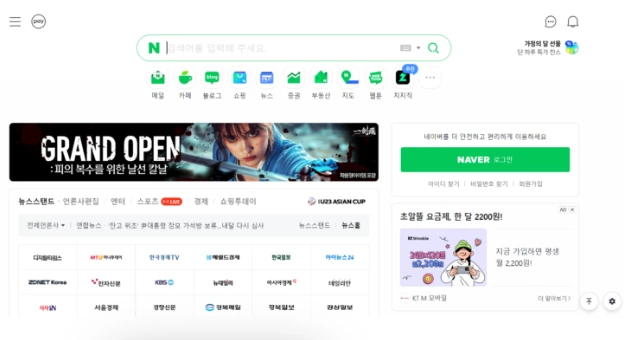
Naver is a leading South Korean search engine operated by Naver Corporation. Launched in 1999, it was the first platform in South Korea to develop and operate its own proprietary search engine.
Beyond search, Naver offers a variety of services, including email, blogs, and Knowledge iN, a popular community-driven Q&A platform. Naver was also the first search engine globally to introduce a comprehensive search experience by aggregating results from multiple content categories and displaying them on a single results page. This integrated approach continues to distinguish Naver within the South Korean digital ecosystem.
8. AOL

Founded in 1983 as Control Video Corporation, AOL is one of the earliest pioneers in the internet and search space. In its early years, AOL famously distributed CDs to users, allowing them to install its software and access the web—an approach that helped drive mass internet adoption. The company was renamed America Online in 1991 and later rebranded as AOL Inc. in 2009.
Following its acquisition by Verizon Communications for $4.4 billion, AOL evolved into a multi-service digital platform. Today, AOL Search continues to operate alongside services such as AOL Mail, AOL Advertising, and the AOL publishing network. While no longer a dominant force, AOL remains a relevant search engine option supported by its long-standing brand recognition and integrated ecosystem.
9.Qwant
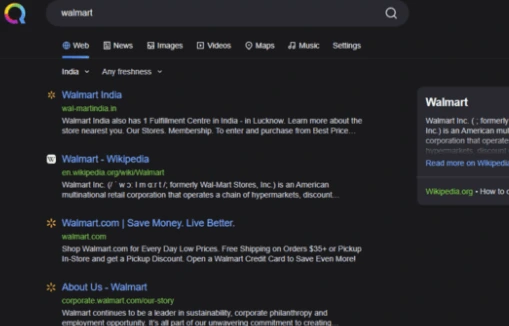
Launched in 2013, Qwant is a Europe-based search engine available in 26 languages and is one of the few platforms in the EU to operate using its own indexing engine. Strongly focused on user privacy, Qwant does not track users or personalize search results based on browsing behavior.
By 2019, Qwant ranked as the 86th most visited domain in France, processing over 10 million queries daily. Its privacy-first approach makes it a preferred option for users seeking unbiased results without data tracking, even though it limits customization features.
10. Ecosia

Ecosia is a sustainability-oriented search engine, specifically created for people who value sustainability. The search engine uses its profit gained through adverts to plant a tree for every 45 searches performed.
As an environmentally-friendly search engine alternative to mainstream search engines, not only does Ecosia’s code prioritize transparency, it specifically aims to address its effects on global warming. Unlike mainstream search engines, which are major contributors to carbon emissions, Ecosia uses its profits to plant trees around the world.
List of Other Search Engines
While Google, Bing, and Yahoo dominate the global search landscape, many alternative platforms cater to niche requirements such as privacy, social discovery, academic research, shopping, and real-time updates. These search engines offer unique experiences beyond traditional web search.
YouTube
As of April 2025, YouTube is the second most extensive search engine in the world, handling more than 3 billion searches every month and serving 2.7 billion users worldwide. It covers 98.04% of video search.
Available in over 100 countries and 80 languages, YouTube holds a critical position in the consumption habits of its users with video-based content. India leads the pack with 476 million users, followed by the U.S. at 238 million and Brazil at 147 million. In the U.S. alone, YouTube videos appear in over 791 million times in SERPs every month, a fact that reinforces its leading place in contemporary SEO and content marketing strategies.
Facebook Search
It processes approximately 1.5 billion searches every day, positioning it as one of the internal search engines used most in the world. Unlike other regular search engines, Facebook Search will be showing only the results that are within its ecosystem, comprising posts, pages, groups, and profiles.
X (Formerly Twitter)
X uses the Lucene open-source search engine, enabling it to process over one billion queries daily. The platform excels at real-time search, making it ideal for trending topics, breaking news, and public conversations.
Amazon
Amazon operates one of the most powerful e-commerce search engines in the world, known as A9. It powers product discovery across Amazon’s marketplace and Prime Video. Optimizing for Amazon’s search algorithm is critical for brands, as product visibility directly impacts sales and conversions.
Startpage
Startpage offers Google-quality results while protecting user privacy. It retrieves results from Google without tracking users and includes features such as HTTPS encryption, proxy browsing, and URL generators to prevent data collection.
Ask.com
Originally launched in 1995 as Ask Jeeves, Ask.com uses a question-and-answer-based search model. While it relies heavily on archival data and community contributions, it has partnered with an external search engine to improve result freshness.
Wolfram Alpha
Founded in 2009, Wolfram Alpha is a computational knowledge engine that provides factual answers instead of traditional web links. It is widely used by students, researchers, and educators and also offers a premium Pro version.
The closed ecosystem enables Facebook to deliver highly targeted results based on user behavior and interests. For business use cases, it’s also useful to monitor brand mentions, customer sentiment, and the performance of content being shared within the platform.
Pick the Right Search Engine for Your Needs
While Google remains the default choice for many users, alternative search engines offer advantages in privacy, specialization, personalization, and ethics. Selecting the right platform depends on factors such as accuracy, data protection, filtering options, and search intent.
Types of Search Engines
- Crawler-Based – Google, Bing, Baidu
- Human-Powered Directories – Best of the Web
- Hybrid Engines – Combine crawlers and directories
- Meta Search Engines – Dogpile, MetaCrawler
- Vertical Search Engines – Indeed, Zillow, Healthline
- Semantic & AI Search Engines – Perplexity, You.com
- Private Search Engines – DuckDuckGo, Startpage
- Shopping & Media Engines – Amazon, YouTube
The Future of Search Engines
Search engines are rapidly evolving through AI, machine learning, and natural language processing. Voice search, visual queries, privacy-first experiences, and smart device integrations are shaping the next generation of search. As engines move beyond keywords toward intent-driven discovery, user experience will remain the defining factor of search innovation.
How Do Search Engines Make Money?
Web search engines earn money mainly from advertisements in the search results. There are two types of search results: organic results and paid results.
Organic search engine results can only be achieved through effective use of search engine optimization strategies, quality content, as well as the guidelines of the search engine itself. It will take around 6-12 months to organically rank in the search engine results.
On the other hand, paid search results allow organizations to bid on keywords, which enables them to pay a fixed amount of money every time their advert is clicked (PPC). The adverts appear on top of the results page of search engines, giving instant visibility. This is the biggest source of income for search engines.
Which Search Engines Use Their Own Crawlers?
Several major search engines rely on proprietary crawlers to discover and index web content:
- Google uses Googlebot
- Bing uses Bingbot
- Yandex uses YandexBot
These crawlers continuously scan websites to ensure search results stay fresh, relevant, and accurate.
Which Search Engines Use AI?
AI plays a critical role in modern search engines:
- Google uses AI models like BERT and MUM to better understand search intent and context
- Bing integrates AI for enhanced relevance, personalization, and conversational search
- Baidu extensively uses AI to improve language processing and search accuracy in China
AI helps search engines deliver smarter, faster, and more relevant results.
What Is the Oldest Search Engine?
The oldest search engine is Archie, created in 1990 by Alan Emtage, a student at McGill University in Montreal.
Archie wasn’t a search engine in the modern sense—it indexed FTP archives rather than web pages—but it laid the foundation for how search engines evolved. Remarkably, Archie is still operational today.
What Is a Search Engine?
A search engine is a software system designed to search, index, and retrieve information from the web based on a user’s query.
Results are displayed on search engine results pages (SERPs) and can include:
- Web pages
- Images and videos
- Articles and research papers
- Infographics and other media
There are many types and names of search engines, each offering unique features to enhance how users discover information online.
Conclusion
The evolution of search engines continues to transform how users access information online. From AI-powered platforms to privacy-focused alternatives and vertical search tools, today’s search ecosystem offers more choice than ever. Understanding these platforms helps businesses optimize visibility, adapt SEO strategies, and stay competitive in an increasingly dynamic digital landscape by SEO Company in Mumbai.

Neetu Wadhwa is the Director of Bloom Agency, a Mumbai-based full-service digital marketing and web development company. With a strong focus on performance, innovation, and strategy, she leads the agency in delivering SEO, web design, and growth marketing solutions that drive measurable business outcomes.







Rahul M.
B2B Service Provider