
Google still plays this kind of central role, in how people stumble upon businesses, products, services, info, and local places online. Even while artificial intelligence, chat based searching, and these new discovery apps keep reshaping the digital scene, Google stays one of the biggest places for online exposure.
The stats around Google Search point to a real, slightly awkward fact for businesses, search behaviour is shifting, but search is not just vanishing. People are still searching, just across more formats devices, and whole different “experiences”. So from mobile and voice search, to AI Overviews and visual discovery, companies have to figure out how people actually find information, before deciding where to put their SEO energy.
The source data basically shows Google has more than 90% of the global search market, and it handles billions of searches each day. That kind of scale makes Google a must have channel, for brands trying to win organic visibility in 2026.
For brands though, showing up in Google results alone isn’t really enough anymore. Rankings, search intent, mobile usability, technical reliability, content usefulness, local relevance, and how much you’re seen inside emerging search features, all can shape how users react when they hit your website.
Here are the main Google Search statistics businesses should know in 2026, and what they mean for a modern SEO approach.
Google Still Dominates the Search Landscape
Google’s scale is still one of the main, strongest reasons businesses keep pushing organic search. The source says Google handles more than 8.5 billion searches every day, and roughly 6.3 million searches happen every minute, so yeah it’s huge. It also holds about 90% of the global search market.
Those figures basically show the massive opening that comes from being seen in search. Every single search can turn into a chance encounter between a person and a business, even if not all searches are driven by money or buying intent.
So for companies, SEO can’t just be looked at as a trick to increase website traffic. The bigger goal is to show up when potential customers are seeking details, weighing options, researching a brand, or getting ready to purchase.
A solid search approach, then, links visibility with actual business targets. The best keyword might attract less volume than a broad term, but it can also bring in far more relevant visitors and stronger qualified enquiries, which is kind of the point.
Ranking Position Has a Major Impact on Clicks
Search results are pretty competitive, and the ranking place kinda matters a lot, because it can sharply affect click through rates. The source says that the very first organic result can grab more than 27% of the clicks on mobile and desktop searches, while the tenth result gets something like 1.9% . That gap is a big deal, so companies cannot just assume “we are on the first page” means the job is done.
Like, if a website shows up at position one it has way more chances to catch attention than if it shows up near the bottom of that page. So improving rankings for commercially valuable keywords becomes a key part of long-term SEO, not just a quick tweak.
But still, rankings should not be judged alone, you really need to look at relevance plus search intent too. A business might not gain anything from ranking first for a keyword if that brings visitors who have zero interest in what the company actually sells or offers. The best SEO playbooks focus on visibility for searches that actually match the audience and what the business provides, so it’s not only traffic, it’s useful traffic.
New Searches Create Opportunities for Businesses
One of the most interesting statistics in the source is that approximately 15% of Google searches are entirely new.
This reflects how quickly search behaviour evolves. People constantly create new queries based on emerging products, technologies, trends, questions, locations, and experiences.
For businesses, this means keyword research cannot be a one-time activity. A keyword list created several years ago may no longer represent how customers search today.
Regularly reviewing search trends can help identify new topics and emerging opportunities. Content teams can then create useful pages that answer developing questions before competitors establish strong visibility.
This is particularly important in industries affected by technology, consumer behaviour, AI, finance, ecommerce, healthcare, and other rapidly changing sectors.
Search Intent Matters More Than Ever
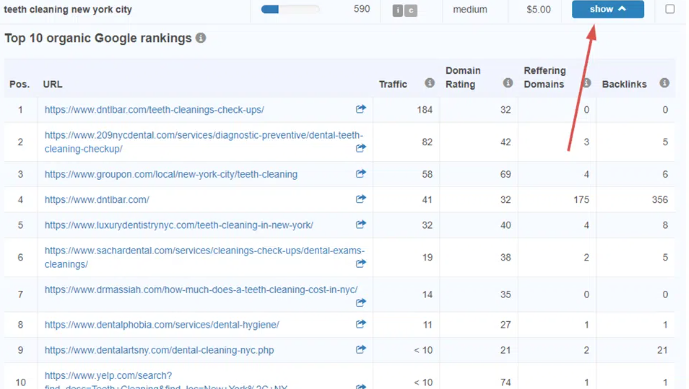
The source notes that approximately 54% of Google searches have navigational intent. It also identifies informational, transactional, and local intent as important categories of searches.
Understanding intent helps businesses create pages that match what users actually want.
Informational searches generally indicate that a person wants to learn something. Transactional searches suggest an intention to take action, such as purchasing a product. Local searches often involve a location and may indicate that the user is looking for a nearby business or service.
Each type of search requires a different content approach.
A blog article may be suitable for an informational query, while a detailed product page may better satisfy a transactional search. Local landing pages, Google Business Profile optimization, location information, reviews, and map visibility can be important for local searches.
Rather than creating one generic page for every keyword, businesses should consider the reason behind the search.
AI Overviews Are Changing the Search Experience
Artificial intelligence is one of the biggest changes affecting Google Search in 2026. The source reports that by March 2025, AI Overviews appeared on approximately 13.14% of U.S. desktop searches. It also cites research showing that AI Overviews appeared for roughly 21% of keywords in a large sample.
This creates a new challenge for traditional organic search.
Historically, businesses focused heavily on earning a top organic position. Today, a search page may provide an AI-generated summary before conventional organic listings, potentially answering part of the user’s question without requiring a click.
The source also reports that the click-through rate for the top organic result can fall by approximately 34.5% when an AI Overview appears.
For SEO professionals, this means visibility needs to be considered beyond the traditional blue links.
Content should be structured so that search engines can understand its subject, context, expertise, and relevance. Clear answers, well-organized information, useful supporting details, and strong topical coverage can help a website compete in increasingly complex search environments.
AI SEO services does not eliminate the need for SEO. Instead, it expands what SEO needs to accomplish.
Mobile Search Should Be a Priority
More than 60% of searches are reported to originate from mobile devices.
This statistic reinforces the importance of designing websites around mobile users rather than treating mobile optimization as an optional feature.
A mobile visitor may have a smaller screen, a slower connection, less patience, and a more immediate need for information. Navigation, page speed, readability, forms, buttons, images, and checkout processes therefore need to work smoothly on smaller screens.
The source also reports that 61% of Google searchers are more likely to contact local businesses with mobile-friendly websites.
For local businesses, mobile optimization can therefore influence more than rankings. It can affect whether someone calls, visits, requests information, or leaves for a competitor.
A responsive website should make important information easy to locate. Contact details, directions, services, product information, enquiry forms, and calls to action should be accessible without unnecessary scrolling or complicated navigation.
Local Search Is Becoming Increasingly Important
Local search continues to create significant opportunities for businesses with physical locations or geographically targeted services.
The source reports that searches containing “near me” have grown by more than 200% over a two-year period. It also notes that 46% of monthly Google searches have local intent and estimates around 97 billion local searches each month.
These numbers show why local SEO should be treated as an important component of digital marketing for location-based businesses.
A strong local search strategy can include optimizing Google Business Profile information, maintaining consistent business details, creating useful location-specific content, earning relevant reviews, developing local landing pages, and ensuring that the website provides accurate information about products and services.
The source also reports that 78% of local mobile searches lead to offline purchases and that 88% of people conducting a local search on a smartphone visit a related store within a week.
For restaurants, clinics, retailers, professional services, educational institutions, real estate companies, and other local organizations, these behaviours can make local visibility directly relevant to business growth.
Voice Search Is Making Queries More Conversational
Voice search is another factor influencing how people interact with search engines.
According to the source, approximately 70% of Google Assistant queries are expressed using natural language.
People often communicate differently when speaking compared with typing. Instead of entering a short phrase, they may ask a complete question.
This creates opportunities for businesses to build content around conversational queries and long-tail searches. FAQ sections, clearly answered questions, conversational headings, and naturally written content can help address the way people phrase voice searches.
The source also reports that 58% of users aged 25 to 34 use voice search daily.
Voice optimization should not mean filling a website with awkward question-based keywords. Instead, the goal should be to provide concise, useful answers while maintaining natural language and strong topical relevance.
Visual Search Is Expanding Beyond Text
Search is no longer limited to typing words into a search box.
Google Lens represents an important example of visual discovery. The source reports that Google Lens was used approximately 12 billion times per month in 2023.
Visual search can be especially relevant to industries such as fashion, retail, home décor, jewellery, travel, food, and ecommerce.
Businesses should therefore think about how images contribute to search visibility. Descriptive image filenames, useful alt text, relevant surrounding content, high-quality visuals, structured information, and fast-loading images can all contribute to a stronger website experience.
As visual discovery becomes more common, image optimization becomes another part of a comprehensive SEO strategy.
Backlinks Continue to Matter
Technical optimization and quality content are essential, but authority remains an important part of search visibility.
The source reports that the number-one result has an average of 3.8 times more backlinks than results appearing in positions two through ten.
This does not mean businesses should pursue backlinks indiscriminately.
A sustainable link-building strategy focuses on earning relevant references from credible websites. Digital PR, useful research, original insights, expert commentary, high-quality resources, partnerships, and genuinely valuable content can all contribute to natural authority development.
The goal should be to build a website that other credible sources have a reason to reference.
Long-Tail Keywords Can Deliver Valuable Traffic
Long-tail searches are another significant opportunity for businesses.
The source indicates that long-tail keywords can receive almost twice as many clicks, while another cited study found that a substantial percentage of high-volume keywords contain three or more words.
Long-tail keywords are often more specific than broad terms. A person searching for a highly specific service or product may be closer to making a decision than someone entering a very general query.
For example, a business might target a broad term related to its industry while also creating content around more specific questions, locations, services, and use cases.
This approach can help websites build visibility across a broader range of relevant searches while addressing different stages of the customer journey.
Technical SEO Remains the Foundation
A website cannot perform well in search if technical problems prevent search engines or users from accessing important content efficiently.
The source notes that Google processes queries within milliseconds and maintains an enormous search index containing more than 100 million GB.
For businesses, the lesson is straightforward: websites need to be technically accessible, organized, and efficient.
Technical SEO can involve crawling and indexing, site architecture, internal linking, page performance, mobile usability, canonicalization, structured data, redirects, broken links, duplicate content, and other elements that influence how search engines understand a website.
Technical SEO is not a replacement for strong content. Instead, it creates the foundation that allows useful content to be discovered and evaluated effectively.
SEO Should Focus on Business Outcomes
Traffic can be helpful, yes, but traffic by itself doesn’t really make the business grow, not the way you want it to. The source has conversion benchmarks too, and they make it clear that websites can vary a lot in how well they convert. Some of the best websites reach way stronger rates than the average ones do. So it shows this difference between being seen and actually performing.
You might pull in thousands of visitors, but still end up with not many enquiries, especially if the landing pages feel a bit confusing, the offer seems fuzzy, or the calls to action are weak… like they almost whisper instead of inviting. In that case modern SEO can’t just be one thing. It should work hand in hand with conversion optimization, even sort of, side by side.
Landing pages should explain the value fast, not in a long, indirect way. The forms should be easy to fill in. The product or service details should answer the usual questions people already have. Trust signals should be easy to spot, not hidden somewhere. And navigation should guide users naturally toward the next step, not make them hunt around.
So the goal isn’t only to get more people showing up on the site. The point is to bring in the right visitors and then get them to take real, meaningful actions.
What These Google Search Statistics Mean for Businesses in 2026
The most important lesson from these statistics is that Google Search is becoming more diverse.
Users are searching through mobile devices, voice interfaces, visual tools, local queries, conventional organic listings, and AI-powered search experiences. At the same time, competition for attention continues to increase.
Businesses should therefore avoid relying on a single SEO tactic.
A modern search strategy can combine technical SEO, content marketing, keyword research, local SEO, mobile optimization, digital PR, authority building, structured data, conversion optimization, and ongoing performance analysis.
The source also reports that organic search contributes significantly to web traffic and revenue across multiple industries, reinforcing the commercial importance of maintaining strong search visibility.
How Bloom Agency Can Help Businesses Adapt
At Bloom Agency, SEO can kinda be treated as a long term growth path, not only a ranking thing. First, we try to really get the business ,like who the customers are, who the competitors basically act like, what the products do, what services are offered, and how the whole search world looks right now. After that, the SEO plan usually leans into the openings that feel most connected to the brand.
That could mean doing a broad keyword research, improving on-page elements, tightening up technical SEO, building content that actually helps, link acquisition, local search work, ecommerce SEO, and then tracking performance measurement so decisions are not random.
Since search keeps moving, the strategy has to move too. AI assisted search experiences, shifting user habits, mobile-first discovery, conversational questions, and local search updates bring up new details for a business to consider.
A flexible SEO approach lets companies respond to these changes without throwing away what still holds true: useful content, solid technical underpinnings, credible authority, better user experiences, and that clear match between the content and the real search intent.
Final Thoughts
The Google Search statistics for 2026 kinda tell a clear story. Search stays enormously important, but how people actually interact with search engines is shifting, not in a small way. Google keeps processing billions of searches, meanwhile users more and more depend on mobile devices, conversational questions, local listings, visual discovery, and AI generated summaries. Ranking position still matters, sure , but for brands it’s getting harder because visibility now spreads across a far wider search universe.
So the brands that win are the ones willing to adapt. Not just tweaking a few keywords here and there, or chasing one single ranking number , or following isolated SEO “moments.” Instead, businesses should craft websites that really answer customer questions, deliver a great experience, signal authority clearly, and make it easy for visitors to do something next.
SEO in 2026 is not only about placing a website onto Google. It’s about making that site seen, helpful, trustworthy, and competitive in whatever place customers choose to search from. And for companies ready to level up their organic presence, a data driven and adjustable SEO plan can become the base layer for sustained digital growth.

Neetu Wadhwa is the Director of Bloom Agency, a Mumbai-based full-service digital marketing and web development company. With a strong focus on performance, innovation, and strategy, she leads the agency in delivering SEO, web design, and growth marketing solutions that drive measurable business outcomes.




Rahul M.
B2B Service Provider