
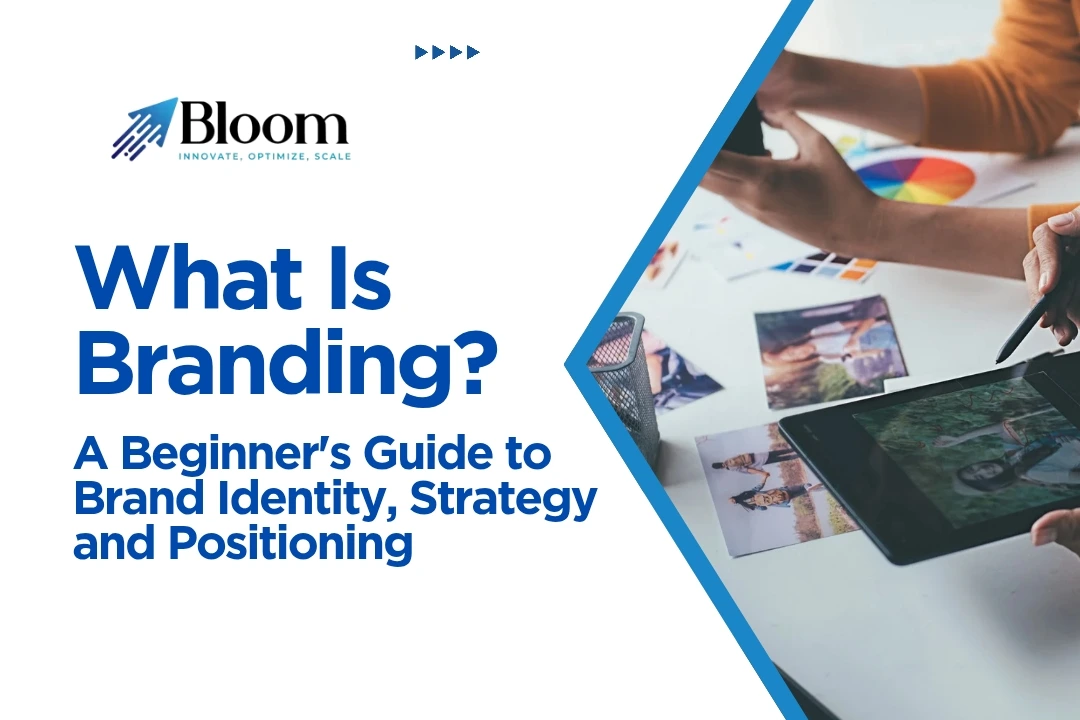
Whilst people often associate branding with having a logo, it is much more than this. Branding refers to how people perceive your business as a whole. It includes how the business is positioned, what it stands for, its appearance, and the feeling that it creates in customers.
Understanding branding can help you make smart decisions when starting a new business or revamping an existing business. In this beginners guide we’ll explain what branding is, the difference between brand identity, brand strategy and brand positioning, and how using professional branding services can help you create a memorable and trustworthy brand.
What is branding?
Branding is how people perceive and remember your business. It brings together the purpose, personality, visual design, messaging and customer experience within your business to create a cohesive brand.
Whilst your product is what you are selling, your brand is the reason people choose you over competitors. Even if two businesses are selling the same product at the same price, people will be more likely to choose the business they trust, recognise or relate to.
Having a strong brand can allow you to:
- Be noticeable in your market
- Be trusted
- Create loyal customers
- Charge fair prices rather than lowering them in competition
- Easily market as people will be familiar with your brand
Brand, Branding & Brand Identity
Although these words are often used interchangeably, they have different meanings.
- How people perceive your business.
- “They’re reliable and modern”
- Branding
- The actions taken to create how people perceive your brand.
- Establishing a tone of voice, visual design, and values.
- Brand identity
- Visual & verbal representation of your brand.
- Logo, colours, fonts & graphics.
Therefore, branding is the actions taken, brand identity is the tools used to create the brand, and brand is how people perceive it.
Key Elements of Brand Identity
Brand Identity is the visual, textual and auditory elements of your brand. Usually this will include:
- Logo: Simple representation of your brand. Should be clear, memorable and readable in both large and small sizes.
- Colours: Can evoke feelings and create recognition. Using a consistent set of colours will make your brand easy to spot.
- Fonts: Different fonts create different feelings. Choose fonts that match the personality of your brand (formal, friendly etc).
- Graphics: Should match the style of your brand in photography, icons and illustrations.
- Tone of voice: The style of writing and speaking within your brand. This may be professional, friendly, fun or expert.
- Branding guidelines: Simple guidelines to ensure that all brand elements are used in the right way, to maintain consistency across your team.
What is brand strategy?
Where brand identity is how your brand appears, brand strategy is the thinking behind it. It is a long term plan to define who you are, who you are targeting, and how you wish to be perceived.
Within your brand strategy, you should usually consider:
- Purpose- Why does your business exist?
- Vision & Mission- Where are you going, and how will you get there?
- Values-What principles guide decision making within your business?
- Target audience-Who do you want to target? What do they care about?
- Personality- If your brand was a person, what would it be like?
- Promise- What can customers always expect from you?
Without brand strategy, your design will be purely decorative. With brand strategy, all of your brand elements (including logos, content and web pages) will be helping you achieve a specific goal.
What is brand positioning?
Brand positioning is how your brand is positioned in relation to competitors in customers’ minds. It answers the question: Why should people choose you?
- A good brand positioning will be clear, focused and unique. To create a good brand positioning, you will generally need to:
- Understand your audience- What do they need, what frustrates them, and what their purchasing behaviours are like.
- Understand your competition-How are they positioning themselves? Are there any gaps in the market?
- Identify what makes you unique- What are you offering better, differently or to a specific audience?
- Create a positioning statement-A short statement summarising who you are targeting, what you offer, and why.
- Use it in everything- Ensure your positioning is reflected in everything from your website, social media and sales.
For example, one local dentists may position themselves as gentle and family friendly, whereas another may position themselves as offering high quality cosmetic dentistry. Both positions are valid, but are targeting different audiences in very different ways.
How is branding created?
In general, branding from professionals will follow this process:
- Research – Understand the business, audience, market and competitors.
- Strategy – Understand the purpose, values, personality and positioning.
- Design brand identity – Create a logo, colour scheme, fonts and visual style.
- Messaging – Create taglines, key messaging and tone of voice.
- Guidelines – Provide a document to ensure correct use of brand elements.
- Implementation – Add your brand to your website, packaging, social media, marketing material and customer interactions.
- Evaluation & Refinement – Evaluate how your brand is performing and update as your business grows.
If early steps, particularly research and strategy, are skipped, it is very common for a new brand to look good but not connect.
What are branding services?
Branding services help businesses create, update and manage their brand. Depending on the agency and your requirements, branding services may include:
- Brand strategy & positioning – Research, defining target audience, and creating a clear brand direction.
- Brand identity – Logo, colour scheme, fonts & visual style.
- Logo design – Professional logo matching your brand personality.
- Graphic design – Social media content, brochures, leaflets, menus & presentations.
- Brand messaging – Taglines, story & tone of voice guidelines.
- Brand marketing – Promote your brand across digital platforms to increase recognition from the right people.
- Brand guidelines – A document to ensure a consistent brand across multiple teams and external partners.
Small businesses may only require a logo and guidelines to begin with. Businesses growing in size may require full support with brand strategy, identity and marketing.
Why is brand consistency important?
Having consistency in your branding will make your brand more trustworthy. If your logo, colours, content and customer experience all match across platforms, people will be able to recognise your brand quickly. However, if they differ across platforms, people will be confused and your brand will seem less professional.
To be consistent:
- Only use brand approved logos, colours and fonts.
- Ensure a consistent tone of voice across all posts, emails and ads.
- Use templates in social media and documents.
- Share brand guidelines with everyone creating content for you.
- Regularly check content to ensure you aren’t using outdated versions.
Common Branding Mistakes
- Only having a logo – Without strategy, brand identity rarely works well.
- Copying competitors – Having a similar brand to competitors will make it harder for people to remember you.
- Being too generic – Having a clear target audience will make your message much more effective.
- Changing branding too frequently – People will get confused with frequent changes, and brand recognition will be reduced.
- Not considering customer experience – The way you respond to, provide and problem solve is also part of your brand.
When should I consider branding services?
Consider investing in branding services if:
- You are starting a new business
- You feel that your current branding looks outdated or inconsistent
- You are entering a new market or targetting a new audience
- Customers struggle to explain what makes your business unique
- You are not getting the response you want from your marketing
A good branding agency will ask you what your goals and target audience are before discussing design. If a provider doesn’t ask questions and immediately suggests logo design, you may want to consider looking elsewhere.
Final Thoughts
Branding is much more than just a logo. It involves strategy, positioning, identity and consistent communication to make people recognise your brand and choose to go with you. Knowing some of the basics of branding can help you make better decisions in your business, whether you are doing it yourself or using professional branding services.
To create a strong brand for your business, identify who you want to target and what makes you different. Build visual elements and messaging around this, and be consistent. This will create one of the most valuable assets for your business.
FAQs
1.What is branding?
Branding is how people perceive and recognise your business. This includes your business name, logo, visual design, messaging and experience.
2.What is the difference between branding and marketing?
Branding refers to who you are as a business and what you stand for. Marketing refers to how you market your business to customers. A strong brand will get more from your marketing.
3.Should small businesses invest in branding services?
Yes. Small businesses can really benefit from branding. A clear and trustworthy brand can help them compete with larger names, even with a smaller marketing budget.
4. How long does it take to create a brand?
It can take a few weeks to a few months to create brand identity, depending on the work required. However, creating brand recognition and trust is an ongoing process.
5. What is the difference between brand identity and brand strategy?
Brand strategy is the planning for your brand, including purpose, target audience and positioning. Brand identity is the visual and verbal representation of this.
6. Can I rebrand my business?
Yes. Many businesses rebrand to give themselves a more modern image, to target a new audience or to match changes in what they offer. With a good rebrand, you can keep what customers appreciate from your current brand, and improve on what isn’t working.
7. What are branding guidelines?
Branding guidelines are a document which explains how your logo, colours, fonts, images and tone of voice should be used. This ensures consistency between your team, designers & marketing partners.
8. How much do branding services cost?
Costs will vary greatly depending on the amount of work, the experience of the agency and what is included (brand strategy, logo design, full brand identity, ongoing brand marketing). Be sure to ask for a clear breakdown of what you are getting.
9. How do I choose the right branding agency?
Look at examples of their work. Ask how they approach research and strategy. Read feedback from clients. A good agency should ask about your audience and goals before showing you designs.
10. Is a logo enough to create a brand?
No. Whilst a logo will help people recognise your brand, to create a good brand you also need strategy, consistent style, clear messaging and good customer experience.

Neetu Wadhwa is the Director of Bloom Agency, a Mumbai-based full-service digital marketing and web development company. With a strong focus on performance, innovation, and strategy, she leads the agency in delivering SEO, web design, and growth marketing solutions that drive measurable business outcomes.




Rahul M.
B2B Service Provider