
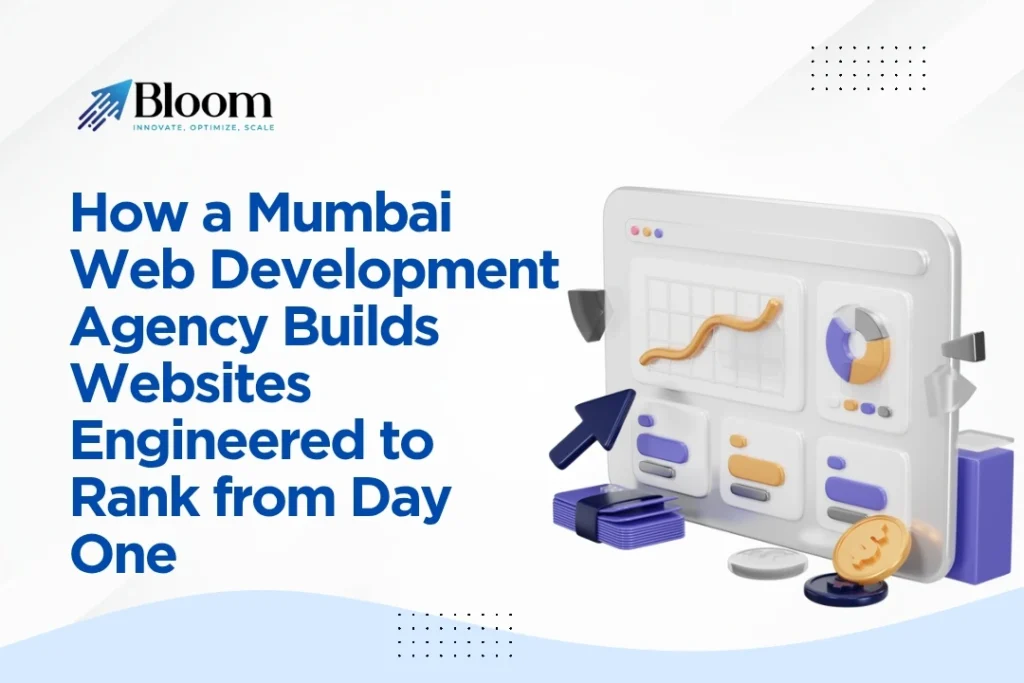
How a Mumbai Web Development Agency Builds Websites Engineered to Rank from Day One
Not only a storefront, a website is one of the most valuable assets that a company can own. The website is used to attract prospective clients and communicate their brand values and generate lead traffic. But, even an attractive website fails to bring any benefits to the client when search engine optimization is not included into website development process. Slow speed of loading, difficult navigation, lack of mobile-friendly features, and technical issues are the reasons why some web pages are inaccessible for search engines.
That is why search engine visibility should be taken into account during website development process. Web Development Company in Mumbai uses a combination of technologies, user-oriented design, and best SEO practices while creating competitive and search engine-friendly websites. The right approach implies the integration of search engines requirements into website planning, design, coding, and content structuring processes.
1. Starting with SEO Research and Website Planning
A successful website will start with understanding your target audience, goals, search intent and competitor landscape. Your experienced development team will work alongside your SEO specialist to identify your core services, products and topics. This will allow your website to be set up to best suit your business.
For example, if you’re a business based in Mumbai providing digital marketing, web development and e-commerce services, you should create individual pages for each service. This will give them a clear purpose and the content will be relevant to the search intent. Keyword research will also help you decide on your page titles, headings, URLs and what content is required. You want your pages to be useful and not just keyword stuffed. This will help avoid costly changes later down the line.
2. Search Friendly Website Structure
Your website structure will help users to easily navigate your website and help search engines find the right content. Having a logical structure will help your important pages be easily found and links will be spread across your website. A professional Web Development Company in Mumbai will structure your website around your core services, products, industries and information. Navigation menus will be simple to understand, your URLs will be descriptive, and your breadcrumbs and internal links will be relevant to the content. If you’re creating an e-commerce development website, your pages may be split into website development services, platform specific solutions, e-commerce SEO and other relevant information. All of these pages should be linked and clearly connected. Your important pages should be easy to find with crawlable links. If your pages are only accessible via complex scripts or have no internal links, they may be harder to find. A well thought out website structure will help your website be crawled efficiently, improve user experience and help individual pages be found for the right searches.
3. Page Speed & Core Web Vitals
Having fast page speeds will improve your users experience. If your pages are slow to load or your interactive elements are not responsive, your users may leave your website. Search engines will also look at page experience factors such as Core Web Vitals. These look at how fast your pages are loading, how responsive they are and how visually stable they are.
Optimising your website will help improve these factors. This can be done by compressing your images, using modern image formats, removing any unnecessary JavaScript and CSS, enabling caching in the browser and choosing the right hosting. Lazy loading can aid your images and ensuring your scripts are well managed to avoid delays.
Core Web Vitals consist of:
- Largest Contentful Paint (LCP) – How quickly your main content loads.
- Interaction to Next Paint (INP) – How responsive your website is.
- Cumulative Layout Shift (CLS) – How visually unstable your page is.
Google commonly use the following as good page speeds: LCP under 2.5 seconds, INP under 200 milliseconds and CLS under 0.1 (75th percentile of page visits). Checking these factors before and after launch will help identify any issues affecting your page speed.
4. Mobile Friendly Website
Many of your customers will find your business via their smartphone. If your website is not mobile friendly, it can cause unnecessary issues. As Google mainly use the mobile version of your content for indexing, it’s important your website is mobile friendly. A responsive website will adapt to different screen sizes. This means images, text, navigation and interactive elements all adapt. Buttons should be easy to click and forms should be easy to complete. Important information should also be easily found without too much scrolling. Your important content should also be included on the mobile version. By optimising your website for responsiveness, your development team can ensure your website is more consistent across devices.
5. Technical SEO
Technical SEO will ensure your website can be crawled, understood and indexed correctly by search engines. Ensuring these are all set up during development will avoid any avoidable issues. Your website should have clean URLs, the right XML sitemap, robots.txt file and canonical tags where needed. Your development team should check your important pages are returning the right status codes and pages that have been removed or moved permanently are handled correctly. HTTPS should be enabled to keep your data secure. Any broken links, redirect chains, duplicate URLs and any noindex errors should be identified. Structured data can give search engines more information about your eligible content. Depending on your website, you may want to include Organisation, LocalBusiness, Product, Article and BreadcrumbList schema. Your structured data must match your on-page content and follow the guidelines of the relevant search engine. Having a solid technical setup will make it easier for search engines to process your website.
6. Content Structure for Search Intent
Even if your website is technically sound, you will still need relevant and useful content to rank organically. During development, your team should create page templates to ensure your content has clear headings, easy to read paragraphs, descriptive page titles, meta descriptions, alt text for your images and logical content sections. This will help your business to consistently add information as your website grows.
Every important page should have a clear purpose. For example, your service page should explain your service, what benefits it provides, what the process is and how customers can get in touch. Blog articles should answer a specific question or provide meaningful advice.
Internal links should be used to link relevant pages together. This will help users find more information and help search engines understand the connections between your content. If you’re targeting local customers, you can include localised content to explain your relevant services, what areas you provide and your local knowledge. Creating a content plan during development will help your business to have a strong basis for SEO growth.
7. Local SEO for Mumbai Businesses
Local SEO is important for businesses targeting customers in certain areas. If you’re a business in Mumbai, you may want to target customers looking for web development, consultancy, health care, real estate or other professional services in the area. A Web Development Company in Mumbai can help support local SEO by creating service pages, having consistent business information and clear local information. Your website should have all important information easy to find. This includes your business name, contact details, what services you offer and how customers can get in touch. Using the right LocalBusiness schema can help search engines understand your content but doesn’t guarantee improved search visibility. Ensure your Google Business Profile is accurate (if applicable) and your website matches the information on your business listings. Local SEO will work best if your content is targeting the right locations. If you create many similar pages for different areas, it can affect the quality of your content.
8. Testing & Monitoring
Before launching your website, you should test it to ensure everything is working correctly and your website is ready for search engines. Your development team should test your website to ensure your navigation, forms, mobile version, page speed, redirects, internal links, meta data, canonical tags, structured data and indexing are working. They should also check your staging pages aren’t blocked by accident and there are no development restrictions on your live website.
After launching your website, you can use Google Search Console to monitor your website. This will help you see how your website is being indexed, what searches are coming up, impressions, clicks and any technical issues. Analytics can also give you more insight into how users are interacting with your website, getting in touch and converting. Keeping an eye on your website will help you spot any issues and improve your pages. Whilst your website can be set up to be search friendly from day one, there’s no guarantee you’ll rank straight away. This depends on many factors such as competition, relevant content, website authority and how the search engines process your website. Having a strong start will help your website to improve.
Why Choose Bloom Agency for Website Development?
Bloom Agency offers its assistance to firms that need to make their websites visible, usable, and profitable. It is possible to cut down the time interval between the process of website launch and website optimization by combining two processes – website development and SEO. There are plenty of factors involved into creating the website that will suit the users as well as search engines. Website structure, responsive design, SEO issues, performance optimization, and page layouts all have to be combined into one strategy. When choosing a website development partner, businesses cannot limit themselves only to visual design. The firm should understand technical SEO, usability issues for mobile devices, website performance and layout, content structure, etc. The collaboration with Web Development Company in Mumbai is important because it ensures that the website is easier to manage and update further on.
Conclusion
Having a website that is ready to rank is not only about the looks of the site or having code that works. It is about planning, proper architecture, speed, mobile first approach, technically correct implementation, and content that meets the expectations of users. The combination of SEO and website development helps businesses to avoid many typical technical issues and create the basis for organic growth. Constant monitoring and optimization are required, but making the right decisions from the very beginning will increase their efficiency.
At Bloom Agency, we combine website development and SEO skills to assist companies in creating websites that are optimized for digital success. If you are building a new website or redesigning an existing one, contact us to develop a website strategy based on your business needs.

Neetu Wadhwa is the Director of Bloom Agency, a Mumbai-based full-service digital marketing and web development company. With a strong focus on performance, innovation, and strategy, she leads the agency in delivering SEO, web design, and growth marketing solutions that drive measurable business outcomes.



Rahul M.
B2B Service Provider