
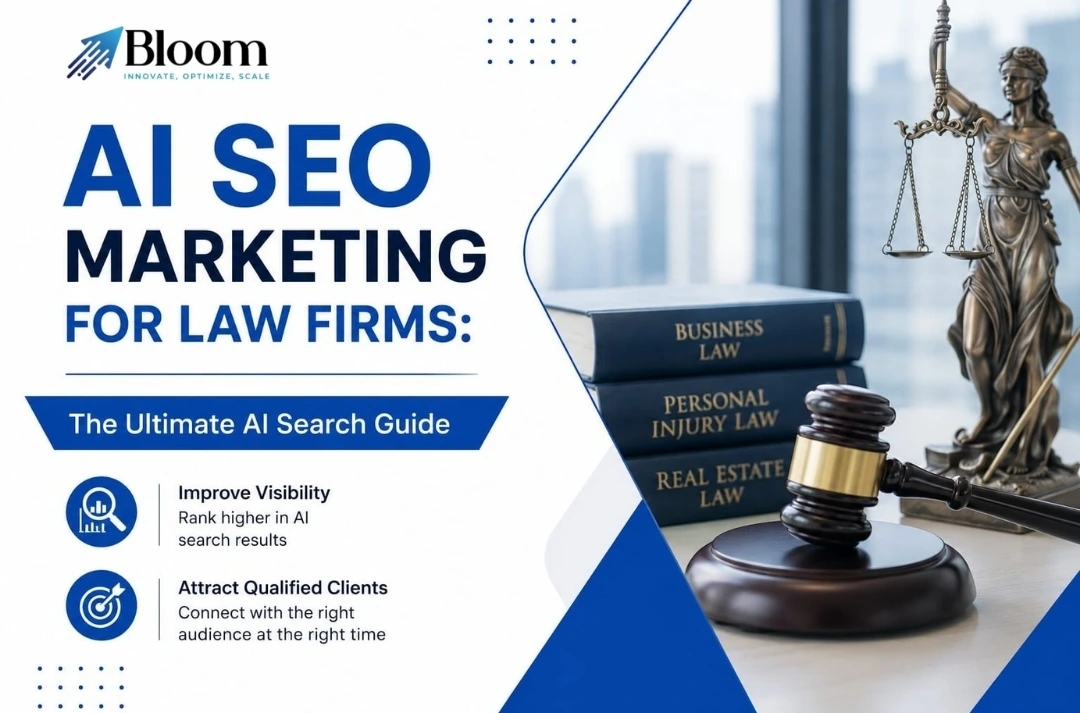
Many law firms put a lot of weight on content creation but kind of forget the technical foundations that let AI systems crawl, access, and actually interpret their websites. Even the most sharp, insightful legal content can end up not getting much visibility if technical snags stop search engines and AI platforms from reading it the right way.
A technically tuned website usually feels better for people, and it also makes AI processing easier. Think fast loading pages, solid mobile responsiveness, sensible site architecture, and navigation that is clear without being weirdly hidden. All of that supports visibility, it also helps boost the chance that AI tools will draw from a firm’s content when they generate legal explanations, and recommendations.
Law firms that invest in technical optimization seem to set themselves up for long-term traction, especially as AI search keeps changing.
Entity Optimization and Building Digital Authority
AI systems now tend to look at entities more than single pages. An entity can be a law firm, a lawyer, a practice area, or even a very specific legal subject. The clearer AI can identify the entity, the more likely it is to trust it and then reference it.
For law firms, entity optimization is basically about staying consistent across every digital touch point. Practice areas should be described the same way across the site, legal directories, social profiles, and outside publications. Lawyer biographies should spell out expertise, credentials, and where their specialization truly sits.
As time goes on, these signals help AI systems form a more complete picture of what the firm does, who it serves, and where the firm’s authority really lives.
Website Architecture Matters More Than Ever
A well organized website supports both users and AI systems, and it helps them move through information without friction. Some legal sites have excellent material but the organization is off, so visitors—plus search tech—struggle to locate the right resources.
Strong website architecture links related themes through clear pathways. Practice area pages should connect in a natural way to supporting resources, guides, FAQs and even case related content. That approach forms topical clusters, showing expertise inside each legal lane.
When AI systems run into a site with clean structure and broad topic coverage, they get more confidence in it as a source. That confidence then raises the odds the firm’s material gets included in AI generated responses.
Making Content That Actually Mirrors Client Intent
Getting legal content right starts before you ever write a single paragraph. It begins with getting what people are really trying to do when they type something into a search box. Most folks don’t hit search because it’s “fun” or just curiosity, it’s because something feels urgent. They might worry about money, work, kids, personal status, or what happens next. So yeah, the search is usually loaded with pressure and confusion, and they want real, dependable direction.
A lot of law firms mess this up by leaning on legal wording instead of the concerns that clients actually carry. Legal precision matters, no question. But potential clients tend to describe their situation in plain daily language not in neat courtroom terms. They want clarity, and they want it tied to their life, not just a dictionary-style explanation of an issue
Content that does well in AI search, tends to balance the emotional side and the practical side. It breaks down legal ideas in a way regular people can follow. And it also shows what to do next, in concrete terms. Rather than only defining the problem, strong content explains the ripple effect on real humans, and what choices may be on the table for them
When law firms publish in a client-first way, trust grows over time with both the reader and the systems doing the matching in AI. That trust often leads to more visibility, better engagement, and more leads that actually turn into calls. The firms that win are usually the ones that put client intent at the center of the whole content plan, not as a side thought.
AI SEO vs Traditional SEO for Law Firms
| Factor | Traditional SEO | AI SEO |
| Primary Goal | Improve search engine rankings | Increase visibility in AI-generated answers |
| Focus | Keywords and rankings | Expertise, context, and authority |
| User Journey | Clicks from search results | Answers provided before website visits |
| Content Style | Keyword-focused pages | Question-and-answer, intent-focused content |
| Success Metrics | Rankings, traffic, CTR | Mentions, citations, brand visibility, lead quality |
| Authority Signals | Backlinks and domain authority | Expertise, trustworthiness, entity recognition, backlinks |
| Content Structure | SEO-optimized landing pages | Structured, AI-readable educational content |
| User Intent | Search query focused | Search intent and contextual understanding |
| Long-Term Benefit | Organic traffic growth | Enhanced visibility across AI and search platforms |
Conversion Optimization in the AI Search Era
People are using law firm websites differently now. In the past, visitors often landed with minimal understanding, and they needed a lot of “baseline education” before they were ready to act. Nowadays, AI search tools can hand over a big chunk of the explanation before someone even clicks to your site.
So the typical visitor arrives with a clearer picture of what’s going on, and with a stronger push to find representation. That means each website visit is more meaningful than it used to be, because the visitor is closer to the decision
Because of that, conversion optimization is no longer optional for legal marketing. Law firms need to make the site feel reliable, and make it simple to take the next move. Strong messaging, easy page flow, obvious contact options, and persuasive calls to action all help boost conversion
Clients don’t just want information. They want reassurance. They want to feel like they’re choosing the right team. Things like testimonials, case summaries, attorney bios, professional credentials, and straightforward service explanations help establish credibility. The main aim is to reduce friction, get rid of uncertainty, and give visitors the confidence to initiate contact
A well-optimized website isn’t only a place for content. It works like a conversion machine that turns interest into consultations, and consultations into actual clients. And as AI keeps reshaping search habits, the firms that prioritize conversion will usually have a noticeable competitive edge
Link Building Has Shifted Outside Old-School SEO
Backlinks still matter, sure. But the way AI systems interpret links is different than what traditional SEO Services for Lawyers mostly focuses on. Old school approaches often treated link quantity like the main scoreboard. Links matter, but modern search systems pay more attention to context, fit, and authority.
AI systems don’t only look at where links come from. They also look at why those links appear. A mention from a respected legal outlet, a professional organization, a university resource, or a major news source carries a lot more weight than a pile of low-quality links from unrelated sites
Because of this, law firms get better results when they aim for recognition, not just “collecting” links. Publishing original insights, giving expert commentary, joining industry conversations, and building genuinely useful legal resources can naturally attract those higher value mentions
Internal linking is also a big deal. When you connect practice area pages, legal guides, FAQs, and blog posts you help signal topical authority. You also show expertise across specific legal matters. AI systems can use these relationships to better understand where a firm’s strengths really sit
Instead of treating link building like a lone tactic, successful law firms embed it into a larger authority-building approach. Every citation, reference, and mention strengthens the firm’s digital reputation, which supports both classic SEO and AI SEO services search visibility
Why Thought Leadership Matters So Much

In a crowded legal market, being “knowledgeable” alone isn’t always enough to stand out. Prospective clients often want attorneys who show they truly understand the legal landscape and can offer useful, meaningful perspective on what’s changing.
Thought leadership is how firms accomplish that
When law firms consistently share analysis, commentary, and educational material, they can position themselves as trusted authorities within their practice areas. This content goes past basic how-to articles. It adds context, explains shifts in the industry, and helps audiences understand what new laws, regulations, and trends could mean in practice
Thought leadership content can be extra valuable in AI search because it often includes unique details and expert interpretation. AI systems tend to reward sources that contribute something real, not just content that restates what everyone else already says in the same way
Measuring Success Beyond Traffic
For many years, traffic growth was like one of the main signposts for SEO success. Yeah, traffic still matters, but AI search is basically shifting the whole game, so law firms really have to widen the lens when they check performance.
A firm’s impact can go well past the usual “how many visits did we get” numbers. People may stumble on a firm through AI-generated summaries, then remember the name and come back later, maybe via direct searches, maybe through referrals. Even if none of that shows up cleanly in traditional analytics, it can still move the needle for client acquisition.
Because of this, it’s more important than ever to track metrics tied to real business results, not just website activity. Things like enquiry quality, consultation bookings, conversion rates, lead-to-client ratios, and revenue growth often tell a much clearer story about marketing effectiveness.
Brand visibility is also becoming more noticeable day by day. An uptick in branded searches, direct traffic, and even online mentions can mean a firm’s authority is rising inside its own target space.
The best law firms tend to treat visibility, trust, and conversions as one connected system. When you measure more than just one slice of performance, you get a clearer view of how your digital presence actually supports business growth.
Common AI SEO Mistakes Law Firms Should Avoid

With AI search getting more attention, lots of law firms feel the need to scramble and adapt quickly. Still, some of them stumble into strategy mistakes that keep them from benefiting from these new opportunities.
A major mistake is basically handling AI optimization as if it’s totally separate from classic SEO. But really, a lot of the same principles still apply. High-quality content, technical sharpness, authority signals, and experiences built around users remain crucial.
Another common issue is making content only for algorithms. Yes, optimization counts, but content should lean toward people first. AI systems increasingly reward content that feels genuinely useful, not pages that look like they were created mainly to grab rankings.
Some firms also skip updating content, which is risky in legal where information changes all the time. Outdated pages can chip away at credibility. Regular reviews keep things accurate and help preserve trust with both users and search systems.
Then there’s inconsistency. If a firm’s message changes across its website, directory profiles, social pages, and third party publications, AI systems may find it harder to feel confident about the firm’s expertise and even its identity.
Avoiding these pitfalls needs a long-term commitment to quality, consistency, and deliberate execution.
The Future of AI Search for Law Firms
Artificial intelligence is changing how information gets discovered, consumed, and evaluated online. Even though AI search is still relatively new, its influence is expected to grow a lot in the years ahead.
Future AI systems will likely get better at context, better at spotting expertise, and better at identifying trustworthy sources. That usually means authority, credibility, and user value keep becoming more important.
Law firms that build solid digital foundations today will be positioned better as changes roll in. Instead of chasing every single algorithm shift or tech trend, the firms that win usually focus on producing content and experiences that genuinely help their audiences.
Legal marketing tomorrow will favor firms that consistently educate, inform, and support potential clients as they move through decision-making. And honestly, AI systems are increasingly set up to reward that exact approach, because it matches what users actually need.
Conclusion
AI search is reshaping legal marketing in significant ways. Visibility is no longer driven only by rankings and raw traffic. It’s also tied to how well a law firm proves expertise, builds authority, and delivers value across the entire digital landscape.
For law firms, the opening is real and substantial. Those that respond early can create stronger visibility, deepen trust with prospective clients, and earn sustainable competitive advantages in their markets.
Bloom Agency supports law firms through this shifting environment with advanced SEO strategies, authority-building work, content marketing know-how, and AI-oriented optimization. By pairing proven marketing fundamentals with more forward thinking methods, firms can set themselves up for long term success.
And as AI search keeps evolving, one thing stays pretty constant: the firms that publish the most helpful, trustworthy, valuable information are the ones that earn visibility, credibility, and growth.
Frequently Asked Questions About AI SEO for Law Firms
What is AI SEO for law firms?
AI SEO for law firms is the process of optimizing a firm’s website, content, and online presence so that artificial intelligence platforms can understand, reference, and recommend the firm’s information. It combines traditional SEO practices with strategies designed to improve visibility in AI-generated search results and summaries.
Is AI SEO different from traditional SEO?
Yes, but the two work together. Traditional SEO focuses on improving rankings in search engines, while AI SEO focuses on helping AI systems understand and use your content when generating answers. Law firms that invest in both strategies are more likely to achieve long-term visibility online.
Why is AI search important for law firms?
AI search is becoming a major part of how people research legal issues. Potential clients increasingly use AI tools to understand legal concepts, explore their options, and identify legal professionals. Firms that optimize for AI visibility can reach clients earlier in their decision-making process.
How can law firms improve their AI search visibility?
Law firms can improve AI visibility by publishing authoritative content, answering common legal questions clearly, maintaining a technically optimized website, building strong industry authority, and ensuring consistency across all digital platforms. High-quality content remains one of the most important ranking factors.
Does AI SEO replace content marketing?
No. Content marketing is actually more important than ever. AI systems rely on quality content to generate responses. Firms that consistently publish informative, well-structured content are more likely to be referenced by AI platforms and trusted by potential clients.
What type of legal content performs best in AI search?
Content that directly answers user questions, explains legal processes clearly, and provides practical guidance tends to perform best. Detailed guides, FAQs, case-related explanations, and educational resources often attract both traditional search traffic and AI visibility.
How long does it take to see results from AI SEO?
AI SEO is a long-term strategy. While some improvements may be noticeable within a few months, building authority and trust with both search engines and AI systems typically requires consistent effort over six to twelve months or longer.
Are backlinks still important for AI SEO?
Yes. Backlinks remain an important trust signal. However, AI systems focus more on the quality and relevance of links rather than sheer volume. Mentions from respected legal publications, news websites, and industry organizations can significantly strengthen authority.
How do I measure the success of AI SEO?
Success should be measured through multiple indicators, including organic traffic, branded search growth, lead quality, consultation requests, conversion rates, online mentions, and overall business growth. AI influence may not always appear directly in website analytics, making broader performance tracking essential.
Why should law firms work with Bloom Agency for AI SEO?
Bloom Agency combines proven SEO expertise with advanced AI search strategies designed specifically for modern digital marketing. Our approach focuses on building authority, increasing visibility, improving conversions, and helping law firms stay ahead of changes in search technology while generating sustainable long-term growth.

Neetu Wadhwa is the Director of Bloom Agency, a Mumbai-based full-service digital marketing and web development company. With a strong focus on performance, innovation, and strategy, she leads the agency in delivering SEO, web design, and growth marketing solutions that drive measurable business outcomes.





Rahul M.
B2B Service Provider