

Reciprocal links have been a thing in SEO chats for decades, and at first they were kinda seen as this quick win to lift rankings. But now search engines ,like ,theyre way better at spotting weird link trading setups. So today reciprocal linking isnt only “good” or only “bad” either. It really depends on why the links exist , how they were collected, and if they actually help the person reading, not just the algorithm.
If you run a business and you’re thinking long-term about SEO, then getting reciprocal links right is important. If they’re used in a natural way between relevant websites, they can help build real relationships, make the user experience better, and they may even support authority. Yet, if you lean too hard into excessive or manipulative link exchanges, that can hurt your search results instead.
In this guide, Bloom Agency breaks down what you should know about reciprocal links, how Google tends to judge them, and how to use them carefully so your SEO plan stays sustainable.
What Are Reciprocal Links?
A reciprocal link happens when two websites link to each other. For instance, Website A points to Website B inside an article, and later Website B sends a link buliding back to Website A from a different piece of related content.
That doesn’t automatically mean someone is trying to game rankings though. Tons of reciprocal links pop up kind of normally between businesses, publishers, bloggers, software providers, research groups, and industry voices that reference each others useful content.
The trouble starts when websites swap links just to push search rankings, with no real value for users.
How Reciprocal Links Work
Think of it like this: a digital marketing agency publishes a thorough guide on technical SEO. Later, a web development company mentions that guide in an article about site performance. Months afterward , the marketing agency links back to the developers article about Core Web Vitals, because it contains helpful technical detail.
Now both sites link to each other. That’s a straightforward reciprocal link because each reference helps the reader in mobile SEO development. Search engines also tend to recognize that relevant websites reference each other over time, without every link looking like a “deal”.
How Reciprocal Linking Has Changed
A lot of years ago, website owners traded links with almost anybody who would say yes. You could find whole directories where thousands of websites were exchanging backlinks, even when the sites were low relevance. That approach worked for a while, because search engines used to lean heavily on raw backlink numbers.
But as Google’s systems evolved, the emphasis shifted a lot. Now Google tries to understand the reason behind each link, whether it was editorially earned, and whether it truly benefits people.
Modern SEO rewards quality first, not just volume. So, natural editorial linking generally carries more weight than bulk reciprocal link exchanges.
Google’s View on Reciprocal Links
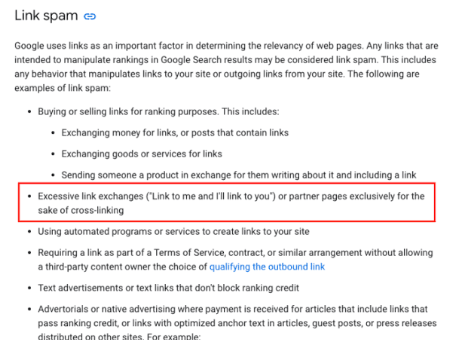
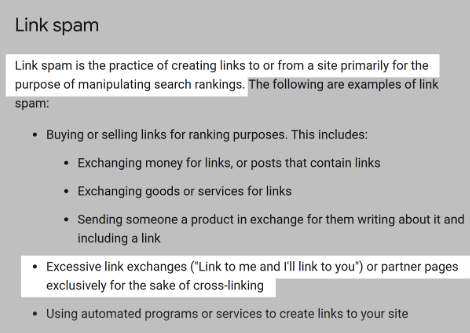
Google does not outright ban every reciprocal link. Companies reference partners, suppliers, clients, research, tools, and helpful resources all the time. Those kinds of reciprocal connections are part of a healthy web. Still, Google tends to discourage big waves of link swapping that exist mainly to manipulate rankings.
Examples of risky stuff include:
- Exchanging hundreds of links.
- Making pages only for link swaps .
- Running automated reciprocal link programs.
- Buying reciprocal links.
- Joining private backlink networks.
If link exchanges look unnatural, search engines may ignore them, or reduce how much SEO impact they provide.
Are Reciprocal Links Good for SEO?
The real answer is: it depends on how the links get earned.
If reciprocal links show up naturally because both websites publish valuable content that deserves citations, then it can support a healthy backlink profile.
When relevant sites recommend each other’s resources, visitors get more context, and search engines may notice the real topical connection between those sites.
In that scenario, natural reciprocal links can support long-term authority, especially when they’re part of a wider, diversified approach to backlinks.
When Reciprocal Links Become Harmful
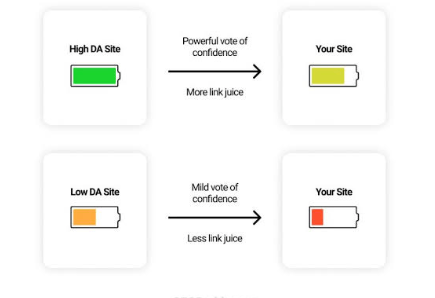
It gets risky when link exchanges become the main SEO strategy. If basically every backlink to your site comes from another site that expects a return link, then the pattern can look staged or artificial. And swapping links with unrelated websites, low-quality blogs, spam networks, or irrelevant directories creates extra SEO exposure.
Search engines are better every day at detecting unnatural linking patterns using advanced spam detection.
6 Smart Practices for Building Reciprocal Links
Reciprocal links can be valuable when they are created naturally and with the user in mind. Instead of exchanging links with every website that reaches out, focus on building relationships that add value to your audience and strengthen your website’s authority. These best practices can help you build reciprocal links safely while supporting long-term SEO growth.
1. Partner Only With Authoritative and Relevant Websites
The quality of the website you link to matters just as much as the quality of the links pointing to your own site. Before agreeing to a reciprocal link, review the website’s content, authority, industry relevance, and overall reputation. A link from a trusted website can improve credibility, while associations with low-quality websites may weaken your backlink profile.
Always ask yourself whether you would recommend that website to your audience even if search engines didn’t exist. If the answer is yes, it’s likely a worthwhile partnership.
2. Use Natural and Descriptive Anchor Text
Anchor text provides context for both users and search engines. Rather than using vague phrases like “Read More” or repeatedly using exact-match keywords, choose anchor text that accurately describes the destination page.
Natural anchor text improves user experience, helps search engines understand topical relevance, and creates a more balanced link profile. Varying your anchor text also reduces the risk of appearing overly optimized.
3. Stay Away From Spammy Websites
Not every link opportunity is beneficial. Avoid exchanging links with websites that publish thin content, excessive advertisements, AI-generated spam, or participate in obvious link schemes.
Regularly evaluate potential partners before linking to them. Building relationships with reputable publishers, niche blogs, and industry experts is far more valuable than collecting large numbers of low-quality backlinks.
4. Regularly Audit Your Reciprocal Links
Websites change over time. Pages are deleted, URLs are updated, and businesses may shift their focus.
Conduct routine backlink audits to verify that your reciprocal links still work correctly and continue pointing to relevant content. Removing broken or outdated links improves user experience while keeping your website healthy from an SEO perspective.
5. Prioritize Editorial Value Over Link Quantity
A handful of high-quality reciprocal links will almost always outperform hundreds of weak exchanges.
If someone offers dozens of links with little effort, it’s usually a sign that the opportunity isn’t worthwhile. Focus on earning links because your content deserves to be referenced rather than simply increasing backlink numbers.
Editorially placed links within useful content provide significantly more long-term SEO value than large-scale link exchanges.
6. Build a Diverse Backlink Strategy
Reciprocal links should complement your overall local SEO efforts rather than become your primary link-building tactic.
Strengthen your backlink profile by combining reciprocal links with guest posting, digital PR, resource page outreach, original research, case studies, expert contributions, and high-quality content marketing. A diverse backlink profile appears more natural and is better positioned to withstand future search engine algorithm updates.
Benefits of High-Quality Reciprocal Links
High-quality reciprocal links, when they’re relevant, can help in a few ways.
- They introduce your content to new audiences who are already interested in your industry.
- They help strengthen connections with publishers, bloggers, journalists, and business partners.
- They can bring referral traffic beyond just search results.
They guide readers to complementary resources that make the overall user experience smoother. And when earned naturally, they become just one piece of a diverse backlink profile, rather than the whole plan.
Risks of Poor Link Exchanges
- Not every reciprocal opportunity is automatically worth taking.
- Linking with low-quality websites can damage trust signals for your domain.
- Low-quality backlinks often come from outdated blogs, AI content farms, random irrelevant directories, or sites drowning in advertisements.
If you connect with those sources, you probably wont gain meaningful value, while the SEO risk can rise. So careful review should come before agreeing to any reciprocal partnership, even if it looks tempting at first.
Characteristics of Safe Reciprocal Links
Safe reciprocal links tend to have a few common traits that , when you look at it, make them feel kind of normal and not like some scheme.
- First the websites usually sit in related fields or same neighborhoods of the internet.
- Second, the actual linked content has to genuinely help people, not just “exist” on the page.
- Third, the anchor text shows up in a natural way inside the article, like it was meant to be there.
- Fourth, the sites keep solid editorial care. you know, real standards, real review, no random stuffing.
- Fifth, the links are there because they improve the overall content, not because someone sent a “deal” email.
And honestly the biggest test is this: the relationship would still seem logical even if search engines just… didn’t exist.
Common Reciprocal Linking Mistakes
Lots of companies accidentally weaken their SEO by doing small things that add up, and it’s not always obvious at first. For example, linking to every website that asks for a swap, often leads to low-grade partnerships. Also, using the exact same keyword heavy anchor too many times can send weird ranking vibes. Another classic issue is building reciprocal links without checking website authority, which drags down backlink quality.
Then there are broken links that no one fixes , which creates a messy experience for visitors and can hurt trust.
And if you rely only on link exchanges instead of earning editorial backlinks, you usually cap your long-term SEO progress. Stepping away from these mistakes helps keep a more balanced and credible backlink profile overall.
Best Practices for Reciprocal Link Building
If you want reciprocal linking to actually help, think quality first, not bulk. Always check the other website’s authority and reputation before you say yes to anything.
Make sure each reciprocal link has a real editorial reason, like it’s supporting understanding not just counting pixels. Only link to pages that genuinely improve your readers’ knowledge of the topic. Use natural anchor text, and don’t force exact match keywords into every single placement. Also, revisit reciprocal links from time to time, to confirm they are still live relevant , and beneficial.
Most importantly, don’t treat reciprocal links like your only tool. mix them with guest posting, digital PR, resource page outreach, content marketing, and editorial mentions, so your link profile stays diversified and healthier.
Building a Strong Backlink Profile Beyond Reciprocal Links
The strongest sites almost never depend on only one kind of backlink. In good SEO programs, you combine several link building approaches so authority grows over time in a way that looks organic.
Publishing original research, making comprehensive guides, creating practical tools, sharing expert insights, getting media mentions, and writing guest articles all help form a sturdier backlink profile. Reciprocal links tend to work best when they support these broader efforts, instead of trying to replace them.
How Bloom Agency Builds Sustainable Links
At Bloom Agency, we think link building should be grounded in relevance, authority, and long-term value, not shortcuts or hurried “quick wins.”
Our team looks for worthwhile publishing openings, then creates content that has a real chance of attracting backlinks on its own.
We also build relationships with reputable websites across multiple industries. instead of leaning on huge reciprocal link exchanges, we aim to earn links through valuable content, focused outreach, and ethical SEO practices.
That method supports stronger domain authority, rankings that last, and ongoing organic growth, while keeping your site aligned with modern search engine expectations.
Final Thoughts
Reciprocal links aren’t automatically good or bad. their real value depends on context, quality, and intent. When reciprocal links happen naturally between relevant and authoritative websites, it’s just part of how the web works, and it can support a reasonable SEO strategy.
But problems show up when people try to manipulate rankings using too many exchanges, or low-quality partnerships. Instead of chasing big numbers, focus on meaningful industry relationships and content that people actually want to reference.
When combined with technical SEO, strong content, and a diversified approach to acquiring links, reciprocal links can become one useful piece of a long-term SEO plan.
Frequently Asked Questions
What is a reciprocal link?
A reciprocal link is created when two websites link to each other through relevant pages or articles.
Are reciprocal links against Google’s guidelines?
No. Natural reciprocal links are acceptable. Excessive link exchanges created solely to manipulate rankings may violate Google’s spam policies.
Do reciprocal links improve SEO?
They can contribute positively when they are relevant, editorially placed, and part of a diverse backlink profile.
How many reciprocal links are safe?
There is no fixed number. Focus on quality and relevance rather than quantity, and avoid making reciprocal linking your primary link-building strategy.
Should businesses exchange links?
Only when both websites are relevant, trustworthy, and the links genuinely improve the user experience. Quality partnerships are far more valuable than large-scale link exchanges.

Neetu Wadhwa is the Director of Bloom Agency, a Mumbai-based full-service digital marketing and web development company. With a strong focus on performance, innovation, and strategy, she leads the agency in delivering SEO, web design, and growth marketing solutions that drive measurable business outcomes.






Rahul M.
B2B Service Provider