
The path to ranking number one on Google as a financial services brand has never been more difficult – or lucrative. You are one of the most scrutinised, regulated and competitive niches on the internet, andGoogle’s quality evaluators hold your content and pages to an even higher standard than almost any industry.
But here’s what most SEO guides won’t tell you: the rules of the game shifted again in 2025–2026.
AI is changing how search engines discover and present financial information.Google’s Search Generative Experience (SGE) redefines what “ranking #1” even is. And if you’re looking to rise above the rest, you need to know that the top players won’t be defined solely by how much they spend on marketing, but by the trust they build – online and offline.
Whether you’re building strategies for an insurance company, bank, fintech business, or an individual financial advisor, you’ll discover tangible strategies that you can start implementing today.
What Is SEO for Financial Services – And Why Is It Different?

Search engine optimization (SEO) refers to enhancing your website’s appearance in search results for keywords that your target customers are actively searching.
Finance SEO is essentially a more professional version of regular SEO, but that’s not the whole story.
Two major challenges set financial services apart from almost every other sector:
“YMYL” – Your Money or Your Life
The “YMYL” abbreviation means that Google places its most rigorous scrutiny on the content of financial services websites. YMYL content has the potential to negatively influence a user’s financial security, lifestyle or personal decisions. A lack of authoritative sources, the absence of clear author credentials or even a factual inaccuracy could harm your ranking despite the quantity and quality of your link portfolio.
Compliance Realities
The information you provide about financial products is subject to legal regulation. Your SEO must operate within the bounds set by law and regulation, not attempt to avoid it. This necessitates effective collaboration between your compliance and content teams. The good news is that successful SEO can create a competitive advantage in this niche that many can find difficult to achieve in a short time.
Key SEO Metrics for Financial Services

Before designing a strategy, let’s define what success looks like. These are the crucial metrics to monitor:
- Organic search traffic – the total number of users that visit your website from organic search engines.
- SERP position – The ranking of your web pages against certain keywords in search engines.
- Impressions versus clicks (CTR) – measures your page’s prominence relative to its click-through rate.
- Bounce rate & time-on-page – provide insight into user engagement.
- Domain authority / domain rating – An assessment of a site’s credibility as interpreted by search engines.
- Featured snippet ownership – invaluable for how-to and definition queries.
- Conversion rate from organic – refers to how many of your organic visitors are converting (form submission, lead generated, product purchased).
- Core Web Vitals scores – LCP, INP, and CLS as defined by Google.
By monitoring these simultaneously, you can see how your SEO efforts translate to actual business results.
10 Essential SEO Strategies for Financial Brands in 2025
1. Master E-E-A-T – Experience, Expertise, Authority, Trust
Google’s quality evaluator guidelines give high importance to E-E-A-T, particularly when it comes to the financial sector.
Here’s how each aspect translates into practice:
Experience – Show, Don’t Just Tell: A blog post titled “The Best Mortgage Strategies in 2025” will carry more weight if written by someone who has originated a significant number of mortgages, as opposed to just researching the subject.
Expertise – Boost Credentials: Profile your authors thoroughly.Include professional qualifications (such as CFA, CFP, or ACCA) and link to their LinkedIn profiles and other professional networks.
Authority – Build Credibility: When well-known financial media outlets, regulators, or academic institutions quote or link to your content, your website’s authority level increases.
Trust – Communicate Confidence: Display key trust indicators such as official registration numbers, compliance badges, privacy policies, physical addresses, and explicit statements regarding data privacy practices.
Action Points
- Implement comprehensive author bios with relevant credentials for all published content.
- Create a dedicated “About Our Authors” and “Editorial Policy” section for your site.
- Referencing official sources (RBI, SEBI, SEC, FCA, etc.) in your content reinforces authority.
- Get your experts cited or quoted by financial journalists.
2. Design Pillar-and-Cluster Content Architecture
One significant opportunity many financial services businesses miss is the effective application of a pillar-and-cluster content structure.
Instead of focusing solely on standalone blog posts, you should aim to create structured, thematic content:
- Pillar Page: A detailed, authoritative guide covering a broad subject, such as “Your Ultimate Guide to Personal Finance for Working Professionals.”
- Cluster Pages: More in-depth posts covering various sub-topics that relate to and link back to your pillar page, e.g., “Strategies for Building an Emergency Fund,” “Top Tax-Efficient Investments in 2025,” or “A Comprehensive Guide to SIP vs. Lump Sum Investing.”
- Why This Works; Google places increased value on the comprehensive coverage of a topic, not just on individual pages. Providing thorough and consistent information on a specific topic demonstrates your expertise and signals to Google that you are a trusted resource – this is particularly useful now that Google’s AI summary can rely on the authority of the sources it uses.
Structure clusters around your key business areas, such as investments, loans, insurance, and wealth management.
3. Optimise for AI Search and Google SGE
This is a critical factor that most guides will probably omit entirely and it has by far been the biggest change to financial SEO over the last year and a half.
Google is now implementing its Search Generative Experience (SGE), which features AI-driven summary results at the top of the page for many finance-related queries, potentially reducing or eliminating the need for a click through to a website.
Here’s How This Affects You
Being referenced within the summary of a Google SGE answer is the new form of “ranking #1”.
The new search model relies heavily on factually accurate, well-sourced, and clear content. Pages that are structured as FAQ or feature listicle format with step-by-step guidelines or product comparisons are more likely to be referenced.
How to Approach It
- Structure your answers directly with a question-and-answer (Q&A) format on your web pages.
- Utilize FAQ schema markup on related pages (more on this later).
- Keep your answers and sentences short and clear – those that an AI is likely to pull into a summary.
- Ensure every statement of fact includes a citation or source.
- Condense your introductions so they get straight to the point.
4. Implement Schema Markup and Structured Data for Finance
The majority of financial services sites are failing to utilize structured data, missing out on valuable SEO benefits.
By applying schema markup to your pages, you explicitly define the nature of your content for search engines (i.e. “FAQ,” “financial product,” “review,” or “expert-written article”).
This allows search engines to display more engaging search results, such as star ratings, expanding FAQ sections, and more.
Types of Schema Markup Relevant for Financial Services
- FAQPage – Useful for explaining common customer queries related to loans, insurance, and investments.
- Article with author – Provides information to search engines about who authored an article, their qualifications and professional associations.
- FinancialProduct – Details about loan, credit card or other financial products.
- Review / AggregateRating – Collect customer feedback and testimonials.
- BreadcrumbList – Helps Google navigate and understand your site hierarchy.
- LocalBusiness – Display business address and hours of operation on Google.
Implementing schema markup is no guarantee of displaying enhanced results, however, it dramatically improves your chances of doing so.
It also offers a significant signal of authority to Google crawlers.
5. Conduct Deep Keyword Research with a Funnel Approach
Keyword research in the financial industry should go beyond identifying terms that are searched often; it involves understanding user intent and where those individuals are in their decision journey.
Top of Funnel (Awareness)
Examples of search queries in this stage:
- “what are the basics of mutual funds”
- “how does a fixed deposit account work”
- “difference between term life and whole life insurance”
Middle of Funnel (Consideration)
Examples of search queries in this stage:
- “best long-term equity funds in 2025”
- “compare online insurance policies”
- “SIP investment calculator with monthly income”
Bottom of Funnel (Decision)
Examples of search queries in this stage:
- “open savings account online for new customer”
- “apply for car loan with lowest interest rate”
- “best credit card for frequent travellers”
Each stage necessitates a particular type of content and a tailored approach.
Top-of-funnel queries require explainers and detailed guides, mid-funnel searches often necessitate product comparison pages or case studies, and bottom-of-funnel searches demand concise call-to-action landing pages.
Also remember to optimize for voice searches, which have become increasingly common for questions about finances, typically manifesting as long-form, natural language inquiries:
“What is the safest investment option for someone approaching retirement?”
Optimize for voice search by clearly answering natural language questions in your content.
6. Prioritize Technical SEO – The Backbone of Your Strategy
Technical SEO plays a crucial role in how search engines index and understand your website. Get it wrong and all other efforts will be undermined.
- Core Web Vitals: Google’s set of performance metrics – Largest Contentful Paint (LCP), Interaction to Next Paint (INP), and Cumulative Layout Shift (CLS) – are used as ranking signals. Financial websites can sometimes lag behind due to large disclaimers, complicated tools, or rich media assets; analyze and optimize these.
- Mobile-First Indexing: Google focuses on the mobile version of your site for indexing. As more users conduct financial searches on mobile devices-particularly in regions like India-an inferior mobile experience can severely impact your search rankings.
- HTTPS and Security: Google flags websites without complete HTTPS security. Users are also alerted to security concerns by their browser, which could impact whether they visit your site in the first place.
- Site Architecture and Internal Linking: A clear hierarchy – such as Home > Category > Subcategory > Article – will assist Google in efficiently navigating your content and distributing authority to your critical pages.
- Crawl Budget: For financial service organizations with extensive websites-like comparison sites with thousands of pages-effective management of your crawl budget using robots.txt and canonical tags becomes essential.
7. SEO Link Building That Actually Works in Finance
Link building in finance has to be done correctly since spammy or untargeted links can easily bring on manual penalties for your business, a YMYL vertical. Here Are Strategies That Can Get Real Results:
- Original Research and Data: Compile an annual survey or report – like an “India Household Savings Survey 2025”. Those are great sources to get natural backlinks as the media and other finance sites cite them.
- Expert Commentary: Become the go-to contact for reporters covering the financial beat. Use tools like Qwoted and ResponseSource to connect with journalists who want comments from experts.
- Regulatory/Industry Partnerships: Earning a listing from (or link from) SEBI, AMFI or corresponding local organizations for your industry sector is pure high-authority gold.
- Guest Blogging on Reliable Financial Publications: You can submit articles to known financial media sites, but always provide truly valuable content, not content disguised as sales promotions.
- Infographics and Visual Explainers: Many financial processes can be complex, and infographics can break down those processes nicely. An example could be a well-made “How to apply for a personal loan” graphic that can earn many links on its own.
Avoid link farms, paid link buying programs, random submissions to directories or the practice of an overly repetitive anchor text pattern.
8. Video SEO is The Ignored Asset For Finance Brands
It’s surprising how many financial services brands overlook the massive SEO opportunity of YouTube. The second biggest search engine in the world actually has huge volumes of financial service searches.
What Kinds of Searches Can You Tap Into
- “Best investment option to buy in India 2025”
- “How to file ITR”
- “What is SIP?”
YouTube SEO Best Practices
- Include primary keywords in the video title, description and spoken words. YouTube auto-transcribes videos.
- Break your videos up using chapter markers, especially long or multi-part guides. This benefits the viewer experience and Search ranking.
- Embed your YouTube videos onto the relevant pages of your website to improve user engagement signals like Time On Page.
- Build video playlists based around core content clusters of your brand.
YouTube videos can positively influence your overall domain authority because Google is increasingly integrating video content in SERPs for many financial terms.
9. SEO for Physical Financial Services Companies
If you’re running a physical finance business such as a bank branch, insurance office, or a financial advisory service location in the real world, local SEO will translate directly into clients and revenue.
Local search is dominant for financial queries:
- “best financial planner near me”
- “home loan center in Bangalore”
- “accountant services in Vile Parle.”
Here is Your Local SEO To-Do List
Google Business Profile: Make sure it is completely optimized, filled with services, working hours, photos, relevant Q&A. Create a new GBP for every location.
NAP Consistency: Name, Address and Phone Number have to be uniform throughout your website, GBP listing, Justdial, Sulekha, etc.
Location Pages: Don’t use duplicated city-name pages – create unique, focused landing pages for each location with all relevant local information and calls to action.
Customer Reviews: Proactively solicitGoogle reviewsfrom your customers. Be sure to respond to ALL of them! Review count and quality is a major local ranking factor.
Local Content: Create blog posts targeting local searches, such as:
- “Tax advisors in Pune 2025”
- “Investment plans in Chennai”
- “Car loan offices in Hyderabad.”
10. Privacy First Analytics as a Trust Signal
Here’s something most SEO guides miss entirely: The way you collect and handle data actually influences how trustworthy your site appears in the eyes of users and, consequently, Google.
Financial services brands are typically bound to high data privacy standards such as GDPR (Europe), CCPA (US), and in India, DPDP Act.
Consumers are becoming increasingly privacy-conscious. They are keenly observing your cookie banners, data usage disclosures and whether your site feels like a “safe space”.
A privacy-first approach to web analytics means that you’re collecting useful site metrics and engagement data without encroaching on the user’s personal information in an intrusive way.
It Serves Two Core Purposes
- Maintains compliance with privacy regulations and avoids potentially reputation-harming legal issues.
- Builds user trust, which is reflected in prolonged visits, lower bounce rates and more repeat visitors.
Also remember to keep your privacy policy up-to-date and prominently displayed.
Bridging the Gap: SEO Traffic to Finance Leads through CRO
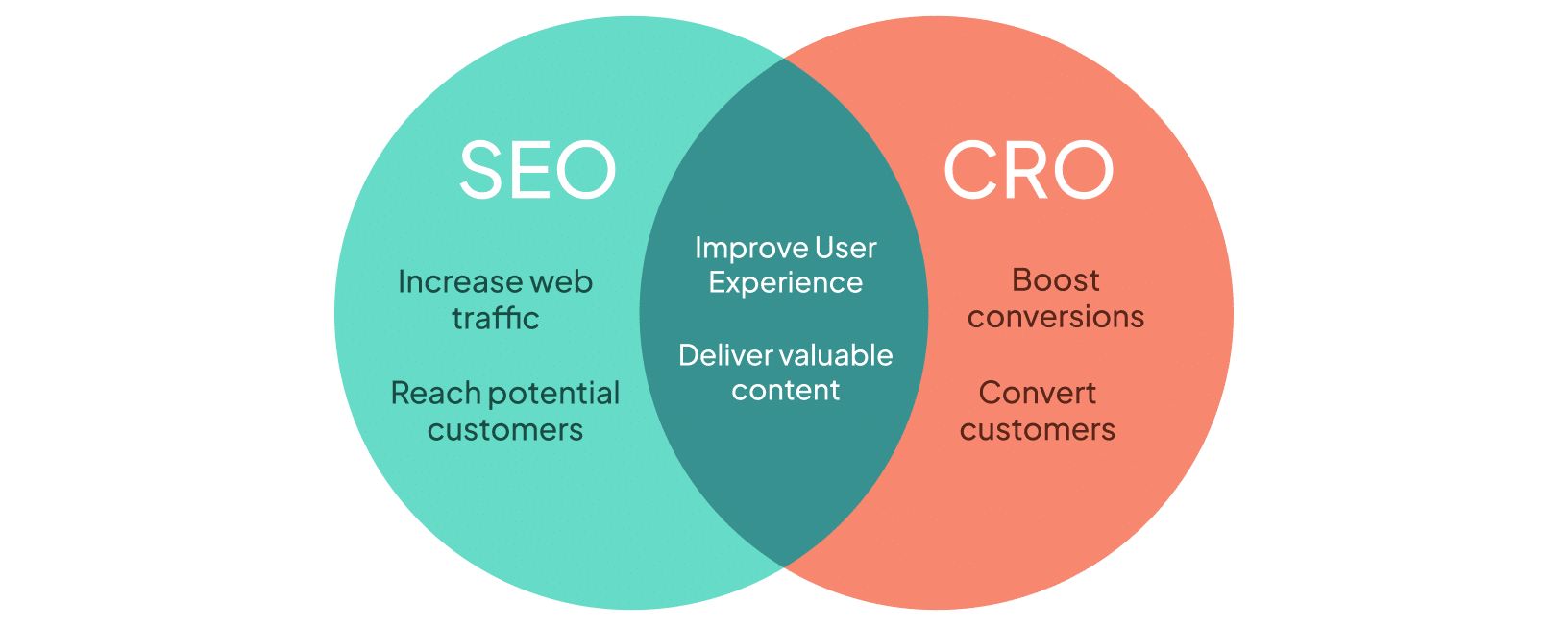
You drive a lot of traffic through SEO. But unless it converts, your traffic volume is ultimately meaningless – it’s simply a vanity metric.
Financial services businesses must be deeply intertwined between their SEO and CRO (Conversion Rate Optimization) efforts, since the goal isn’t just ranking #1, but a satisfied client.
Here Are Quick Wins for Your Finance Landing Pages
- Place the primary Call To Action (like a calculator or a form to apply) above the fold.
- Include social proof around where the user is ready to convert – testimonials, badges, number of clients successfully served.
- Simplify and trim down form fields. Keep them to just name, email, and a single qualifying question for lead-gen forms, for example.
- Use urgency ethically: If you’re selling a time-sensitive tax product, a “Offer expires by…” notice can be helpful.
- Ensure each page clearly indicates the desired next action for the user – too many options often overwhelm.
Bonus
Take time to review the 10 best performing organic pages for your site. Which area are you better at: ranking on search, or driving conversions? Ideally, you need to excel in both areas.
Conclusion: Why the Finance SEO Game Rewards Persistence
This is a niche that is all about patience, genuine expertise, and delivering value in everything that you do.
Finance brands which dominate search are not doing anything secretive or magically – instead, they are consistent in publishing reliable content, have a strong authoritative presence, and maintain clean websites and the technical basics in good order.
Although the SEO landscape is going to keep evolving with the addition ofAI powered search, more strictSchema implementationand increased use of video, the core principles are unchanged:
- Serve your audience exceptionally well
- Display proven expertise
- Develop their trust over the long haul
Begin by assessing your current position. Choose two or three of these strategies to focus on for the upcoming quarter. Monitor your results, make tweaks as necessary, and just keep going.
The leading search positions are not necessarily the territory of the big spenders, they belong to the most trusted voice in the marketplace.

Neetu Wadhwa is the Director of Bloom Agency, a Mumbai-based full-service digital marketing and web development company. With a strong focus on performance, innovation, and strategy, she leads the agency in delivering SEO, web design, and growth marketing solutions that drive measurable business outcomes.





Rahul M.
B2B Service Provider