
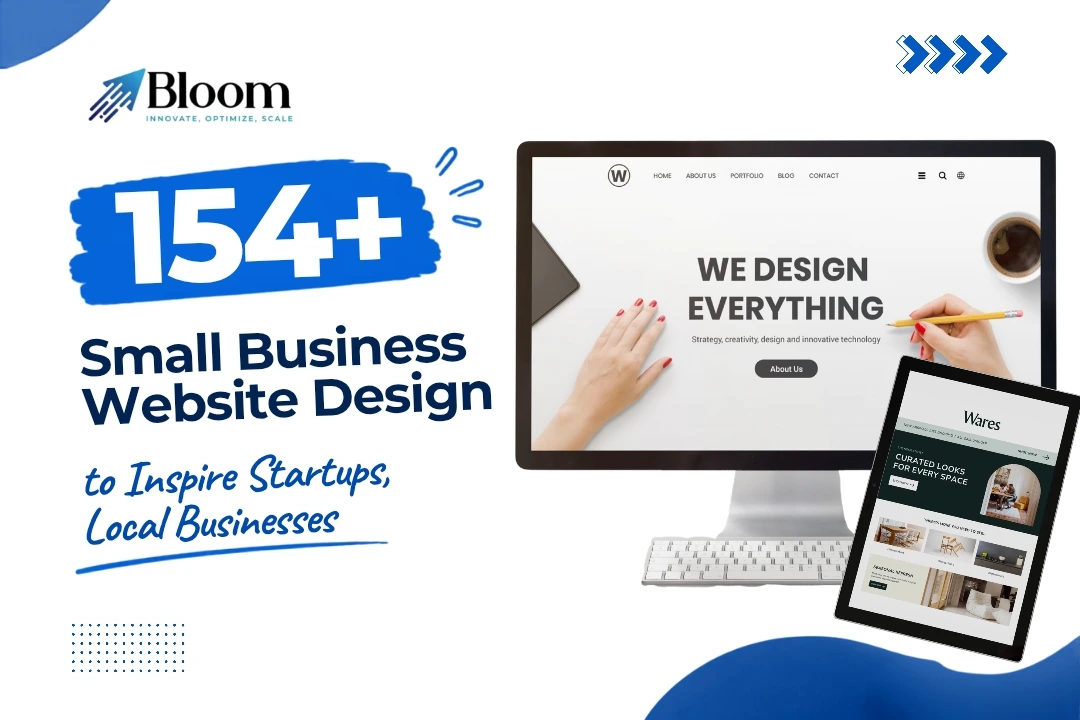
For a small business, a website is more than just an online brochure, kinda. It is usually the first spot potential customers go to when they want to figure out what you offer, weigh your business against competitors, or decide if they should contact you. A well-planned website can make you look credible, spell out your services, pull in enquiries, and back long term growth.
That said, having a website by itself is not enough. A site might look stylish, but still miss the mark on leads if visitors cannot quickly grasp what the business does, locate the key information, or take that next small step. So effective small business website design really needs to blend visual appeal with easy usability, search engine optimization, mobile-friendliness, and also conversion-focused elements.
Whether you are starting something new or refreshing a site you already have, the aim should be to shape an online experience that helps people move smoothly from noticing your business to actually becoming customers.
Why Does Every Small Business Need a Professional Website?
Customers these days tend to look up businesses online, before they decide to buy anything. It might be a quick search for a nearby service, but then they go on reading through what a company says. They may compare alternatives, check reviews , or even browse products before they ever reach out.
Having a professional website gives your business this kind of steady digital “home” where customers can figure things out at their own pace. Unlike social media profiles, your website lets you keep much more control over your brand, the content, the layout, and how the customer journey actually goes. You can sort information in a way that matches what people really need and build dedicated pages for single services, different locations, product lines, or even specific industries.
And honestly a website can help build trust too. When service details are clear, the design looks polished, and you include customer testimonials, case studies, solid contact info, plus helpful resources, visitors often feel like they’re working with a legit business—one that’s experienced and not just guessing.
For small businesses up against bigger companies, a thoughtfully designed website can act like a simple advantage. It helps you show real know-how, and it makes the brand stand out in a more clear, memorable way.
What Makes Small Business Website Design Effective?
Effective website design is kind of not only about picking good looking colors, images, and fonts. It’s more like every bit of the layout should genuinely support the user’s experience , and also match the business goals, not just sit there looking pretty or polished.
A website really needs to tell people, right away , three basic things: what the business does, who it’s meant for, and what visitors should do next, like a clear next step. If those things aren’t obvious early on, users usually get impatient, move on, and that’s a problem.
For instance, a service company could use a homepage headline that explains the main offering clearly, then add a brief explanation, a few strong benefits, some supporting visuals , and a noticeable enquiry button. You want the whole flow to feel natural, almost like guiding someone without pushing.
Also, visitors shouldn’t have to dig around across a bunch of different pages just to figure out the core purpose. If they can’t understand the intent quickly, the site feels slow even when it loads fine.
Navigation matters just as much. The main services, the about section, contact information, products, and any other important pages should be easy to find . A clean navigation setup, with a simple structure, helps cut down confusion and lets people reach what they need faster, with less fuss.
Start With Your Target Audience
Before beginning the design process, identify who the website is being built for.
A website targeting homeowners will have different messaging from one targeting corporate buyers. Similarly, a healthcare website, education website, ecommerce store, real estate website, and professional services website may require completely different layouts and content strategies.
Understanding your audience helps determine the tone, information hierarchy, imagery, calls to action, and functionality.
Consider the questions your potential customers are likely to ask.
What problem are they trying to solve? What information do they need before contacting you? What could prevent them from making a decision? What makes your business different from competitors?
Answering these questions during the planning stage makes the final website much more useful.
Create a Homepage That Communicates Quickly

The homepage is often the first page visitors see, so it needs to make a strong first impression.
The opening section should clearly communicate the primary value proposition. Instead of using vague statements, explain what the business provides and how it helps customers.
A strong homepage can then guide visitors through important sections such as services, products, benefits, company information, testimonials, frequently asked questions, and contact options.
Visual hierarchy plays an important role here. Headings should stand out from supporting text, important buttons should be noticeable, and sections should be arranged logically.
The objective is not to fill the homepage with as much information as possible. It is to present the right information in a way that makes the visitor want to continue exploring.
Build Dedicated Service Pages
One common mistake among small businesses is putting all services on a single page.
If your company provides several different services, creating dedicated pages can improve both user experience and SEO.
For example, a digital marketing company may have separate pages for SEO, social media marketing, paid advertising, content marketing, and website development.
Each service page can explain the specific offering, its benefits, process, frequently asked questions, and relevant calls to action.
Dedicated pages also provide opportunities to target specific search queries. Someone searching for a particular service can land directly on the page that addresses their requirement instead of navigating through a general services page.
Make Your Website Mobile-Friendly
Mobile responsiveness is essential for modern business websites.
People may discover your business through a smartphone search, social media post, online advertisement, or messaging platform. If the website does not display properly on a mobile device, visitors may leave before understanding what you offer.
Responsive website design allows pages to adapt to different screen sizes. Text should remain readable, buttons should be easy to tap, images should scale properly, and navigation should remain convenient.
Mobile users also tend to have less patience with slow or difficult websites. A responsive design combined with good performance can create a smoother experience across smartphones, tablets, laptops, and desktop computers.
Speed Matters More Than You Think

Website performance has a direct impact on user experience.
Large images, unnecessary scripts, poorly optimized code, excessive plugins, and inefficient hosting can make pages load slowly. Visitors may abandon a page if they have to wait too long.
Small business website design should therefore include performance considerations from the beginning.
Images should be optimized without compromising their quality. Unnecessary functionality should be removed, caching should be configured appropriately, and the website’s technical structure should support efficient loading.
A fast website is not only more pleasant to use; it can also support better search visibility and engagement.
Design for Conversions, Not Just Appearance
A visually impressive website is valuable, but design should ultimately support business goals.
Depending on the business model, the desired conversion might be a phone call, enquiry form submission, product purchase, appointment booking, quotation request, WhatsApp conversation, or newsletter registration.
Calls to action should therefore be placed where visitors are most likely to need them.
Instead of relying on a single “Contact Us” button at the top of the website, consider adding relevant calls to action throughout important pages.
A service page might end with a quotation request. A product page could include an enquiry or purchase option. An informational article could guide readers toward a related service.
The call to action should match the visitor’s intent.
Website layout ideas for different small business industries
1. Restaurant websites that make ordering feel easy
Restaurant websites work best when they mix strong visuals with convenience. Great food photography can make an instant impression, and then menu card design, opening hours, directions , reservations, plus online ordering should be easy to reach.
If the layout is tidy, customers can quickly scan dishes, check availability, lock in a booking, or place an order. Reviews and restaurant SEO background info can also help people trust you a bit more, even before they visit.
2. Salon websites that push appointment bookings
For salons, beauty studios, and similar services, the visual side matters a lot. A website can highlight hairstyles, treatments, makeup services, portfolios, and even those before-and-after results.
Pricing, team or stylist profiles, opening times, location, and booking should be displayed clearly. Linking social channels can also keep the look fresh and make the brand feel more alive.
3. Healthcare websites that build patient trust
Healthcare sites should be clear, credible, and simple to navigate. Patients often want to check who the doctor is, what treatments exist, which departments matter, what facilities look like, and how appointments work, before they ever show up.
Doctor profiles, qualifications, treatment pages, FAQs, patient resources, plus contact information can all help visitors feel steadier. Navigation should be straightforward, not like it’s hiding the most important medical info behind extra clicks.
4. Real estate websites that make property searching less painful
Real estate websites need to make property discovery easy. Visitors may want to compare homes using location, layout type, configuration, price, amenities, and other key specs.
Property galleries, floor plans, videos, maps, virtual tours, project details, and enquiry forms can create a smoother experience. Then clear calls to action encourage people to request a viewing, or just talk to a sales rep.
5. Law firm websites that show expertise (without sounding stiff)
A law firm website should feel professional and experienced. Visitors should get it fast: what practice areas you cover and what legal help you offer.
Service pages, lawyer profiles, legal resources, FAQs, client testimonials, and consultation forms can make the site more useful. Also, educational content can help prove knowledge and answer common questions clients usually ask early.
6. Construction websites that showcase completed work

Construction companies should show proof, not promises. A solid website can feature finished projects, project photos, services, certifications, technical capabilities, and client feedback.
When you add detailed project pages, prospective customers understand better what you’ve already done, plus what kind of work you can handle next.
7. Interior design websites that highlight creativity
Interior design websites should let visitors experience your style before they contact you. Big project galleries, completed work, design ideas, and client stories can make the whole page feel more engaging.
Also, the design itself should mirror that creative approach, through smart layouts, typography choices, imagery, and how everything is visually presented.
8. Manufacturing websites that focus on capabilities
Manufacturing websites typically need to communicate capability, dependability, and technical know-how. Product catalogues, manufacturing sites or facilities, certifications, industries served, quality procedures, and technical specifications are the kind of details B2B buyers actually look for.
A well-organized site can also help potential buyers send enquiries or request product information faster.
9. Ecommerce websites that make shopping smoother
An ecommerce website should help people find and buy products with as little friction as possible. Clean categories, search features, product images, strong descriptions, customer reviews, mobile friendliness, and a simple checkout flow are basically non-negotiable.
Fast loading pages and an easy navigation structure can reduce drop-offs, and keep the shopping experience calmer and better.
10. Educational websites that inform students and parents
Educational websites need to communicate clearly. Courses, admissions, faculty, facilities, achievements, fees, placement info, and contact details should be easy to locate.
Course pages plus enquiry options help students and parents understand their options, then take the next step.
Build an industry-focused website with Bloom Agency
The best website layout depends on your audience, your industry, your business goals, and also how customers move through the journey. A professional website should blend attractive design with responsive development, an SEO-friendly structure, helpful content, and obvious conversion paths.
Bloom Agency helps businesses create websites that look professional, sure, but also support visibility, engagement, enquiries, and longer-term digital progress.
Use Trust Signals Throughout the Website
Customers naturally want reassurance before doing business with a company they have not used before.
Your website can address this concern through trust-building elements.
Customer testimonials, reviews, certifications, awards, years of experience, project portfolios, case studies, client logos, transparent contact information, and clear business details can all contribute to credibility.
For service-based companies, case studies can be particularly effective because they demonstrate how the company has helped customers solve real problems.
However, trust elements should be genuine and relevant. Avoid filling the website with exaggerated claims that cannot be supported.
Use Content to Answer Customer Questions
A strong website does not only sell. It also educates.
Customers often have questions before they are ready to purchase. They may want to know how a service works, how much time it takes, what the process involves, what they should prepare, or how your solution compares with alternatives.
Useful content can answer these questions before a customer contacts your team.
Blog articles, FAQs, guides, comparison pages, service explainers, and educational resources can also create additional opportunities to attract visitors through search engines.
When content is genuinely useful, it can support both customer confidence and organic search growth.
SEO Should Be Part of the Design Process
Search engine optimization should not be treated as something added after a website is finished.
The structure of the website affects how search engines understand and crawl its pages. Page hierarchy, URLs, headings, internal links, content, metadata, image optimization, mobile usability, and technical performance all contribute to search visibility.
Keyword research should therefore happen before important pages are finalized.
For example, a business serving customers in Mumbai may create location-specific service pages based on relevant search intent. An ecommerce company may organize product categories around the terms customers actually use when searching.
The objective is not to insert keywords everywhere. It is to build useful pages that naturally address what potential customers are searching for.
Create a Clear Website Structure

A website becomes easier to use when information follows a logical hierarchy.
A small business might use a structure such as:
Home → About → Services → Individual Service Pages → Blog → Contact
An ecommerce website may require categories, subcategories, product pages, filters, and supporting content.
The exact structure depends on the business, but every page should have a clear purpose.
Internal linking can connect related pages and help visitors discover additional information. It can also help search engines understand relationships between pages.
A well-organized website is easier to navigate, maintain, expand, and optimize.
Choose Visuals That Support Your Brand
Images are an important part of website design, but they should have a purpose.
Generic stock photography can sometimes make a website feel disconnected from the actual business. Where possible, businesses should consider using authentic photographs of their team, products, workplace, projects, facilities, or customers.
For product-based companies, high-quality product images are essential. For professional service providers, project screenshots, portfolio examples, charts, or relevant illustrations may be more useful.
Visual consistency also matters. Fonts, imagery, spacing, icons, and other design elements should work together to create a recognizable brand experience.
Keep the Contact Process Simple
A potential customer should never have to work hard to contact your business.
Important contact options should be easy to find. Depending on your audience, these could include phone, email, enquiry forms, WhatsApp, appointment booking, or physical location information.
Forms should only ask for information that is genuinely necessary. A long form with too many fields can discourage visitors from completing it.
For local businesses, accurate address information and location details can also make it easier for customers to find and contact the company.
Build Landing Pages for Specific Campaigns
Not every visitor needs to land on the homepage.
Businesses running Google Ads, social media campaigns, email campaigns, or other marketing initiatives can create dedicated landing pages designed around specific audiences and offers.
A landing page can focus on one service, product, campaign, or customer requirement.
For example, an education company promoting a particular course can create a page focused specifically on that course rather than sending advertising traffic to a general homepage.
This creates a more focused customer journey and can make it easier to measure campaign performance.
Make Accessibility Part of the Experience
A professional website should be usable by as many people as possible.
Readable typography, sufficient contrast, descriptive image text, logical heading structures, keyboard-friendly navigation, and properly labeled forms can improve accessibility.
Accessibility improvements can also benefit general usability because they often make websites easier for everyone to understand and navigate.
Rather than treating accessibility as an afterthought, it should be considered during the design and development process.
Secure and Maintain Your Website

Launching a website is not the end of the process.
Websites require regular maintenance to remain secure, functional, and up to date. Software, plugins, themes, integrations, forms, and security systems may need periodic updates.
Regular backups can provide additional protection if technical problems occur.
Businesses should also monitor broken links, outdated content, website errors, form submissions, and performance issues.
A maintenance plan helps ensure that the website continues to support the business rather than becoming an outdated digital asset.
Measure What Visitors Are Doing
A website should be improved based on actual user behavior rather than assumptions alone.
Analytics tools can provide information about traffic sources, popular pages, engagement, conversions, and other useful metrics.
For example, if a service page receives substantial traffic but generates very few enquiries, the business can investigate whether the messaging, trust signals, page structure, or call to action needs improvement.
Similarly, if visitors consistently leave at a particular point in the customer journey, that area may require attention.
Continuous optimization can gradually improve the effectiveness of the website.
Common Small Business Website Design Mistakes
Many small business websites struggle because of relatively simple problems.
One common issue is unclear messaging. If visitors cannot understand what a company does within a few seconds, they may leave.
Another problem is cluttered design. Too many banners, animations, colors, pop-ups, and competing calls to action can make a website difficult to navigate.
Poor mobile optimization is another major issue. A website that works well on desktop but poorly on smartphones can lose valuable visitors.
Businesses also sometimes neglect SEO, resulting in attractive websites that receive very little organic traffic.
Finally, outdated information can damage trust. Old offers, incorrect contact details, broken links, and outdated service information should be reviewed regularly.
How a Professional Website Design Company Can Help
Creating an effective business website involves more than designing individual pages.
A professional website design company can help with planning, information architecture, UI/UX design, development, responsive design, technical optimization, SEO integration, content structure, analytics, and ongoing improvements.
The biggest advantage is that these elements can be planned together rather than handled as disconnected tasks.
For businesses that want their website to become an important source of leads and revenue, this integrated approach can be particularly valuable.
Small Business Website Design Should Support Long-Term Growth
A website should be designed with future growth in mind.
Your business may start with five services and eventually expand to fifteen. You may add new locations, launch an ecommerce section, introduce new products, publish educational content, or begin targeting customers in different markets.
A scalable website structure makes these changes easier.
The initial design should therefore consider not only what the business needs today but also how the website may evolve over the next few years.
Why Choose Bloom Agency for Small Business Website Design?
For small businesses, the ideal website is one that combines strong design with practical business objectives.
At Bloom Agency, website development can be approached with a broader digital marketing perspective. Instead of focusing only on appearance, the website can be structured around user experience, search visibility, performance, content, and lead generation.
This approach helps businesses create websites that are not simply attractive online profiles but useful digital assets.
From responsive website development and SEO-friendly architecture to conversion-focused page structures and ongoing optimization, every element can contribute to a stronger online presence.
A successful website should help customers find your business, understand your offering, trust your brand, and take action.
Frequently Asked Questions
How much does small business website design cost?
The cost depends on factors such as the number of pages, design requirements, functionality, integrations, ecommerce features, content requirements, and development platform. A basic business website will generally require less investment than a complex ecommerce or customized web application.
How many pages should a small business website have?
There is no fixed number. Most businesses need a homepage, about page, contact page, service or product pages, and supporting content. The ideal structure depends on the company’s offerings and customer journey.
Should a small business website be mobile-friendly?
Yes. Mobile responsiveness is essential because many customers discover and research businesses using smartphones. A responsive website ensures that content and functionality work properly across different screen sizes.
Does website design affect SEO?
Yes. Website structure, page speed, mobile usability, navigation, headings, internal linking, content organization, and technical implementation can all influence how effectively search engines crawl and understand a website.
Should I add a blog to my business website?
A blog can be useful if you have valuable information to share with potential customers. Educational articles can answer common questions, demonstrate expertise, support SEO, and attract visitors searching for relevant topics.
How often should a business website be updated?
There is no universal schedule, but businesses should regularly review their website for outdated information, broken links, technical problems, security updates, performance issues, and new content opportunities.
Final Thoughts
A successful small business website should do more than just look professional. It kinda should help people make sense of what you do ,so they can find your services and feel confident about your brand and then actually move to the next step.
Good design for a small business site, blends user experience with responsive development, plus SEO, overall speed, solid content, consistent branding, and a real conversion plan. When all those parts line up ,the website can turn into a key piece of your bigger marketing, and growth plan.
Whether you’re putting together your first website or giving an older one a redesign, try to center it around what customers need first. Create an obvious structure, explain your value in a straightforward way, keep things easy to browse, tune it for search engines and mobile, and keep refining it with actual performance information not guesses.
A well-thought-out website isn’t only an online presence. It can become one of your most useful business instruments for pulling in new customers, holding their attention, and converting them.

Neetu Wadhwa is the Director of Bloom Agency, a Mumbai-based full-service digital marketing and web development company. With a strong focus on performance, innovation, and strategy, she leads the agency in delivering SEO, web design, and growth marketing solutions that drive measurable business outcomes.



Rahul M.
B2B Service Provider