
AI search is quietly changing how people find businesses, compare services, and make buying decisions , or at least it feels like that every week. Things like ChatGPT, Gemini, Perplexity, Claude, and Google’s AI search experiences can compress company details in seconds, like somehow.
But here is the issue, AI can sometimes serve up outdated bits, incomplete summaries, or even conflicting statements about the same business, and it happens more than people think.
Your business may have moved, updated its offerings, rolled in new pricing, refreshed contact details, or simply repositioned the brand. Yet if older info is still sitting around across directories, websites, review platforms, and other online corners, AI systems may keep pulling it back into the conversation.
For companies trying to improve digital visibility, that turns into a real challenge. It’s not only about optimizing what shows up in regular search results anymore. Brands also need to understand how their details are being represented inside these AI driven search experiences.
This guide walks through why inaccurate AI business information shows up, what sources AI uses for business data, how you can correct errors, and when partnering with an AI SEO agency is actually worth the time, money , and effort.
Why Outdated Business Information in AI Can Become a Problem
When customers use AI to research a company they expect something simple, and also pretty accurate at the same time. Like, they want it fast, you know? Imagine a customer asks an AI assistant for your business address and it sends back an old location. Or they ask about your services and the AI mentions a bunch of things you stopped offering, like , a few years ago. They might not even make the effort to visit your website to double check, so it kinda sticks. Because of that, business-data accuracy becomes a real key part of modern AI SEO services.
AI Can Present Outdated Information With Confidence
AI systems can combine information from multiple sources and produce a single response. If some of those sources contain old information, the resulting answer may also be inaccurate. The issue is not necessarily that the AI system intentionally provides incorrect information. It may simply be working with inconsistent signals.
For example:
- Your website lists your current phone number.
- An old directory still displays your previous number.
- A five-year-old article contains your former address.
- A review platform has outdated business information.
An AI system may encounter several of these sources and produce an answer that does not accurately reflect your current business.
Inconsistent Information Can Affect Customer Trust
Customers increasingly use search engines and AI tools during the research stage. If different sources provide different answers about your business, customers may become uncertain about which information is correct.
This can affect:
- Business hours
- Locations
- Phone numbers
- Services
- Product availability
- Pricing information
- Company descriptions
- Areas served
- Leadership information
- Brand positioning
Keeping these details consistent across the web therefore supports both traditional SEO and AI search optimization.
Old Information Can Remain Visible for a Long Time
Updating your website does not automatically mean every AI platform will immediately recognize the change.
Information may exist in:
- Historical webpages
- Business directories
- Review websites
- Industry publications
- Social platforms
- Local listings
- Third-party articles
- Cached or indexed content
- Other publicly available sources
That is why correcting outdated information requires more than changing one webpage.
What Business Information Does AI Commonly Get Wrong?
Different types of business information can become outdated at different speeds.
Information that changes frequently generally requires more regular monitoring than information that remains stable.
| Business Information | Why It Becomes Outdated | What Businesses Should Do |
| Business address | Relocation or expansion | Update website, Google Business Profile, Bing Places and directories |
| Phone number | New sales or support numbers | Keep contact details identical across major platforms |
| Business hours | Seasonal or operational changes | Update local listings and website pages |
| Products and services | New or discontinued offerings | Refresh service and product pages |
| Pricing | Package or market changes | Update pricing pages and third-party references |
| Team information | Hiring, role changes or leadership updates | Maintain current About and team pages |
| Areas served | Geographic expansion or reduction | Update service-area pages and business listings |
| Company description | Rebranding or repositioning | Establish a consistent brand description |
| Reviews and reputation | New customer experiences | Monitor review platforms and respond appropriately |
The goal is not simply to add more information. It is to make sure the important information is consistent, current, and easy for search systems to understand.
Where Does AI Get Information About Your Business?
AI systems can use information from different sources depending on the platform, query, and whether web retrieval is involved.
For businesses, it is useful to think about these sources as different layers of your online identity.
| Source Category | Examples | Strengths | Potential Problems |
| First-Party Sources | Website, service pages, About page, FAQs, blogs, schema | Directly controlled by the business and useful for official information | Old pages or conflicting information can create confusion |
| Business Listings | Google Business Profile, Bing Places, directories, Maps | Important for local business information | Old listings may remain active |
| Review Platforms | Review sites, industry platforms and customer profiles | Provide third-party business context | Business information may not always be updated |
| Third-Party Publications | News sites, blogs, industry articles and comparison pages | Help establish authority and context | Older articles can contain outdated information |
| Social & Community Platforms | Social profiles, forums and community discussions | Can provide current brand context | Information may be incomplete or inconsistent |
| Structured Data | Organization, LocalBusiness, Product and service schema | Helps search systems understand entities and relationships | Incorrect schema can reinforce outdated information |
This is why a strong AI SEO strategy needs to look beyond a single webpage.
At Bloom Agency, the focus can include technical SEO, content optimization, entity consistency, structured data, local search signals, and broader AI visibility so that important business information is represented clearly across the digital marketing ecosystem.
How to Correct Outdated Business Information in AI
There is no universal button that allows a business owner to edit every AI-generated answer.
Instead, the practical approach is to identify where the incorrect information is coming from and improve those underlying sources.
A structured correction process can be broken into six steps.
| Step | Action | Primary Goal |
| 1 | Audit AI answers | Identify inaccurate or outdated information |
| 2 | Trace the information | Find the sources influencing the answer |
| 3 | Correct the sources | Establish accurate business information |
| 4 | Publish fresh content | Reinforce current information |
| 5 | Use platform feedback | Report inaccurate AI responses where possible |
| 6 | Monitor regularly | Confirm whether AI responses improve |
Step 1: Audit What AI Says About Your Business
Start by asking AI platforms the same questions your customers might ask.
For example:
- What services does [Business Name] offer?
- Where is [Business Name] located?
- What are the opening hours?
- What products does the company specialize in?
- Is [Business Name] available in [City]?
- Who are the main competitors?
- What makes this company different?
- What type of customers does the business serve?
Run similar queries across multiple AI platforms where appropriate.
Do not focus only on whether your brand appears.
Check whether the information about your brand is accurate.
Create a record of:
- The prompt used
- The platform
- The date
- The response
- Incorrect information
- Sources cited by the platform
- Screenshots where useful
This gives you a baseline for future comparison.
Step 2: Trace Incorrect Information to Its Source
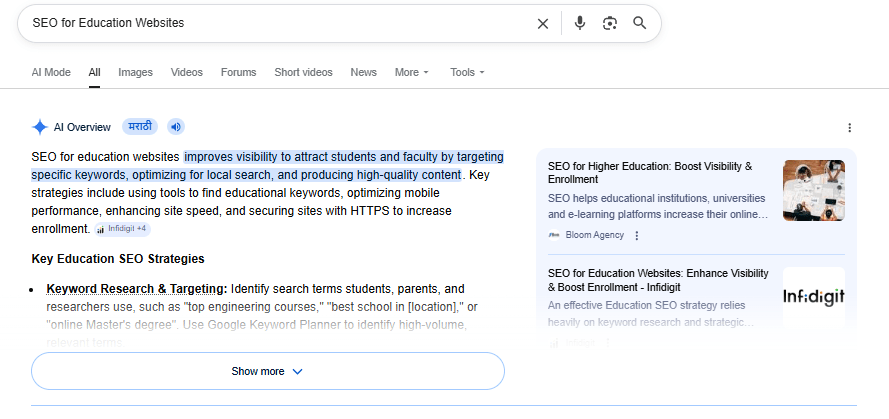
Once you identify an inaccurate answer, investigate where that information may have originated.
If an AI platform provides citations, examine those sources carefully.
For example, an incorrect phone number may come from an old directory listing. An outdated service description could come from an old blog post. An incorrect location might originate from a business profile that was never updated after relocation.
You should also look for entity confusion.
This can happen when two companies have similar names, operate in similar industries, or have overlapping descriptions.
If AI systems are combining information about two different businesses, simply publishing another blog post may not solve the problem.
Your digital identity needs to be made clearer across important sources.
Step 3: Correct the Upstream Sources
After identifying the likely sources of outdated information, correct them.
Update Your Website
Review important pages including:
- Homepage
- About page
- Contact page
- Service pages
- Location pages
- Product pages
- Team pages
- FAQs
- Older blog posts
- Website footer
Check whether your company name, address, phone number, services, locations, and descriptions are consistent.
Update Business Profiles
Review major business and local profiles and make sure they reflect your current information.
This may include:
- Google Business Profile
- Bing Places
- Apple Maps
- Industry directories
- Review platforms
- Relevant business databases
Correct Third-Party Information
If an influential article or directory contains outdated information, contact the publisher or platform where possible.
For example, if an old industry article still lists a discontinued service, asking the publisher to update the information can help improve consistency.
The objective is to create a clear and consistent source of truth.
Step 4: Publish Fresh and Useful Content
Updating existing information is important, but publishing useful current content can also reinforce your business entity.
Consider creating or updating:
- Service pages
- Product pages
- Location pages
- FAQs
- Industry guides
- Comparison pages
- Company announcements
- Updated statistics
- Expert articles
- Customer-focused educational content
For example, if your company launches a new service, create a dedicated service page rather than mentioning the service only in a social media post.
Use clear headings and straightforward language.
Where appropriate, structured data can also help search engines understand important entities, services, locations, and relationships.
This is an important part of modern AI SEO services, because AI search visibility still depends heavily on strong underlying web information.
Step 5: Use Available AI Feedback Options
Some AI platforms give users a way to say the response is inaccurate or just not that helpful, kind of like a flag. But yeah, it depends a lot on the platform, and the whole process can shift over time. When the option is there, companies could use these feedback channels to flag the wrong details. Still, that shouldn’t replace correcting the actual source material. For example, if an AI answer includes an old address because the same outdated info is sitting on a few older websites, then reporting the answer by itself won’t magically update those websites. A better approach, more like a loop, is to: identify the mistake → trace it back to the source → correct that source → reinforce the current information → keep watching the AI response after that.
Step 6: Monitor Your AI Visibility Regularly

AI search optimization is not a one-time task.
Information can change, new sources can appear, and AI platforms can update how they retrieve and interpret information.
Create a recurring monitoring schedule.
For example, every 30–60 days, test important brand queries again.
Track:
| Metric | What to Check |
| Brand mentions | Does AI recognize the business correctly? |
| Citation sources | Which websites are being referenced? |
| Business details | Are phone, address and hours accurate? |
| Services | Are current services represented? |
| Competitor comparisons | Is the business being described accurately? |
| AI traffic | Are visitors arriving from AI platforms? |
| Conversion activity | Are AI-referred visitors engaging or converting? |
Keeping the same prompts during each audit also makes changes easier to measure.
How Bloom Agency Can Help With AI Search Visibility
Correcting outdated information is only one part of building a strong AI search presence.
Bloom Agency approaches AI SEO as an extension of a broader search strategy rather than a replacement for traditional SEO.
The foundation includes technical health, useful content, authority, structured data, local visibility, and consistent brand information.
A Bloom AI SEO strategy can include:
| AI SEO Area | What Bloom Can Focus On |
| AI Visibility Audit | Identify how a brand currently appears across AI-powered search experiences |
| Entity Optimization | Improve consistency and clarity around the brand, services and business identity |
| Content Optimization | Create useful content structured around customer questions and search intent |
| Technical SEO | Improve crawlability, site structure, performance and indexation |
| Schema Implementation | Use relevant structured data to clarify business and content entities |
| GEO Strategy | Optimize content for visibility and citations in generative search environments |
| Local AI Visibility | Strengthen business information, local signals and location relevance |
| Authority Building | Develop relevant third-party signals and quality backlinks |
| AI Monitoring | Track brand mentions, citations and changes in AI-generated responses |
| Traditional SEO Integration | Ensure AI visibility work supports conventional organic search performance |
The important point is that AI SEO should not exist in isolation.
A website with poor technical foundations, weak content, inconsistent business information, and limited authority may need those issues addressed before expecting significant AI visibility gains.
DIY or AI SEO Agency? How to Decide
Not every business needs the same level of AI SEO support.
Some businesses can handle basic information corrections internally, while others may need ongoing technical and strategic support.
| Situation | DIY Approach | AI SEO Agency Approach |
| Wrong phone number | Update website and major listings | Audit citations if the old number appears widely |
| Changed business hours | Update local profiles | Check consistency across major platforms |
| New service | Publish and optimize a service page | Build a complete content and search strategy |
| One outdated directory | Contact the directory | Manage broader citation cleanup |
| Multiple conflicting listings | Time-consuming manual research | Structured citation and entity audit |
| Brand confusion | Review company descriptions | Develop entity clarification and authority strategy |
| Low AI visibility | Improve existing content | Combine GEO, technical SEO, content and authority work |
| Multiple locations | Update profiles individually | Build a scalable local and AI search framework |
| Competitive AI search landscape | Manual monitoring | Ongoing AI visibility and competitor monitoring |
For a small correction, an internal team may be able to handle the work.
For a larger problem involving multiple websites, locations, services, competitors, and AI platforms, specialist support can make the process more systematic.
What Businesses Should Look for in an AI SEO Agency
Choosing an AI SEO provider requires looking beyond the label itself.
| Look For | Why It Matters |
| AI SEO integrated with traditional SEO | AI visibility should complement existing organic search work |
| Transparent reporting | You should understand what is being monitored and improved |
| Technical expertise | AI visibility depends on strong website foundations |
| Content expertise | Clear, useful and authoritative content remains important |
| Entity optimization | Consistent business information helps reduce confusion |
| Multi-platform monitoring | Different AI platforms may surface different sources |
| Real case studies | Demonstrated work is more useful than unsupported promises |
| Clear KPIs | Measurement should go beyond vague claims about “AI visibility” |
| Human editorial oversight | AI tools should support content production rather than replace quality control |
| Long-term strategy | AI search is evolving, so the strategy should adapt over time |
Be cautious of agencies that promise guaranteed AI citations or guaranteed placement in a particular AI answer.
No legitimate agency can completely control what an AI system will generate for every query.
A credible strategy focuses on improving the signals that influence discoverability, relevance, authority, and citation potential.
How Bloom’s AI SEO Approach Supports Traditional Search

AI search does not make traditional SEO irrelevant.
Your website still needs:
- Strong technical foundations
- Fast and accessible pages
- Clear information architecture
- Helpful content
- Relevant keywords and topics
- Internal linking
- Structured data
- Quality backlinks
- Strong local signals where relevant
- Consistent business information
Bloom Agency combines these foundations with an AI-focused layer.
That can include identifying conversational queries, structuring content around related questions, strengthening entity signals, improving content clarity, and monitoring how the brand appears across AI search experiences.
The objective is to build a website that is useful not only to traditional search engines but also to the people and AI systems interpreting the information.
Frequently Asked Questions About Correcting Business Information in AI
Can I directly edit what ChatGPT says about my business?
Generally, there is no universal business profile where you can directly edit every piece of information an AI assistant may generate. The practical approach is to identify the underlying sources and make your business information accurate and consistent across them.
Why does AI show an old address when my website has the new one?
AI systems can encounter information from multiple sources. An old address may still exist on directories, articles, review platforms, maps, or other websites. Updating only your website may therefore not immediately remove every conflicting signal.
How can I improve my business visibility in AI search?
Start by building strong fundamentals. Make sure your website is technically sound, your business information is consistent, your content clearly answers customer questions, your entity information is well established, and your authority signals are strong.
This broader approach forms the foundation of AI search optimization.
Does schema markup help with AI SEO?
Structured data can help search engines better understand information about your business, pages, products, services, and other entities. It is not a guarantee that an AI platform will cite your website, but accurate structured data can be a useful component of a broader technical SEO strategy.
How often should I check what AI says about my business?
There is no universal schedule for every business, but regular monitoring is useful. Businesses experiencing frequent changes can monitor more often, while others may conduct structured audits every 30–60 days.
Can AI SEO replace traditional SEO?
AI SEO should generally be treated as an additional layer of search optimization rather than a complete replacement for traditional SEO.
Technical SEO, content quality, authority, site architecture, and user experience remain important foundations.
What is the difference between GEO and AI SEO?
Generative Engine Optimization, commonly called GEO, focuses specifically on improving visibility and citation potential within generative AI systems.
AI SEO is a broader term that can include GEO along with technical SEO, content optimization, entity work, AI search monitoring, and other strategies designed for AI-powered search environments.
How does Bloom Agency approach AI SEO?
Bloom Agency combines AI-focused optimization with established SEO practices. Depending on the business, the strategy can include technical SEO, content marketing, schema, entity optimization, local SEO, authority building, AI visibility monitoring, and Generative Engine Optimization.
The exact strategy depends on the website, industry, audience, competition, and existing search performance.
Build a More Accurate and Visible Brand in AI Search
Outdated business information can cause this weird level of unnecessary confusion when customers, more and more, use AI tools to research companies and such.
And no, it’s not just “post more content” , like that fixes everything, because it usually doesn’t. What actually works is having a steady digital identity backed by accurate website details, refreshed business listings, helpful content, solid technical SEO, structured data, authority signals, and that kind of ongoing monitoring that keeps things from drifting again.
For some organizations, fixing one outdated listing is all it takes, but for others, the inconsistency might show up across dozens of sources, and then you need a more whole, comprehensive approach.
Bloom Agency can help your business build an AI-ready search presence while also continuing to reinforce those traditional SEO basics that keep long-term organic visibility alive.
If you want to see how your business is showing up across AI-powered search experiences, start with an AI SEO and visibility assessment. From there you can spot your biggest opportunities, plus the information gaps you didn’t even know were there.

Neetu Wadhwa is the Director of Bloom Agency, a Mumbai-based full-service digital marketing and web development company. With a strong focus on performance, innovation, and strategy, she leads the agency in delivering SEO, web design, and growth marketing solutions that drive measurable business outcomes.




Rahul M.
B2B Service Provider