
Search engine optimization is, kinda, more competitive than ever now and that makes the right SEO tools pretty much essential for companies trying to boost online visibility. Like if you run a small business, or you manage an eCommerce store, or you’re basically leading a digital marketing agency, having trustworthy SEO data can really change the way you decide what to do next. From finding those high-value keywords… to checking competitors, and keeping an eye on backlinks, SEO platforms take tasks that would otherwise eat up a ridiculous amount of hours.
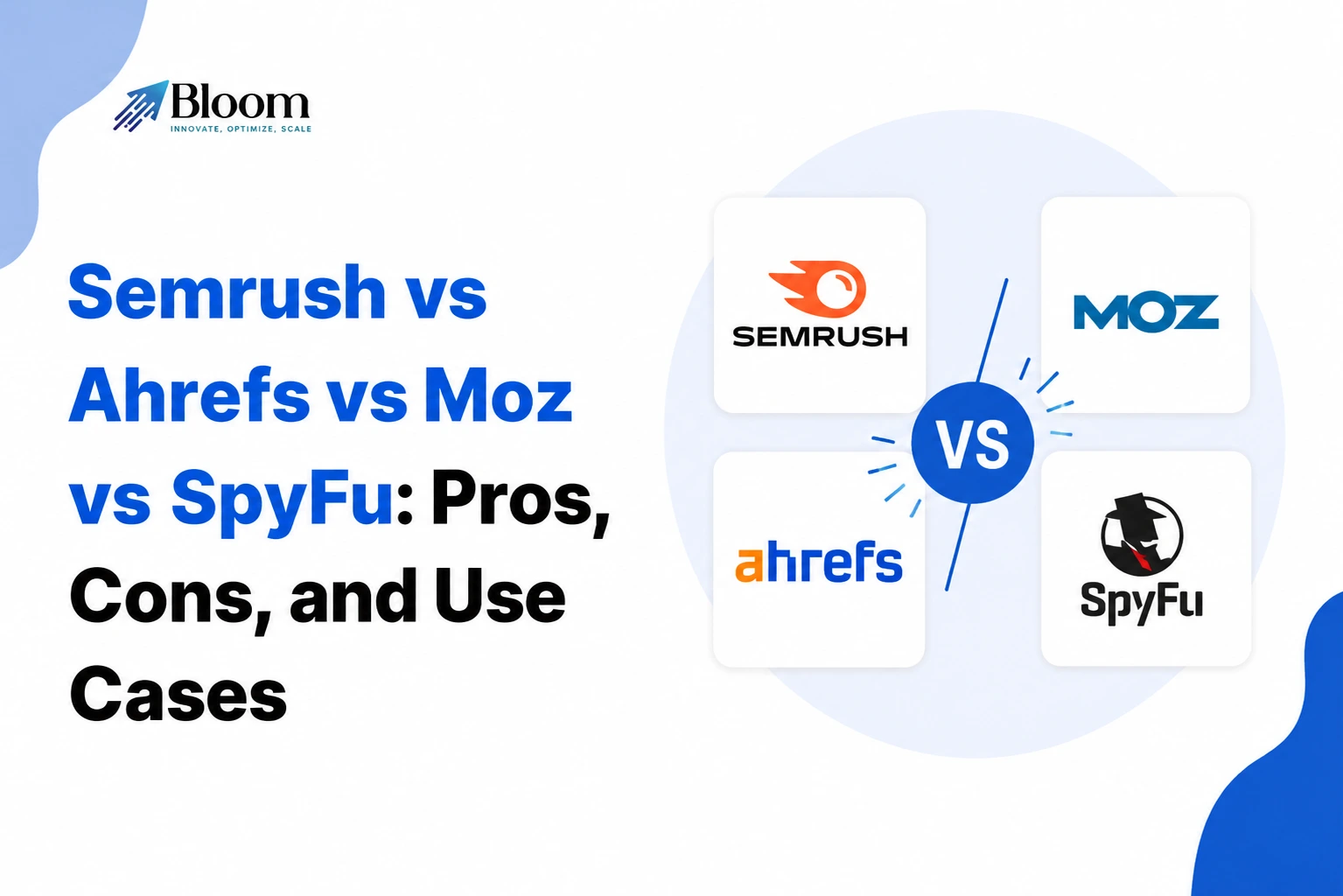
And yeah, with a bunch of strong options out there, picking the correct platform can feel a little overwhelming. Semrush, Ahrefs, Moz, and SpyFu are some of the most known SEO tools around. They’re popular, but they don’t all do the same thing. Some lean hard into wider digital marketing, while others are more focused on backlink analysis, competitor intelligence , or a simpler, beginner-friendly way to manage SEO without too much fuss.
So the “best” choice really depends on what your business wants, what you can spend, and how deep your SEO experience goes. A freelancer might care most about affordability and quick usability. Meanwhile an agency juggling multiple clients usually needs advanced reporting, technical SEO tools, plus collaboration features that don’t feel chaotic.
In this guide, we compare Semrush, Ahrefs, Moz, and SpyFu by looking at their features, strong points , weak spots , pricing, and the ideal situations each one fits best—so you can figure out which platform supports your SEO strategy most realistically.
Why Choosing the Right SEO Tool Matters
SEO wins come from decisions that are backed by accurate, timely data. Keyword trends, competitor activity, website health, and backlink quality all play a part in where you end up in search results. Without reliable insights, it can be hard to run campaigns confidently, because you’re kind of guessing in the dark.
A solid SEO platform helps businesses spot growth chances earlier than competitors, track website performance, uncover technical problems, and judge whether optimization is actually working. Instead of relying on “hope,” marketers can build data-driven plans that improve visibility and create steady organic traffic over time.
Since each platform offers a different set of capabilities, understanding those differences makes it easier to invest in software that matches your longer-term marketing aims.
Semrush: The Complete Digital Marketing Platform
Semrush has moved way beyond being “just” a standard SEO tool. It’s turned into a full digital marketing platform. It combines search engine optimization with content marketing, competitor research, paid advertising, local SEO, social media management, and AI-style search insights, all sitting in one dashboard.
That all-in-one approach makes Semrush useful for businesses handling multiple marketing channels. Instead of subscribing to several separate tools, teams can oversee almost everything from a single interface. Which, frankly, is a big deal when time is tight.
One of Semrush’s biggest strengths is its keyword database. Marketers can pull search volume, keyword difficulty, user intent, seasonal movement, and related keyword ideas with strong accuracy. These insights make content planning easier while also helping businesses aim for search terms that actually drive meaningful traffic.
Semrush: The Complete Digital Marketing Platform
Semrush also stands out in competitor research. Users can examine competing sites, spot the keywords driving their strongest results, view traffic estimates, watch ad campaign activity, and locate content gaps that might turn into ranking opportunities.
Technical SEO is another area where Semrush tends to shine. Its site audits can reveal crawl issues, duplicate content, broken links, page speed concerns, structured data errors, and mobile usability problems before those items start hurting rankings.
For content creators, Semrush includes writing assistants, topic research tools, SEO content templates, and AI-driven suggestions that make the creation process smoother while improving optimization.
Semrush is also pushing further into AI by tracking brand visibility inside AI-generated search experiences. That helps businesses understand how they show up across newer search environments.
Still, with such a wide feature set, Semrush can be a bit heavy for beginners. New users often need time to get comfortable with the dashboards, reports, and customizing workflows. Also, advanced toolsets plus additional user seats can raise costs for bigger teams.
Even with those trade-offs, companies looking for a broad digital marketing ecosystem often end up seeing Semrush as one of the strongest long-term investments.
Ahrefs: The Industry Leader for Backlink Analysis
Ahrefs built its reputation by assembling one of the largest backlink databases in the SEO world. While the platform now includes broader SEO features, its backlink intelligence is still where it really stands out.
For businesses focused on link building, competitor research, and content strategy, Ahrefs gives deep visibility into the “linking ecosystem” of the web. Users can inspect any site’s backlink profile, find referring domains, track newly gained links, catch lost backlinks, and judge link quality with strong detail.
Its Site Explorer is one of the platform’s most powerful pieces. In seconds, marketers can review a competitor’s organic traffic, top-performing pages, keyword rankings, backlink profile, and historical growth trends. The result is clearer context for why certain strategies worked, which makes it easier to reverse-engineer those wins and identify where improvements are still possible.
Ahrefs also includes a Content Explorer that surfaces popular content based on backlinks, organic traffic, and social engagement. Instead of just guessing which topics might perform well, marketers can create content with support from proven search interest.
Moz: A Bit Beginner-Friendly SEO Platform, kinda
Moz is like… pretty much known for being one of those trusted names in SEO. Even though newer rivals have rolled out more advanced features and all that, Moz still sorta stands out because it keeps things simple, easy to use, and it teaches you while you go. So if you’re a business owner, blogger, startup, or marketing person who wants dependable SEO insights, Moz feels like a calmer option instead of getting stuck in an overly complex dashboard situation.
One of Moz’s most known things in SEO is Domain Authority, aka DA. This metric gets used a lot to guess how likely a site might rank in search engines. Now, Google does not use DA as a ranking signal, but it still works as a decent comparison tool, especially for matching sites up, figuring out backlink chances, and tracking how your overall site is growing over time.
Moz brings a mix of SEO tools that cover keyword research, backlink checks, technical SEO, rank tracking, and on-page tweaks. Keyword Explorer is the part people start with, it helps you find relevant keywords by looking at search volume, ranking difficulty, and organic opportunity so you can spot topics that actually line up with what you’re trying to achieve.
Then there’s Link Explorer, which gives backlink insights you can use to evaluate referring domains, anchor text distribution, spam scores, and Page Authority metrics too. Moz’s backlink database is smaller than Ahrefs’, but it still tends to provide dependable details for the everyday link-building type of work businesses do.
Another win with Moz is the automated site crawl. It keeps monitoring your site for technical SEO problems. And then, users get suggestions for fixing crawl errors, duplicate content, missing metadata, redirect issues, and other things that can quietly affect search visibility if ignored too long.
Moz also has MozBar, that popular browser extension. With it, marketers can check SEO metrics while browsing pages, so competitor research feels way less of a chore. You don’t have to keep logging into the platform just to see what’s going on.
A major strength here is user experience. The dashboards look clean, the reports are pretty easy to read, and overall the learning curve is lower than many enterprise SEO platforms. Newer businesses often like how the navigation makes sense and the recommendations feel practical, not overly dramatic.
Moz is also big on education, like it publishes content that helps you understand SEO concepts as your digital marketing skills improve. Think beginner guides, webinars, plus research studies, so there’s ongoing learning alongside the software.
Still, Moz is not perfect. Its backlink database isn’t as deep as Ahrefs. And when it comes to competitor intelligence plus content marketing, Moz can feel less complete than what Semrush provides. If you’re running huge SEO campaigns, you may end up needing extra tools as your marketing needs get larger.
That said, Moz stays a strong pick for organizations wanting an SEO platform that mixes useful functionality with simplicity, without turning the whole process into a headache.
SpyFu: Affordable Competitor Research and PPC Intelligence, mostly

SpyFu plays SEO a little differently. Instead of putting technical SEO or backlinks first thing, it leans hard into competitor intelligence. The focus is on uncovering the keywords, ad tactics, and overall search performance of other businesses, kind of like learning by watching what your rivals already do.
For companies working with tighter marketing budgets, SpyFu gives standout value. Pricing is usually lower than many premium SEO tools, yet you still get access to strong keyword research, competitor analysis, and PPC-focused insights.
One of SpyFu’s most useful features is its historical keyword database. You can look at years of search rankings, advertising campaigns, keyword performance, and competitor activity. So you’re seeing longer-term patterns instead of relying only on what’s happening right now, which is often where data gets misleading.
The PPC research side is pretty impressive. Marketers can review competitors’ Google Ads, estimated ad budgets, bidding strategies, and even historical ad copy before launching their own campaigns. That helps you tune advertising budgets while learning from campaigns that already worked for someone else.
SpyFu also includes keyword comparison tools that help spot gaps between competing sites. Basically, you can find the keywords driving competitor traffic and then use that as a starting point to improve your own search visibility.
More recently, SpyFu added AI-powered features. These are designed to provide smarter suggestions for competitor analysis, keyword research, and content improvements. They make the data easier to interpret, and they help highlight real growth opportunities instead of just dumping numbers on you.
Another area where SpyFu does well is lead generation. Businesses can build prospect lists using competitor insights, industry keyword data, and company info, which is convenient for both marketing teams and sales teams.
The interface itself is simple, so even less experienced users can generate meaningful competitor reports with minimal training. Add transparent pricing and generous reporting limits, and SpyFu becomes a decent option for freelancers, consultants, startups, and small businesses.
But, to be clear, SpyFu isn’t built to fully replace enterprise SEO platforms. Technical SEO auditing is more limited, content marketing tools are less comprehensive, and backlink analysis doesn’t go as deep as Ahrefs. If your goal is a full digital marketing ecosystem in one place, you might end up pairing SpyFu with additional software over time.
Semrush vs Ahrefs vs Moz vs SpyFu, which one kinda performs best?
So heres the thing: each SEO platform was built for a slightly different audience, so, no there’s not a single “perfect” tool for every business. what makes sense for you really comes down to your marketing goals, the money you can spend, how technical your team is and also how big your SEO work actually is.
When keyword research is the main priority, Semrush often feels like the stand out. It has a huge keyword database, plus search intent analysis, topic grouping and even AI content suggestions. Basically it helps marketers understand how people search, and that makes it easier to plan content that hits both short-tail and long-tail keywords without guessing too much.
For backlink research, Ahrefs stays pretty dominant. The backlink index is massive, data updates are frequent, and the referring domain reporting is extremely detailed. If your business wants to raise domain authority and snag high-quality links, then Ahrefs usually turns into an essential piece of the SEO stack.
Now if you are putting serious budget into Google Ads, or you care about competitor ad research, SpyFu can be the stronger pick. It includes a historical PPC database so marketers can review competitor activity over time, see keyword bids and check ad copy, which helps you tune campaigns before you burn through your own advertising budget.
Moz, on the other hand, shines in usability. The dashboard is pretty intuitive, the reporting is simpler, and there is a lot of educational material. That combo makes it a solid option for beginners, small business owners, and marketing pros who want dependable SEO insights without dealing with too much complexity on day one.
Instead of asking which tool is objectively better, businesses should probably ask which option matches their marketing priorities more closely.
Which SEO Tool Should You Choose?
Freelancers and solo consultants usually need something that’s affordable but still useful for keyword research and competitor analysis. In many cases, Moz or SpyFu gives a nice balance, kinda functional without feeling overly complicated, so smaller teams can still build a real SEO plan.
Small to medium sized businesses that want long-term organic growth generally get more value from Semrush. It combines technical SEO , keyword research, content planning, local SEO, and competitor analysis inside one place. Having multiple tools under one subscription also means less chaos, less switching, and less need to buy extra software.
Ecommerce brands are often dealing with thousands of product pages, category pages, and commercial keywords. For those teams, Ahrefs tends to be especially valuable due to advanced backlink analysis, keyword tracking, and competitor intelligence. When you understand how rival online stores are earning traffic , you can strengthen your own SEO outcomes faster
Digital marketing agencies usually need the widest feature set since they manage many clients at the same time. Semrush often becomes the preferred option because of reporting, project management, white-label features, local SEO tools, AI visibility tracking, and collaboration features meant for larger marketing teams
Businesses that focus mainly on paid campaigns can benefit a lot from SpyFu’s historical PPC intelligence. Looking at competitor campaigns before launching ads helps marketers improve results, while avoiding unnecessary spending
Common Mistakes Businesses Make When Selecting an SEO Tool

A very common mistake is choosing based only on price. Sure, affordability matters , but the cheapest option often ends up having limited functionality that slows long-term growth. Instead of just comparing monthly costs, businesses should look at the overall value each tool offers
Another frequent issue happens when teams buy advanced software without considering technical comfort. Enterprise-level tools can be powerful, but they can also be hard to use if the team lacks SEO knowledge. Choosing a platform that matches the skill level often leads to better results over time
Some organizations also underestimate growth. A tool that fits today’s needs can start to feel limiting as traffic increases, keyword targets expand , or client portfolios grow. Going with scalable software can save you from having to migrate later
Ignoring technical SEO is another way things get messy. Keyword research alone will not keep search visibility strong. Regular website audits, crawl analysis, page speed checks, structured data validation, and indexing reports are still core to long-term success
And businesses should avoid relying on one performance metric only. Rankings, traffic, backlinks, and keyword volume each matter , but good decisions usually require looking at multiple signals together , not just trusting one chart from one report in isolation
Build a Stronger SEO Strategy with Bloom
Picking the right SEO tool is only the start. Even the most advanced software won’t automatically improve rankings if there isn’t a clear strategy and consistent execution. SEO tools give valuable data, but turning that data into measurable business growth takes know-how, technical capability, and ongoing optimization
At Bloom Agency, we pair industry-leading SEO platforms with proven digital marketing approaches to help businesses get sustainable growth. Our approach goes beyond just keyword rankings and leans into technical SEO, content planning, on-page optimization, authority building, local SEO, AI search optimization, and performance analysis that matches real business goals and not just vanity metrics

Neetu Wadhwa is the Director of Bloom Agency, a Mumbai-based full-service digital marketing and web development company. With a strong focus on performance, innovation, and strategy, she leads the agency in delivering SEO, web design, and growth marketing solutions that drive measurable business outcomes.




Rahul M.
B2B Service Provider