
Artificial Intelligence has kinda changed the way people look for stuff online. Instead of just using regular Google results, more folks are going straight to AI platforms like ChatGPT , Google AI Overviews, Gemini, Perplexity AI , and Microsoft Copilot. They use them to get answers, compare items, and basically decide what to buy.
And as this keeps going, companies are scrambling to show up inside AI-generated search answers. This is where AI SEO comes in, also called Generative Engine Optimization, or GEO. The goal is that your brand becomes one of those “trusted” sources AI systems actually point to when they generate responses.
But of course, just like regular SEO, AI SEO got surrounded by myths, shortcuts, and random misinformation. Every week there’s another “AI hack” that claims instant visibility, guaranteed citations, or rankings overnight. Sometimes, sure, a tactic might give a short-term bump. Still, a lot of it fails in the long run and can even mess up your performance later.
At Bloom Agency, we’ve been helping businesses get ready for AI-driven search by mixing technical SEO, content optimization, structured data, entity building, and digital authority work. Through constant testing and industry research, we’ve found something pretty consistent. Social media management search rewards quality, clarity, trust, and relevance. Not sneaky shortcuts.
In this guide, we’re going to sort the real from the fake, by debunking the biggest AI SEO myths businesses still believe in 2026.
Understanding AI SEO Before Chasing Rankings
Traditional SEO is mainly about improving visibility inside Google search results.
AI SEO does more than that.
Instead of only trying to get a single page to rank, AI systems pull from multiple trusted sources. Then they check whether your content is high quality, whether it’s factually solid, how things connect as entities, and then they craft full responses for users.
So instead of asking, “Which website ranks first”,
AI is basically asking,
“Which source offers the clearest, most trustworthy answer ?” That small shift matters, because it changes how businesses should create content. Not endless articles chasing individual keywords. Instead, you build topical authority, and make it easy for AI systems to understand, reference, and cite what you actually know.
Companies who get this shift are already seeing visibility across the newer AI platforms, not just search engines.
Myth 1: AI SEO Is Only About Third-Party Mentions
One of the biggest misconceptions is that AI SEO only cares about third-party mentions.
A lot of businesses think, if big publications don’t mention them, AI systems won’t “listen” to their own site. But that’s just not how it works. Your website still counts a ton, it stays one of the strongest assets for AI visibility.
When people ask super specific questions about products, services, pricing, features, or solutions, AI models often rely on well-structured pages from the brand itself. And there’s a reason it makes sense.
Your website has detailed information that other sites usually can’t supply. Service pages, FAQs, pricing pages, case studies, product documentation, educational resources… these often give far more complete answers than a quick media mention.
Third-party websites still matter, but mostly for validation. They can build trust and signal authority. The trick is, they should support your website, not replace it. Businesses that ignore their own site while going hard on digital PR often miss a bunch of real citation opportunities.
At Bloom Agency, we suggest you treat your website as the main knowledge hub. Then use guest posting, digital PR, and brand mentions to strengthen the overall authority around it.
Myth 2: Publishing More Content Automatically Increases AI Visibility
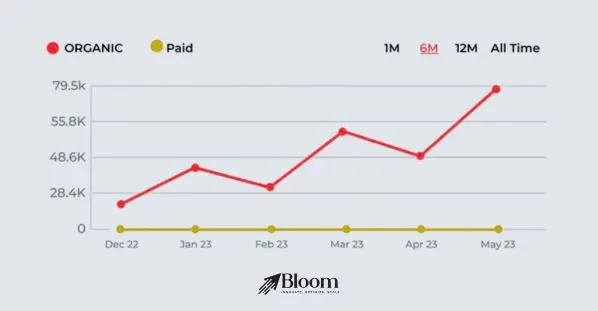
Some businesses think if they publish hundreds of blog posts a year, they’ll just win AI search. But no, quantity alone doesn’t win anymore.
AI systems judge whether content actually answers the question, not how many pages you produced.
A lot of companies push out dozens of generic blog posts that chase broad keywords, but they don’t really solve what prospective customers are worried about during the buying process.
Meanwhile, competitors publishing fewer , higher-quality resources often get more AI citations. Plain and simple.
So instead of tracking success by content volume, focus on relevance.
- Every article should fix a real problem.
- Every guide should answer common questions.
- Every landing page needs useful, structured information.
AI platforms reward expertise. Publishing just to hit a page count rarely builds durable authority. Honestly, a smaller site with strong educational content often beats a huge site full of repetitive stuff.
That’s why Bloom Agency builds topic clusters, not isolated blog posts. This approach helps businesses create real depth across an entire subject area, instead of constantly chasing one keyword at a time.
Myth 3: AI Reads Every Word on Your Website
Another misconception is that AI “carefully reads” every sentence on every page. Modern AI models can process a lot, sure, but efficiency still matters. The top part of your page carries huge weight.
When AI systems retrieve info, they often emphasize introductory summaries, definitions, and short explanations before they move into deeper sections. So if your main answer is buried halfway down, there’s a real chance AI won’t reach it.
That’s why strong AI content uses a clear structure. The most important info needs to show up near the top. After that, add supporting explanations. People like this, because they get immediate answers. AI systems like it too, because the content becomes easier to retrieve, and easier to summarize.
Myth 4: Beautiful Writing Matters More Than Facts
Yeah, good writing does help people read. It makes everything smoother, more clean, you know.
But facts… thats where trust is built. AI systems, they kinda gravitate toward content that’s actually backed by statistics, research, concrete examples, clear definitions, original insights, plus information that can be checked. Otherwise it’s just vibes, and AI is not really trying to vibe.
Storytelling definitely helps with engagement, sure, but unsupported opinions tend to fall flat when AI has to decide what sources get cited, and what doesn’t.
So businesses should back their claims with real evidence whenever it’s possible, not just well worded statements.
Case studies, performance metrics, industry reports. Also: original research, expert commentary. These signals improve credibility and, at the same time, they make it easier for AI systems to verify what you’re saying.
Even service pages gain a lot when they include factual details, not just polished phrases. Instead of writing something like,
“ We provide excellent SEO. ”
- Talk about measurable outcomes.
- Mention the industries served.
- Show successful campaigns.
- Share actual business results, with specifics.
AI systems are getting better at rewarding content that shows real expertise, not content that only claims it. That’s also why Bloom Agency mixes technical SEO knowledge with practical marketing experience when we create AI-optimized content.
Our goal isnt just to publish articles. It’s to publish resources people can reference, without hesitation.
Myth 5: Changing the Published Date Automatically Makes Content Fresh
A lot of people kinda think that if you just swap the published date, then an old article will look fresh, like brand new, to AI systems. Yeah, some platforms might treat dates as a freshness hint when they retrieve results, but honestly, updating the stamp without touching the actual substance gives you mostly meh returns.
Like, search engines (and not just one either) look at way more than dates. Google tends to judge content edits, overall page quality, how relevant it is, the user experience, plus authority signals. So if you only do a tiny date bump, and nothing meaningful changes inside the page, it probably won’t help rankings much ,or at all.
A better route is to refresh the piece in a real way—add updated numbers, new examples, clearer explanations, extra FAQs, and current industry angles. When you do an authentic content refresh, both classic search and AI based platforms are more likely to treat the page as still useful, not just “re-dated”.
Myth 6: A Wikipedia Page Is Required for AI Visibility
Some businesses act like you need a Wikipedia page to show up in AI generated answers, like it’s a hard rule. It’s not.
AI systems pull from a mix of sources when building responses. That includes websites, industry publications, trusted directories, review platforms, and general online mentions. If your brand builds a strong digital footprint through authoritative content and third-party validation, then AI visibility can improve without Wikipedia being involved at all.
So for businesses, the better focus is brand credibility—through expert level content, media mentions, partnerships, customer reviews, and keeping your info consistent across the web.
Myth 7: You Must Rank in Google’s Top 10 to Get Mentioned by AI
Sure, traditional SEO ranking still matters, but AI search doesn’t always behave the same way. AI systems frequently answer tough questions by blending information from multiple sources, not just one “winner” page.
So even if a webpage sits past the top ten , or even past the first page for a competitive keyword, it can still appear in AI responses if it offers a sharply relevant answer for a specific user question.
Basically, this means you should publish content for detailed search intent, not only chase those high volume phrases. Question driven articles, expert walkthroughs, comparison pages, and educational resources can create more chances for AI citations, even when the keyword competition is brutal.
Myth 8: An AI Citation Means Your Brand Is Being Recommended
Getting referenced by AI doesn’t always mean your brand is being actively recommended, or preferred.
AI systems can reuse info from your pages while they mention another company, or while they provide a general response that isn’t directly a “pick this brand” moment. Because of that, businesses should monitor brand mentions, entity recognition signals, and sentiment—plus keep the usual traffic KPIs in view.
An actually strong AI SEO approach aims to become a trusted source that AI systems connect with specific topics and real customer needs.
Myth 9: More Reviews Automatically Improve AI Rankings
Reviews are helpful, no question. But just piling on more reviews does not automatically translate into better AI visibility.
AI platforms often analyze credibility, context, sentiment, and how reliable the review sources are. A company with fewer reviews, but with detailed and genuine customer experiences, can out perform another brand that has tons of generic reviews that kinda say nothing.
For local businesses, keeping a solid set of Google Business Profile reviews still matters because reviews affect local SEO. Still, AI visibility needs wider authority building, not just “more review count”.
Myth 10: AI Tools Can Completely Replace SEO Experts
AI tools definitely changed how marketers work, but they can’t fully replace SEO experts. Not in the “strategic decision making” sense anyway.
AI tools can support things like keyword research, content ideas, summaries, and workflow automation. But they can’t fully know your business goals, your competitors, your customers, your analytics data, or your market positioning—unless a human guides it properly.
So the best AI SEO approach is a combo: automation plus human expertise. SEO pros review data, spot opportunities, improve technical performance, and craft strategies that match business objectives, not just tool outputs.
Building an Evidence-Based AI SEO Strategy With Bloom Agency
AI search tends to reward businesses that publish accurate, structured, and trustworthy information. The future of SEO isn’t about chasing shortcuts, it’s about building content that answers real customer questions, then proves authority over time.
At Bloom Agency, we help brands gain visibility across both traditional search engines and AI powered platforms. We do that through advanced SEO strategies, content optimization, technical SEO, digital authority building, and AI SEO services.
As an SEO agency in Mumbai, Bloom focuses on strategies that help businesses become more discoverable, more trusted, and more competitive in this changing search environment.
Whether you’re trying to improve Google ads, increase AI citations, or simply strengthen your online presence, our team designs data backed SEO solutions meant for long term growth.
Ready to move beyond AI SEO myths and build a strategy backed by real data? Reach out to Bloom Agency today. Our team helps businesses improve visibility across Google Search, AI Overviews, ChatGPT, Gemini, and other AI-powered search platforms through technical SEO, high-quality content, digital PR, and authority building. Whether you’re looking to increase AI citations, improve organic rankings, or strengthen your brand’s online presence, Bloom Agency has the expertise to help you stay ahead. Reach out today to discover how our AI SEO strategies can drive sustainable growth for your business.

Neetu Wadhwa is the Director of Bloom Agency, a Mumbai-based full-service digital marketing and web development company. With a strong focus on performance, innovation, and strategy, she leads the agency in delivering SEO, web design, and growth marketing solutions that drive measurable business outcomes.



Rahul M.
B2B Service Provider