
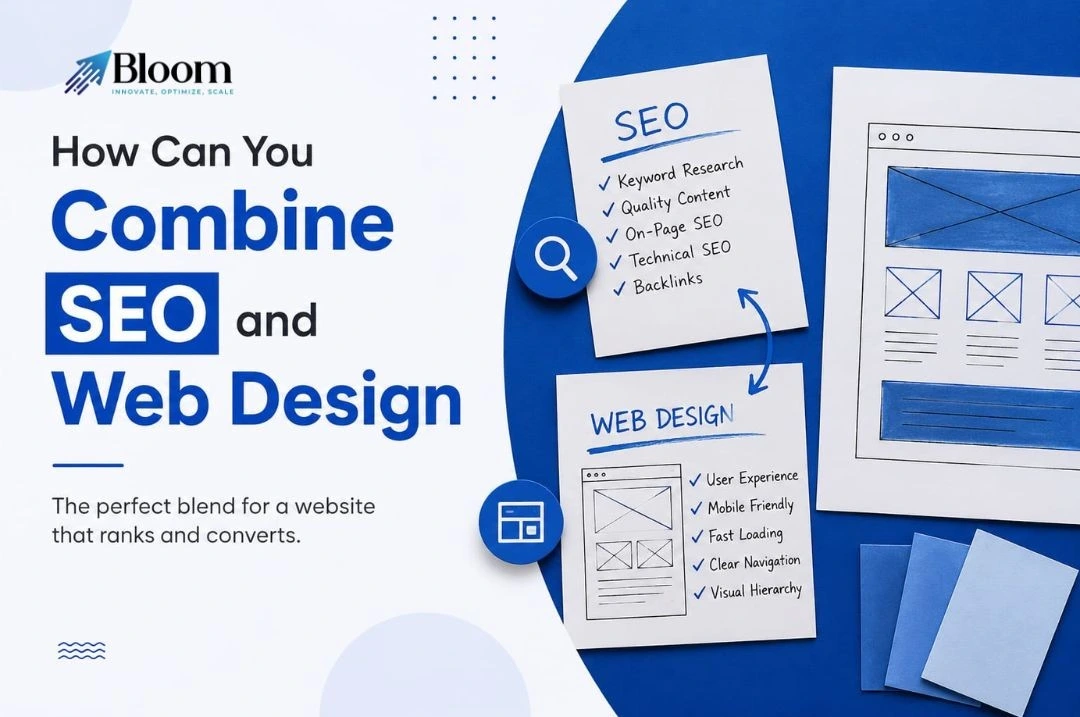
A website that looks really good at first glance is kinda important, you know , because it creates a strong first impression… but honestly, design alone is never enough if you want business growth online. A site also has to be tuned for search engines, so people can actually discover it when they search. That’s where SEO and web design overlap, like they’re basically working on the same team.
Today’s businesses often want websites that look professional, AND that also perform well in search engine results. When you combine SEO with web design services, you can boost visibility, improve the user experience, increase engagement, and drive conversions all at once, instead of chasing one thing at a time.
A lot of companies lean too hard on design and then completely forget SEO, or they push SEO but don’t touch the website experience at all. In reality, it’s not really separate—these pieces are tangled together. A website that’s optimized for both search engines and real people usually wins against one that only handles one side.
Why SEO and Web Design Have to Be Linked
You might have the most impressive website out there, but if nobody finds it on Google, it’s not going to pull in traffic or leads. SEO helps get visitors by improving search engine visibility, so you can show up for the right searches.
But here’s the other side: bad website design can send visitors right back away quickly, even when SEO is doing its job and bringing them in. Slow pages , messy navigation, weak mobile responsiveness, and a tired user experience all raise bounce rates and lower conversions. Also, search engines like Google don’t just rank pages by keywords. They look at user experience signals too. So yes, SEO and web design are no longer separate strategies. They directly affect each other. Companies that merge SEO with solid website design often end up with stronger rankings, better engagement, and higher conversion rates.
The Role of SEO in Website Visibility
SEO helps search engines understand what your website is about, and how relevant it is for someone searching online. When a site is properly optimized, it gains visibility through things like keyword targeting, technical optimization, well organized content structure, metadata optimization, internal linking, and solid mobile performance. Without SEO, even the most well designed website can end up basically invisible in search results. Not because it’s bad, but because search engines just can’t “see” it properly. SEO also supports long term organic traffic. Paid ads stop when you stop paying, but SEO keeps generating visibility and website visitors over time, if you keep it maintained and current. Businesses that invest in SEO-friendly web design are setting up a foundation for sustainable growth, not just a short spike.
How Web Design Affects SEO Results
Web design influences a lot of ranking factors search engines use.
Google tends to favor websites that load fast, look and work great on mobile devices, offer clear navigation, and deliver a positive user experience. And guess what, all of those are shaped by how the website is designed and built.
If web design is weak, rankings can drop even when your content is strong and your keywords are on point. A modern SEO-friendly design should emphasize performance, accessibility, responsiveness, usability, and a clean technical structure. When SEO experts and web designers collaborate from the very beginning, businesses typically end up with websites that rank better and convert more effectively.
Mobile-First Design and SEO
Google uses mobile-first indexing, which basically means the mobile version is treated as the main version for ranking purposes. So if your website doesn’t work well on phones and tablets, you may lose visibility in search results even if the desktop version looks fine. Responsive design helps the website adapt automatically to different screen sizes and devices. A mobile-friendly experience improves user experience, lowers bounce rates, and strengthens SEO performance.
Most modern web design agencies prioritize responsive layouts because mobile traffic keeps dominating internet usage worldwide, so the design has to fit reality, not just a desktop preview.
Website Speed and Search Rankings
Website speed is one of the most important technical SEO factors, like it really matters. Users expect pages to load quickly, if they dont , they get annoyed and usually bounce pretty fast. Search engines can spot that kind of behavior and they may push slow websites down in rankings, yes even if the content is good. Web design optimization helps speed up through things like image compression, clean coding habits, browser caching, solid hosting, and content delivery networks.
When a site is faster, it boosts both user satisfaction and overall SEO visibility, kind of like a two-for-one.
Navigation Structure and User Experience
A clear website structure makes it easier for users and search engines to grasp content in a more organized way. Simple navigation menus logical page hierarchy internal links, and breadcrumb navigation improve how usable everything feels, and also help crawling go smoother.
People should find key information quickly, without that “where am i” confusion. Good navigation also makes visitors browse more pages which supports engagement signals, and that often helps SEO over time. Search engines tend to prefer websites with arranged structures, because they’re simpler to index and interpret.
SEO-Friendly Website Code
Behind a good looking website there should be clean and optimized code, not a tangled mess. SEO-friendly code helps search engines crawl pages efficiently and understand what the website is actually saying. Using heading tags properly, schema markup, canonical tags, metadata, and structured HTML boosts technical SEO performance.
Also well-coded websites typically load faster and behave better across phones, tablets, and other devices. Technical optimization matters a lot for both search rankings and the user experience, no doubt about it.
On-Page SEO and Website Design
On-page SEO elements should be mixed in naturally during the website design process. Web designers need to build layouts that support keyword-rich content, optimized headings, smart image placement, and a clear content hierarchy.
Key elements usually include title tags, H1 and H2 headings, optimized URLs, meta descriptions, internal linking, and image alt text. A strong website design has to balance visual appeal with what search engines need to read and rank. Businesses should also make sure content placement stays reachable, readable, and consistent on every device.
User Experience and SEO
User experience is now a major ranking factor in modern SEO.Google studies how people interact with your site after clicking in from search results. If visitors leave right away, or they do not engage, rankings could gradually drop. Better user experience strengthens engagement metrics, like time on site, click-through rates, and how many meaningful interactions happen.
Things like easy-to-read typography, clear calls-to-action, fast loading, intuitive layouts, and interactive design pieces help users stick around.
Websites built with real usability in mind often get better positions in search results.
The Importance of Content Placement
Content placement impacts both how easy it is to read, and how effective the SEO becomes. Most users scan first before deciding whether to keep reading.So important details should be near the top of the page, so they show up immediately.
A good heading structure helps keep content organized and it also helps search engines understand what the page is about. Strategically placed calls-to-action can encourage conversions without breaking the flow of the user journey. A fair combination of design and content structure usually creates a smoother browsing experience, and that boosts engagement.
Local SEO and Web Design
If a business serves a specific area, it should pair local SEO with web design that supports it.Local SEO helps businesses appear in location-based searches, and in Google Maps results too. Web design supports local SEO by adding Google Maps, location-specific pages, local schema markup, customer testimonials, and geo-targeted keywords. Also keeping consistent business details, like name, address, and phone number across the site, strengthens local search trust signals.
A strong local SEO approach increases visibility for nearby customers who are actively searching for services.
Image Optimization for Better SEO
Images make websites feel better and more engaging, but they still have to be optimized for SEO. Big image files can slow down your site and hurt rankings. Optimized images improve loading speed while also helping search engines through descriptive file names and alt text.
Strong visuals can also improve user experience, and keep people interacting longer.Web designers should balance image quality with performance optimization, so the pages stay fast.
SEO Tools That Support Web Design
Modern SEO and design tools let companies build websites that look great and still work well in search. Tools like WordPress, when paired with SEO plugins, can make metadata handling and technical optimization much easier.
Website builders such as Elementor and Webflow help businesses create custom layouts while still keeping SEO flexibility. Performance testing tools can reveal speed issues and usability problems that impact rankings.
Analytics platforms add insights about user behavior, engagement levels, and how the site performs overall. Using the right tools improves both design workflow and SEO results, at the same time.
Questions to Ask Before Hiring a Web Design Company
Businesses planning a new website should confirm that their web design partner truly understands SEO basics. It helps to ask if the company builds SEO-optimized websites, prioritizes mobile friendliness, improves page speed, and includes technical SEO elements.
A trustworthy agency should understand how SEO changes design decisions, and how it affects user experience. Picking a team that has experience in both SEO and web design creates a sturdier digital base for long-term online growth.
Why Businesses Choose SEO Discovery
SEO Discovery kind of blends advanced SEO tactics with modern web design approaches, so businesses can boost online visibility and conversions in a more real way.
They tend to focus on building websites that strike this weird, but useful balance between visual appeal, performance optimization, technical SEO , and the actual user experience part.
Services include responsive design, SEO refinement, local SEO tie-ins, content strategy, speed optimization, and analytics tracking too.
And when the design skill meets SEO know how , businesses often see stronger rankings, better engagement and higher conversion numbers , all at once.
Conclusion
Honestly, SEO and web design services are not separate things in digital marketing anymore. They work together , to improve website visibility, user experience engagement , and overall business growth. A good looking site without SEO might not pull much traffic , but SEO alone without solid design can cause frustrating user experience, which usually ends up with low conversions.
So when businesses build SEO right into the web design workflow, the end result tends to perform better for both search engines and people. From mobile responsiveness and page speed, to navigation structure and content placement , every design call can influence SEO performance. When SEO and web design get combined properly, you usually get a stronger online presence, improved rankings, more visitors, and better long term outcomes.
FAQs About SEO and Web Design
Why is combining SEO and web design important?
Combining SEO and web design helps improve search visibility, user experience, engagement, and conversions all at the same time.
How does web design affect SEO?
Web design impacts SEO through page speed, mobile friendliness , navigation, usability, and the overall technical setup.
What is mobile-first design?
Mobile-first design means websites are optimized for mobile devices first, because Google primarily indexes the mobile version.
Why is website speed important for SEO?
A faster site boosts user experience , lowers bounce rate, and generally supports better search engine rankings.
Can user experience improve SEO rankings?
Yes. Better engagement signals , like longer session duration and lower bounce rates, can help rankings over time.
What is local SEO in web design?
Local SEO supports businesses showing up in location based searches through geo-targeted optimization, plus local page elements on the site.
Why are optimized images important for SEO?
Optimized images improve loading speed , accessibility, and help search engines understand content through proper alt text and clear file naming.
What tools help combine SEO and web design?
Common tools include WordPress, Rank Math, Yoast SEO, Elementor, Webflow, Google Analytics, and Google Search Console.
What should I ask a web design company about SEO?
You can ask if they optimize for mobile responsiveness, speed, metadata, schema markup, and an SEO friendly site architecture.
Why choose SEO Discovery for SEO and web design?
SEO Discovery combines professional web design with advanced SEO strategies, to help raise rankings, visibility , traffic , and conversions in a way that actually sticks.

Neetu Wadhwa is the Director of Bloom Agency, a Mumbai-based full-service digital marketing and web development company. With a strong focus on performance, innovation, and strategy, she leads the agency in delivering SEO, web design, and growth marketing solutions that drive measurable business outcomes.







Rahul M.
B2B Service Provider