
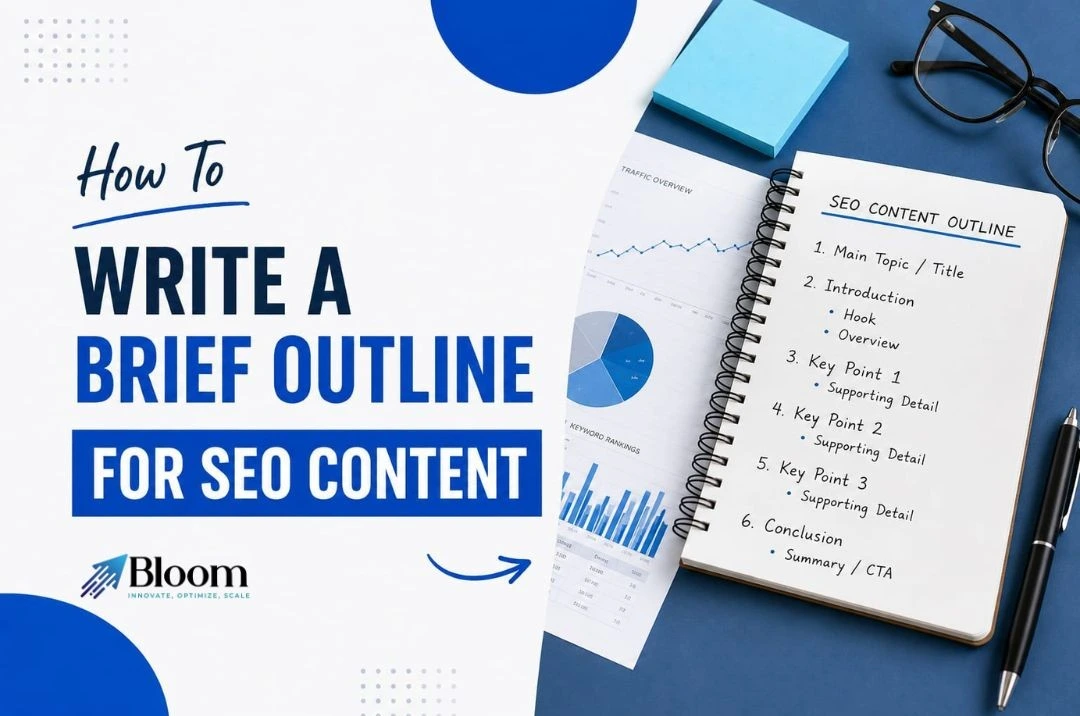
Making SEO content without an outline that actually works usually turns into this messy structure, weak keyword targeting, and rankings that go up and down in a weird way. A solid SEO content brief is kind of the base of successful content marketing because it steers the writers, helps with organization and makes sure each page is optimized for real people and for search engines at the same time.
A good SEO content outline also helps you nail search intent, organize headings in a clear order, place keywords in a natural way and keep everything consistent while the writing is happening. A lot of businesses that use professional SEO content writing services depend on detailed content briefs because it’s easier to maintain quality and boost search visibility.
In this guide, I’ll explain how to build a proper SEO content brief step by step , and also how to sidestep the common mistakes that tend to hurt rankings instead of helping them.
Why SEO Content Briefs Matter
An SEO content brief gives the writer a roadmap before content creation even starts. It spells out the topic, the target keywords, the structure, the audience intent, and the main goals for the article.
If you skip the outline, content can end up disorganized, repetitive, or just not optimized enough. Search engines tend to favor content that is organized well and that answers user questions clearly, without dragging it out
A strong SEO content outline improves, keyword targeting and content structure, plus it supports:
- Search intent alignment
- Readability
- Internal linking possibilities
- User engagement
- Ranking potential
Companies that invest in AI SEO services and technical SEO services often use these detailed briefs so every content piece stays consistent across the whole site
Start With Keyword Research and Search Intent
The first step in making an SEO content brief that performs is keyword research. When you understand what people are searching for, it becomes easier to shape the content plan from the start
Keyword research typically uncovers:
- Primary keywords
- Secondary keywords
- Long-tail variants
- Related search phrases
- User questions
Search intent matters just as much, because not everyone is at the same stage. Some people want information, other people are ready to buy , or they want to compare options first. When your content structure matches the intent, rankings and engagement tend to improve.
Example time: someone searching “best SEO services” may expect comparisons, and pricing details, where as someone searching “what is technical SEO” usually wants an educational explanation. Professional SEO services often mix keyword analysis with competitor research too, so they can spot ranking opportunities more effectively.
How to Create an SEO Content Brief That Boosts Rankings
Making high-performing SEO content begins like… before the writing even starts. A good SEO content brief helps sort thoughts, sharpen keyword targeting , match search intent, and keep writers on track toward content that actually shows up in search engines.
If you don’t have a proper outline, then even really solid writing can still stall in rankings, mostly because it may skip key subtopics, misunderstand user intent, or miss the right SEO structure . And yeah, that happens more often than people admit. When businesses spend time on detailed SEO content briefs, they usually see better visibility, better engagement , and steadier long-term organic growth.
Why SEO Content Briefs Matter
An SEO content brief is basically a roadmap for writers, editors, and the SEO team. It makes sure every page uses a consistent layout, while also aiming at the right audience and the right keywords.
A strong SEO brief supports:
- Better content organization
- Higher search engine visibility
- More internal linking
- Improved readability and engagement
- Faster content production workflows
Plus, well-planned briefs tend to reduce editing headaches because writers get clearer directions before they begin .
Start With Keyword Research and Search Intent
Keyword research is the base for every successful SEO content outline. Before anyone touches headings, or starts drafting paragraphs, you should know what people are searching for, and—more importantly, why they search for it.
Search intent tells you whether users want information, products , services, or comparisons. When you line up intent correctly, you increase your chance to rank because Google tends to favor pages that best meet user expectations.
Important Areas to Focus On During Keyword Research
| SEO Element | Purpose |
| Primary Keyword | Main topic keyword targeted throughout the page |
| Secondary Keywords | Supporting keywords that add topical relevance |
| Search Intent | Helps match content with user expectations |
| Search Volume | Measures keyword popularity |
| Keyword Difficulty | Indicates ranking competition |
| Related Questions | Helps structure headings and FAQs |
Optimize for Featured Snippets
First off, figure out who the Target Audience is, like really, not just the vague “people interested in SEO” thing. Before you even build that SEO content outline, you need to know exactly who will be reading it, because once you get that, the whole article kinda falls into place. It shapes the direction, keeps the message in line with what users are actually hoping to see. And honestly, when you understand your audience, you can better decide the tone, how deep the concepts get, which examples fit, what pain points to hit, and what call to action makes sense.
Include Meta Description Instructions
Like, beginner readers usually want plain, practical explanations and examples they can apply right away. Advanced pros , on the other hand, often want sharper technical viewpoints and more in-depth analysis. When the audience is defined clearly, engagement tends to go up, the content feels more relevant, and it matches search intent without all that guesswork.
Next, Create SEO-Friendly Headlines, because the H1 heading plus your meta title are massive for search visibility and click-through rates. A good headline should include the primary keyword in a natural way, and still spell out what the page is about, but in a way that grabs attention. You want it to earn clicks, not just exist.
Add Visual Content Recommendations

Keep SEO-friendly headlines short enough to stay readable and not sound like they’re stuffed. Action-based phrasing helps, and power words like “complete”, “proven”, “easy”, or “ultimate” can boost engagement and CTR. Also, try to keep meta titles around 50–60 characters so they don’t get cut off in Google results.
Then Build a Clear Heading Structure, because a proper hierarchy makes the page easier to scan and helps search engines understand what’s what. Your H1 is the main topic, and it should include the primary keyword naturally.
Define the Desired Call-to-Action
After that, H2 headings should organize the big sections so the article flows logically. Use H3 and H4 to split bigger ideas into smaller chunks so readers can find what they need faster. When headings are well structured, crawlability improves, the user experience feels smoother, and overall technical SEO gets a bit of a boost too, since the topic structure is obvious.
Also Add Detailed Notes for Each Section, because strong SEO briefs aren’t just bullet points with vibes. Writers need guidance under each section so everything stays aligned with search intent and the actual SEO goals.
Common Mistakes to Avoid in SEO Content Briefs
Those notes might include key talking points, suggested stats, example ideas, internal linking spots, visual suggestions, and the general direction the section should take. Clear instructions reduce confusion, improve writing quality, and can cut down on random re-edits later when someone realizes the intent drifted.
Now Plan Internal Linking Opportunities, because internal links matter for SEO, and they also improve site navigation. While you’re making the SEO content outline, identify which related pages should be linked naturally across the article.
Best Tools for Creating SEO Content Briefs
Internal links help search engines crawl more efficiently, and they help users move through the site without getting stuck. Plus, linking to relevant services—like technical SEO services, link building services, SEO content writing services, local SEO services, and AI SEO services—can strengthen topical authority while keeping readers engaged with more relevant material.
Optimize for Featured Snippets too, since those can show up for informational searches and often help the page get more visibility. The trick is structuring content so Google thinks, “yeah, this looks like it answers the question.”
To do that, add a concise answer near the beginning of the section, use headings that work like questions, and when it makes sense provide clear, step-by-step explanations. Google usually pulls snippet text from pages that present information directly and in a tidy, well-organized format.
How Bloom Agency Creates High-Performing SEO Content

Include Meta Description Instructions as well, since every SEO brief should carry a suggested meta description. It impacts click-through rates directly from the search results page. A good meta description should naturally include the target keyword, and explain the value of the page, like what the reader gets if they click.
Strong descriptions encourage clicks by highlighting benefits or solutions that match the reader’s needs. Also keep it under 160 characters so it shows properly and isn’t truncated on search engines.
Add Visual Content Recommendations, because visuals seriously help with readability and user experience. If you include visual suggestions inside the SEO content outline, writers and designers can build a more engaging page faster.
Conclusion
Consider things like infographics, charts, screenshots, process diagrams, and comparison graphics, since they turn complex info into something easier to digest. And if visuals are optimized—like with descriptive file names and keyword-rich alt text—you can also get a lift from image SEO.
Finally, Define the Desired Call-to-Action, because every SEO piece should move the reader toward a next step. In the content brief, spell out what the CTA is, where it should appear, and what conversion action you want the user to take.
This could be booking a consultation, downloading a guide, requesting a free audit, or contacting the business directly. When the CTA is clear and placed thoughtfully, conversion opportunities improve and the content feels more effective overall.
FAQs About SEO Content Briefs
What is an SEO content brief, anyway ?
An SEO content brief is kind of a structured document that lays out keywords, headings, search intent, internal links, and writer guidance before any actual content creation starts. It helps everyone stay on the same page , even if people don’t always.
Why an SEO content outline matters?
It makes things more organized, better keyword targeting, smoother readability and generally stronger SEO performance, plus it helps writers make more focused pages instead of wandering off into tangents.
How long should an SEO content brief be ?
It depends on how complicated the topic is, but honestly the more detailed briefs usually lead to better outcomes. Short briefs can work, but the trade off is often less precision.
What should be in an SEO content brief ?
A solid brief should include keywords, headings, search intent, internal links, meta descriptions , content goals, and pretty detailed writer notes too. Sometimes also a quick “don’t do this” list, because that saves time.
Where do I get keywords for an SEO outline ?
You can pull ideas from tools like Ahrefs, SEMrush, Google Search Console and AnswerThePublic. Also it’s useful to look at what’s already ranking, and what people actually ask for.
Can AI tools help with SEO content outlines?
Yes, AI SEO tools can help with keyword analysis, heading suggestions, competitor research and even content planning, not just generating ideas randomly.
How often should I update SEO content briefs?
It should be updated regularly, based on ranking movement, competitor changes, and the way search behavior keeps shifting over time. Like, search isn’t “set and forget” at all.
Why headings are important for SEO?
Headings help readability , they organize the page in a clean hierarchy and they help search engines figure out how the topic is structured, and what matters most.

Neetu Wadhwa is the Director of Bloom Agency, a Mumbai-based full-service digital marketing and web development company. With a strong focus on performance, innovation, and strategy, she leads the agency in delivering SEO, web design, and growth marketing solutions that drive measurable business outcomes.







Rahul M.
B2B Service Provider